

Why Does My Weight Fluctuate Daily? a Clear Guide
Dr. Adeyinka AdegbosinWhy can the scale rise overnight when your routine has not changed? Your weight includes more than body fat: it also reflects water, stored carbohydrate, food and fluid moving through your digestive tract, and your bones, organs and muscles. These parts shift on different schedules, sometimes within hours.
A morning reading works like a rain gauge. It shows what your body is holding at that moment, not whether your long-term health or fat-loss progress has changed. One heavier morning can feel alarming, but it does not mean you gained the same amount of body fat overnight.
The steadier way to read the number is to compare patterns, not react to a single result. Track daily readings, then judge progress by a seven-day average, taking your cycle phase, heat and training into account. If day-to-day results vary, tracking over several cycles can offer more insight.
How Many Kilograms a Normal Day Can Move
A morning reading can sit higher or lower after a salty meal, a change in training, or a different weighing setup. Several small shifts can overlap, so the scale's daily movement does not point to one cause on its own.
Each cause has a typical duration. Match the reading to a row, then consider whether that explanation fits your day.
| Cause | How long it lasts | What it is not |
|---|---|---|
| Salty or high-sodium meal | A short-term shift that eases as fluid balance changes | Fat gain |
| High-carbohydrate meal and glycogen | A short-term shift while stored carbohydrate and water change | Fat gain |
| Large meal or constipation | Until food moves through the digestive tract | Fat gain |
| Sweat from heat or hard training | Until fluid is replaced | Fat loss |
| Menstrual fluid shift | For some people, around parts of the cycle | A change everyone experiences |
| Uneven floor or a different scale | Until the weighing setup is consistent | A real body change |
A salty meal may be followed by a temporary increase, while a high-carbohydrate meal can change stored glycogen and its associated water. A large meal also has weight while it is still being digested. These shifts can overlap, making one morning's reading difficult to interpret.
Sweat can lower the number temporarily, but that reflects fluid loss rather than fat loss. Menstrual fluid shifts also vary: some people notice a change around their cycle, while others do not. Compare readings with the same phase of your cycle rather than treating one person's pattern as a rule for everyone.
The weighing setup matters too. A scale on carpet or an uneven floor may give a different reading from one placed on a firm, level surface. Keep the scale and conditions consistent before interpreting a change.
A single morning is a snapshot of what your body is holding. Judge progress by a seven-day average, and compare averages from similar cycle phases while accounting for heat and training. For today's reading, name the row that best fits.
Why Water and Glycogen Move First
Body water can shift the scale before body fat changes. The body uses water to support digestion, transport nutrients, remove waste and regulate temperature. Sodium helps regulate fluid volume in tissues and circulating blood, so changes in salt intake, hydration, heat or exercise can move the number from one morning to the next.
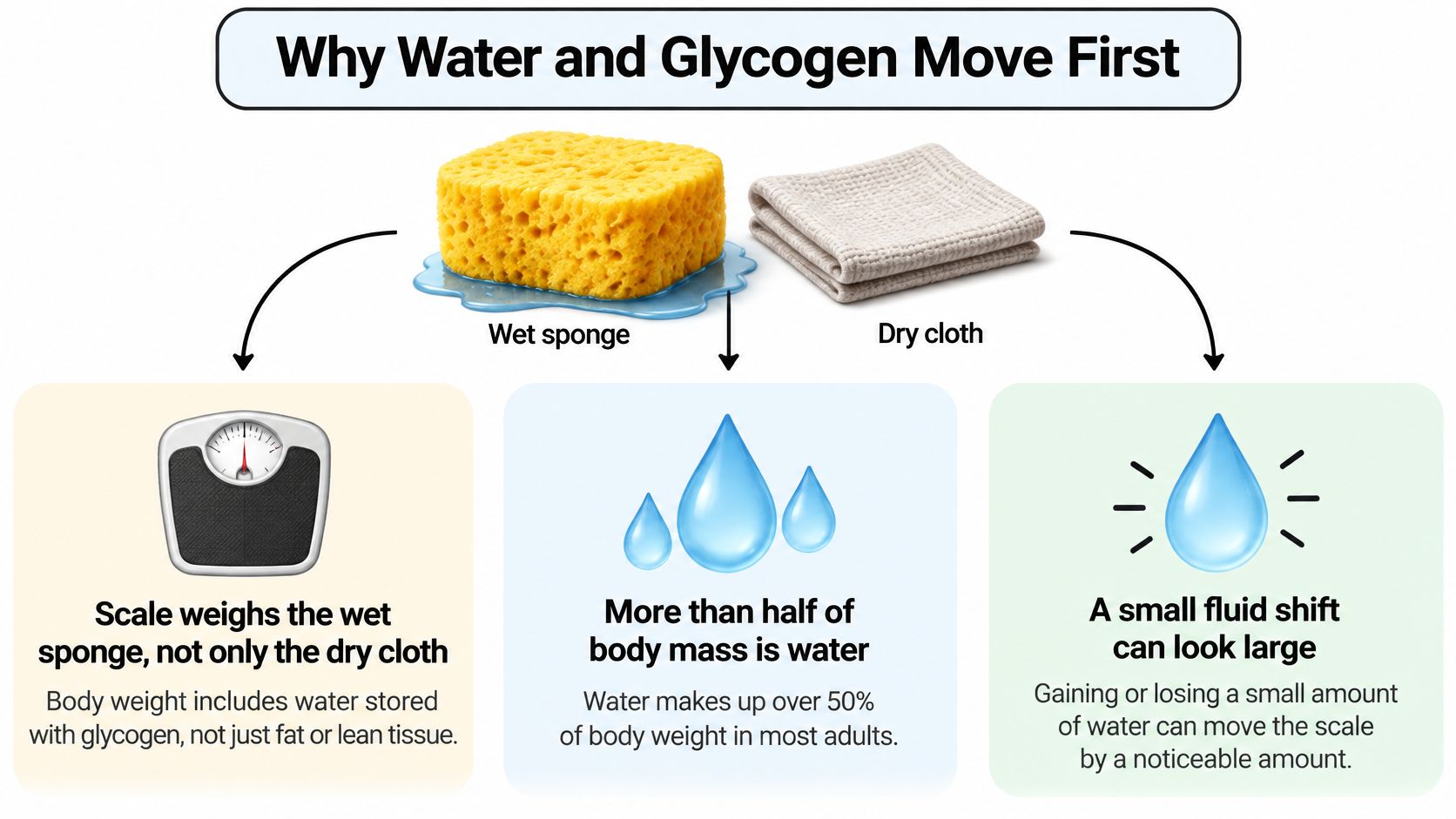
Sodium is the volume dial
After a salty meal, the body may retain extra fluid while the kidneys restore balance. A lower-salt day can bring that fluid shift back down. These changes affect scale weight, not necessarily body fat.
The Australian Bureau of Statistics reported that Australian adults averaged about 2,384 mg of sodium a day in 2023, and that 65.6% of adults, about 12.9 million people, consumed more than 2,000 mg daily from food and drink (ABS release on sodium intake). The Suggested Dietary Target is 2,000 mg a day, while the upper level is 2,300 mg, roughly 6 grams of salt. Bread, processed meat, sandwiches and pizza can contribute sodium, carbohydrate and food mass, so a meal containing these foods may affect the next morning's reading in more than one way.
Glycogen carries its own water
Glycogen is stored carbohydrate that muscles use for fuel. When stores refill after a low-carbohydrate stretch or a long training session, the body also retains water. A pasta dinner after a week of eating fewer carbohydrates can therefore raise the scale temporarily, without indicating a sudden gain in body fat.
A hot day or hard session can shift the number in the other direction if fluid leaves through sweat. Rehydrating changes it again. New training, including building strength with your own bodyweight, may also be followed by a short-lived fluid shift.
Use the daily number like a rain gauge: it records water, stored fuel and other short-term changes alongside body tissue. For a clearer view, compare seven-day averages and consider whether the weeks fall in similar menstrual-cycle phases, temperatures and training patterns. Australian guidance recommends drinking according to thirst and choosing water as the usual drink. Check whether sodium intake or a change in carbohydrate intake could explain a rise before treating one heavier morning as evidence of fat gain.
Food in the Gut and a Scale That Lies
A large dinner, a late snack or a big drink can still be in your digestive tract at the next morning's weigh-in. As an illustration, that food and fluid might account for several hundred grams, or more, of the reading. Constipation can keep contents in the gut longer, while a sudden increase in fibre, such as adding bran and beans, may mean more stool and gas for a few days.
Alcohol can make the scale dip, then rebound. It can increase urination overnight, leaving a lower reading in the morning; after you drink and eat, the number may rise again. Caffeine can also affect fluid balance, so neither change is evidence of fat loss.
When the machine is the problem
A scale on carpet or uneven tile may give inconsistent readings. Low batteries, switching machines, clothing, wet hair and weighing after breakfast can add further variation.
Compare readings on the same scale and hard floor, first before and then after urinating. Even when nothing else changes, the difference shows how timing can affect the number.
Practical test: Weigh twice, two minutes apart: once before urinating and once after. The difference is one example of the day-to-day noise that can make a morning reading look more significant than it is.
Gut contents pass through on their own schedule. A setup-related difference can disappear when you weigh under the same conditions. Neither calls for skipping food, and neither indicates the direction of your progress over recent weeks.
If last night's meal or a wobbly tile seems to explain a rise, keep the reading in context. Weigh on the same scale and floor, under similar conditions, and note what you ate the day before.
Cycles Heat and Training That Hold Fluid
Can a morning increase mean you gained fat overnight? Often, the scale is measuring a shift in water, food and glycogen, much like a rain gauge records changing conditions rather than the whole climate.
A 2021 study of the menstrual cycle and oral contraceptive cycle followed 22 women with natural cycles and 30 women using combined monophasic oral contraceptives across three cycle phases. Researchers measured weight, urine specific gravity, skinfolds, bioelectrical impedance, ultrasound and DXA. They found no statistically significant cycle-wide changes in body weight or urine specific gravity. Individual readings can still shift, so one morning does not define the pattern.
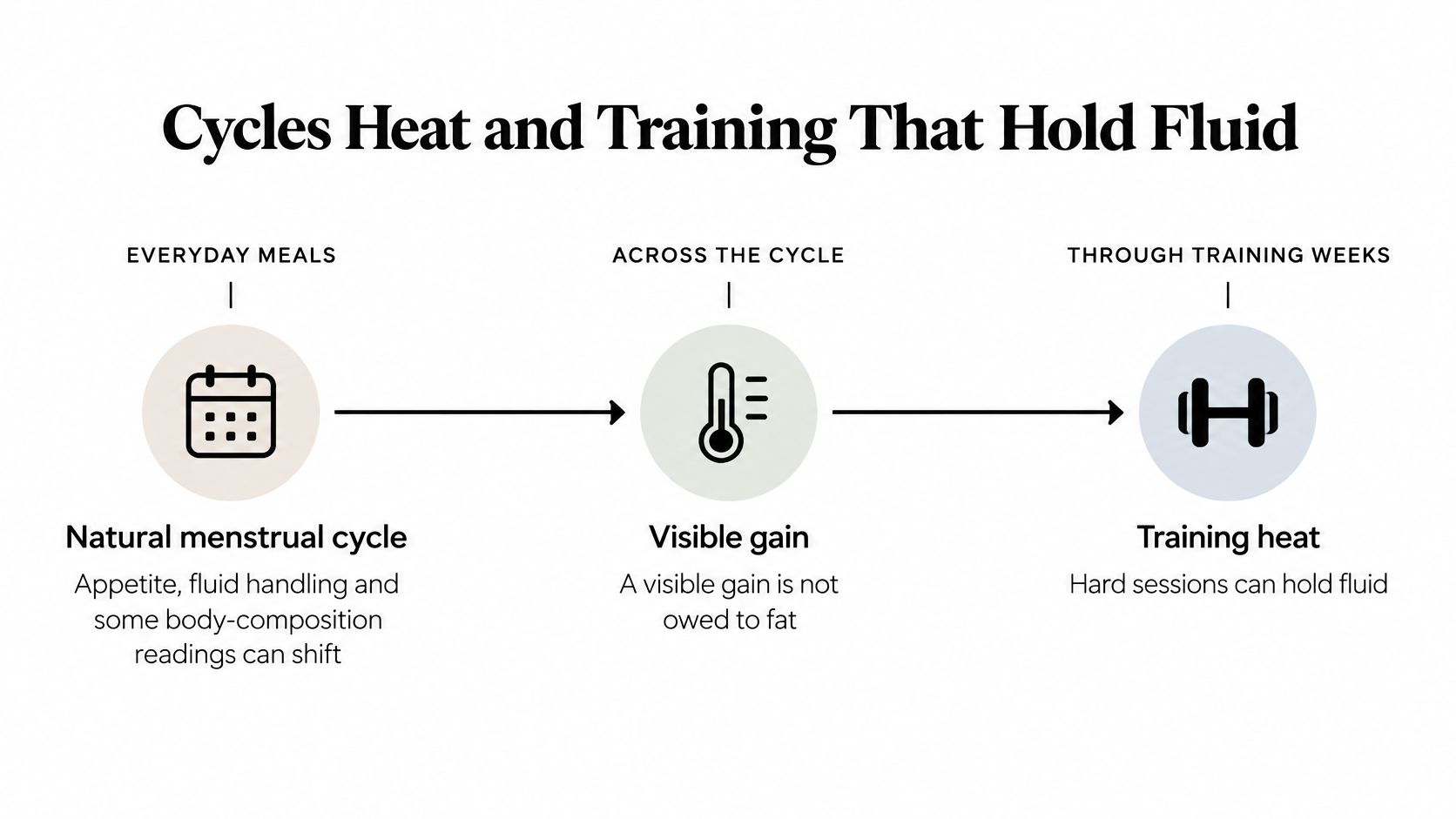
The study did find differences in body-composition measures: among women with natural cycles, DXA-measured body-fat percentage and fat mass were lower in the late follicular phase than in the mid-luteal phase. For a clearer comparison, look at readings from a similar cycle phase rather than treating a single change as fat gain. This guide to weight changes before your period explains why a premenstrual rise can occur. For more on how progesterone affects fluid balance, see the linked explanation.
Heat, new training and the lookalikes
Hot weather and heavy sweating can temporarily lower scale weight as fluid leaves the body. When you replace that fluid, the number may rise again. A new training block, sore muscles or starting creatine can also coincide with a temporary increase as the body holds water.
A cold or an inflamed injury may add another short-lived change. These shifts are like passing weather around the long-term climate: note the circumstances, then assess the trend across several weekly averages rather than reacting to one reading.
How to Weigh So the Trend Is Real
A morning reading can feel decisive, especially after a sudden jump. Use the same routine each day, then judge progress by the seven-day average. The scale is like a rain gauge: its daily number can reflect water, glycogen and gut contents as well as longer-term change.
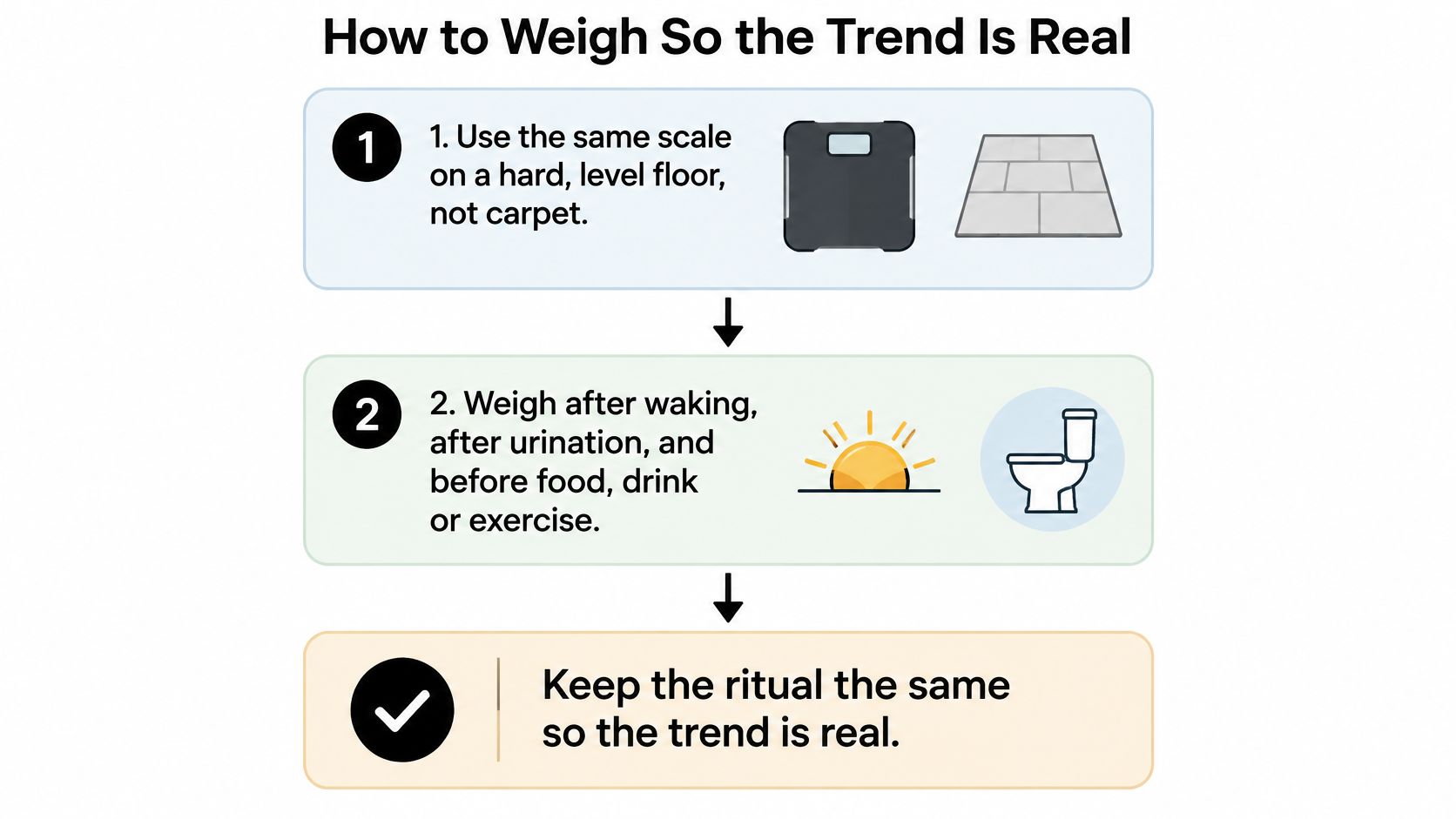
- Use the same scale on a hard, level floor. Carpet can compress under your feet and affect the reading. A firm surface helps keep conditions consistent.
- Weigh after waking and urinating, before eating, drinking or exercising. That gives you a repeatable starting point before the day's food and fluids change the number.
- Record relevant context beside the reading. Note cycle phase, a salty or carbohydrate-heavy day, training, heat and bowel movements. These details help explain a bump without treating it as fat gain.
- Collect seven morning readings before judging the trend. A single number is easily shifted by ordinary changes; a week gives you a steadier view.
- Calculate the seven-day average and compare it with the next week's average. Judge progress on the weekly average, not on one day's reading. Match comparisons by cycle phase where possible, and consider heat and training.
- Annotate unusual readings rather than reacting to them. If a morning is about 2 kilograms from your recent average, note possible context and carry on with your usual routine.
Fluid guidance, not a fluid quota
Hydration is useful context, not a target to chase for a better scale reading. Healthdirect's guidance on drinking water and your health gives general Australian adult fluid guides of about 2.6 L a day for males and 2.1 L for females. These include fluids from drinks and foods; needs can be higher during pregnancy or breastfeeding.
Exercise, heat, alcohol, caffeine, sodium and cycle physiology can all shift fluid balance. A high-sodium meal can temporarily increase fluid, while sweating can lower the reading until fluids are replaced. Treat those changes as context when comparing weekly averages, rather than trying to correct a single morning number.
The Venus AI Smart Scale: Body Composition & Body Fat Scale generates a 6-page wellness report after each reading, including 30-day trend charts for weight, fat percentage and muscle. A notebook works too. Either way, if results vary from day to day, track them over several cycles for the most insight, and use the guide to understanding digital scale measurements to interpret what the readings can and can't show.
Decision rule: Judge progress on the weekly average, not on one day's reading.
One Week That Looks Like Failure
Here's an ordinary week for an office worker, with the weights illustrative rather than a target for anyone. Monday starts at 72.0 kilograms after waking and using the toilet. Tuesday's late dinner is still aboard at 72.3. A long run in warm weather on Wednesday drops her to 71.6. Thursday, after replacing fluids and eating pasta, she reads 72.8. Friday, after an ordinary day and a bowel movement, 72.2. Saturday brings pizza and a salty side: 73.4. Sunday eases to 72.6.
A log of those mornings is all the equipment you need, though a scale that keeps the record for you makes the week easier to read.

Add the seven readings and divide by seven. The average is about 72.4 kilograms, just 0.4 above Monday. The Saturday that felt like a catastrophe was mostly salt, carbohydrate and a full gut.
| Day | Morning weight | Likely driver |
|---|---|---|
| Monday | 72.0 kg | After waking and the toilet |
| Tuesday | 72.3 kg | Later dinner still aboard |
| Wednesday | 71.6 kg | Long run and sweat in heat |
| Thursday | 72.8 kg | Fluids replaced plus pasta |
| Friday | 72.2 kg | Ordinary day after a bowel movement |
| Saturday | 73.4 kg | Pizza and a salty meal |
| Sunday | 72.6 kg | Fluid starting to leave |
| Seven-day average | 72.4 kg | The number to compare next week |
Run the same arithmetic on your phone each Sunday. Seven numbers, one division, and the story of the week appears.
Two shorter cases show how differently the same method reads.
The hot training day. A cyclist finishes a long summer session about a kilogram lighter with dark urine. Overnight he drinks, and by morning the kilogram is back. Sweat was replaced. No fat was lost and none was regained.
The luteal week. Someone who reliably gains before her period climbs about a kilogram over three days with a noticeably bigger appetite, then drifts back toward baseline once bleeding starts. Judged against her own late-follicular week it's a pattern. Judged against a partner's flat line it would look like failure. If you're reading a chart like this alongside body fat and muscle, this explanation of losing body fat but not weight covers why the composition numbers can move while the scale sulks.
The lesson is in the last row of the table, not the highest morning. Judge the week by its average and its notes.
Check Red Flags Then Trust the Weekly Average
A salty dinner, hot weather, hard training or menstrual hormones can explain a short-lived rise. Healthdirect's guidance on fluid retention explains that daily weight changes often reflect water and gut contents rather than fat, and that reducing dietary salt may help with fluid retention. Fluid needs also vary with temperature, food, activity and health.
Some changes need medical attention, not another diet. Seek advice if swelling in your legs, ankles or face persists, your weight rises rapidly without a clear explanation, you become breathless, or you pass much less urine than usual.
If those signs are absent, keep a simple record. Weigh under the same morning conditions, note relevant changes, then compare seven-day averages across several weeks. Match each average to your cycle phase, heat and training so you compare like with like. Venus Health Co.’s wellness report includes 30-day trend charts for weight, fat percentage and muscle.
The Venus AI Smart Scale costs $220.00 AUD and comes with a 30-day money-back guarantee. Its automatically generated report can help you review readings alongside longer-term trends. Visit Venus Health Co. to learn about the scale and app.
Get medical advice for red flags. Otherwise, judge progress by the seven-day average, compared with the same point in your cycle.