

Pap Smear Period
Dr. Adeyinka AdegbosinYes, a cervical screening test can usually be taken during a period in Australia. Heavy bleeding can affect sample quality, so many clinicians prefer a non-bleeding day when that's practical.
Your period has arrived the morning before your appointment, and now you're wondering whether the blood will ruin the test. The useful answer isn't just “cancel” or “it's fine”. Three separate questions are getting mixed together: Will the test be comfortable? Will the sample be adequate? Is the bleeding unusual enough to need investigation?
Australia's cervical screening system has changed since the old Pap smear era. The national program began in 1991, initially offering two-yearly Pap tests to people aged 20 to 69, and official reporting links that organised approach with a major fall in cervical cancer burden. From 1991 to 2002, incidence approximately halved, from about 13 cases per 100,000 women to about 7 cases per 100,000, while mortality fell to about 2 per 100,000 (Australian Institute of Health and Welfare cancer screening reporting).
Today, Australia primarily uses HPV-based screening rather than the traditional Pap test. Over 2019 to 2023, more than 5 million people aged 25 to 74 had an HPV or liquid-based cytology test for any reason, representing about 73% of the eligible population (AIHW cervical screening data). So if you searched “pap smear period”, you may be thinking about an older test while your clinic is offering a newer one.
When Your Period Lands on Appointment Day
You wake up, notice your period has started, and see a cervical screening appointment in your calendar. In most Australian clinics, light bleeding or spotting isn't an automatic reason to cancel, so the appointment can often go ahead.
The complication is flow. Heavy menstrual bleeding can interfere with sample adequacy, which means the laboratory might not be able to assess the specimen properly. That can result in an unsatisfactory result and another appointment, rather than a meaningful screening result from the first visit. Australian guidance says the test can be taken at any point in the menstrual cycle, including during a period, but heavy bleeding may make the sample less suitable (Australian Government guidance on self-collection).
Your practical options
- Keep the appointment if you're only lightly spotting or the bleeding is minimal.
- Call the clinic and describe the flow plainly. You don't need to decide alone.
- Reschedule if you're having a heavy day and the clinic recommends waiting.
- Don't miss the appointment. A phone call lets the practice protect the booking or offer a better time.
Practical rule: Light bleeding is usually a timing and comfort question. Heavy bleeding is more often a sample-quality question.
A non-bleeding day may make the examination easier for you and the clinician, but delaying screening indefinitely creates its own problem. The right choice depends on how much you're bleeding, whether you have symptoms, and whether you're likely to return promptly if you reschedule.
How a Cervical Screening Sample Is Actually Taken
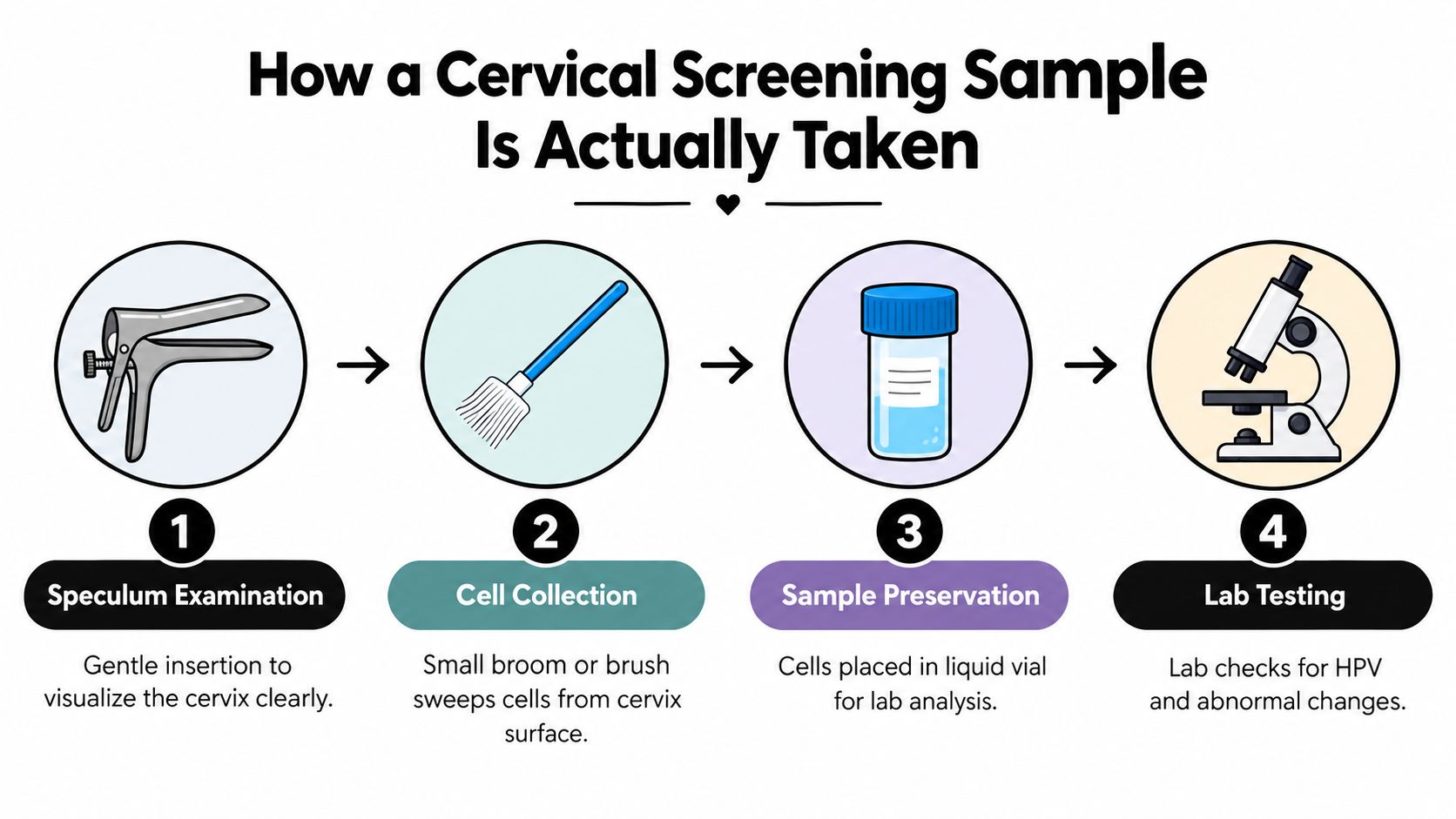
A clinician-collected test usually begins with a speculum examination. The clinician gently places the speculum in the vagina so they can see the cervix. They then use a small soft broom or brush to collect cells from the surface of the cervix, especially the transformation zone, where cervical cell changes can develop.
The sample goes into a laboratory container. Depending on the screening pathway, the laboratory checks for human papillomavirus, or HPV, and may also examine cervical cells for abnormal changes. Liquid-based cytology places collected cells into a liquid vial, helping the laboratory prepare the material for analysis rather than examining a traditional smear directly on a slide.
The older Pap smear and the modern HPV test
A traditional Pap smear looks at the shape and appearance of cells under a microscope. Blood, mucus, and inflammatory material can make those cells harder to interpret. That's why menstrual bleeding was a more obvious concern for the older method.
Australia moved to HPV-based cervical screening in December 2017. The newer test looks for HPV infection, rather than starting with a visual assessment of every cell. It's generally more tolerant of small amounts of blood, but heavy flow can still interfere with specimen collection or processing. Liquid-based cytology sits between the methods because cells are collected into a vial and can be used for laboratory assessment.
The distinction matters because “can the test be done?” and “is this the clearest possible day for the sample?” aren't identical questions. A light period may not prevent testing, while a heavy flow may lead the clinician to recommend another day.
This video offers a visual explanation of what happens during cervical screening:
Light Spotting vs Heavy Flow vs Abnormal Bleeding
A small amount of blood at the end of a period isn't the same situation as bright, heavy bleeding with clots. Neither is the same as bleeding after sex or between periods. Treating all three as “my period might ruin my Pap smear” can lead either to unnecessary cancellation or to a missed opportunity to discuss a symptom.
Light spotting or the tail end of a period is usually the least concerning for sample adequacy. The clinician may be able to proceed, particularly if the bleeding is minimal. You may still prefer to reschedule for comfort, but postponement isn't automatically required.
Heavy flow, especially on a heavier early-period day, is different. Blood may make the cervix harder to see and can affect the collected specimen. The clinician may suggest rebooking to reduce the chance of an unsatisfactory result that needs repeating.
Unusual bleeding deserves a separate clinical conversation. Unexplained bleeding between periods, persistent bleeding after sex, bleeding after menopause, or bleeding that's unusually heavy or prolonged shouldn't be treated as a routine scheduling inconvenience. Australian clinical guidance recommends clinician-collected co-testing and specialist investigation for unexplained intermenstrual bleeding or persistent post-coital bleeding, regardless of the HPV result (National Cervical Screening Program provider summary guide).
| Scenario | What it looks like | Can the test proceed? | Sample adequacy risk | Recommended action |
|---|---|---|---|---|
| Light spotting | Small amount of blood or the final trace of a period | Often, depending on the clinician | Lower risk than heavy flow | Keep the appointment or call first |
| Heavy menstrual flow | Noticeable bright bleeding, possible clots, heavier early-period flow | The clinic may recommend waiting | Greater chance of an unsatisfactory sample | Ask about rescheduling |
| Abnormal bleeding | Bleeding after sex, between periods, after menopause, or unusually heavy bleeding | The visit may still proceed, but symptoms take priority | The bigger issue is investigation, not timing | Tell the clinician promptly |
If you're tracking cycle timing, an article about spotting before ovulation may help you distinguish expected cycle changes from bleeding that doesn't fit your usual pattern. For people monitoring basal temperature as part of cycle awareness, the Venus Smart Basal Thermometer for Ovulation, Bluetooth BBT Tracker with App records morning BBT readings and syncs them to its app, but it doesn't replace assessment of unusual bleeding.
Which description sounds most like you? Light spotting usually means call or proceed. Heavy flow usually means ask about timing. Unusual bleeding means mention it as a symptom, not just an appointment problem.
Scheduling and Preparation Tips That Actually Help
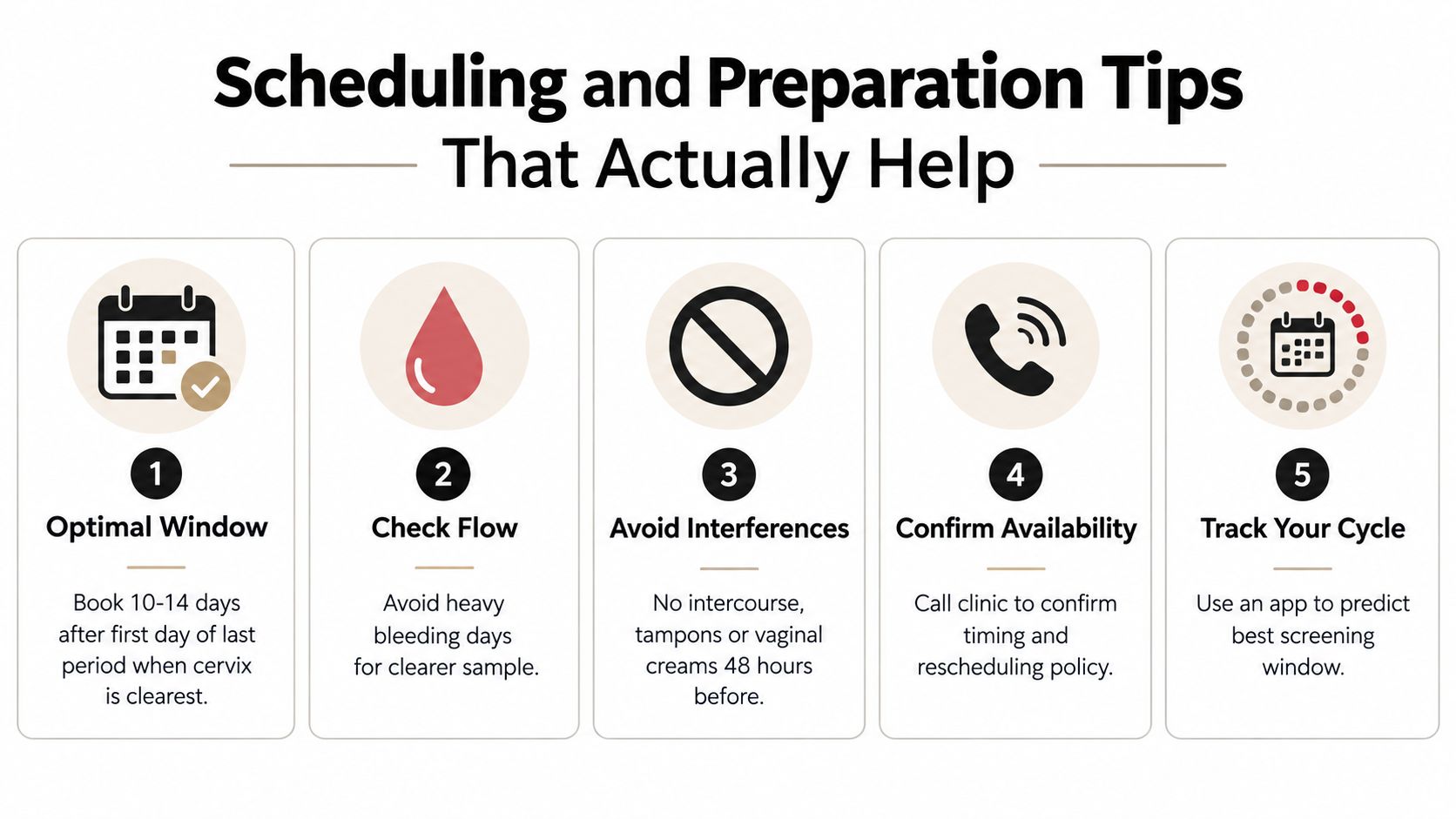
Cycle timing is a useful optimisation, not a rigid rule. If you can choose freely, booking around 10 to 14 days after the first day of your last period may offer a non-bleeding window with less discharge, but the perfect date isn't worth abandoning screening for months when clinic appointments are limited.
For irregular cycles, choose a time when bleeding is light and tell the practice that your cycle is unpredictable. If your period arrives early, call on the same morning and ask what the clinician recommends. A short conversation is safer than cancelling or failing to attend.
A simple pre-test checklist
- Avoid vaginal interference: For the 48 hours before the appointment, avoid intercourse, tampons, vaginal creams, pessaries, and douching unless your clinician has given different instructions. These products can affect what the clinician collects or how the sample is assessed.
- Check your flow: Light spotting doesn't automatically require cancellation. Heavy bleeding is a reason to contact the clinic and ask whether rebooking would produce a more adequate sample.
- Protect the appointment: If a practice manages many bookings, clear patient scheduling software can help clinics organise appointments and changes, but you still need to contact your own practice about its policy.
- Record your cycle: A period-tracking resource such as this guide to the best period tracker app can help you recognise your usual pattern, although no app can diagnose abnormal bleeding.
If you're also trying to understand ovulation timing, the Venus Ovulation Predictor Test Kit uses urine test strips designed to detect the LH surge and provides results in under 10 minutes according to the product information. That information may support cycle awareness, but it doesn't determine whether cervical screening should be delayed.
Self Collection as an Alternative During Your Period
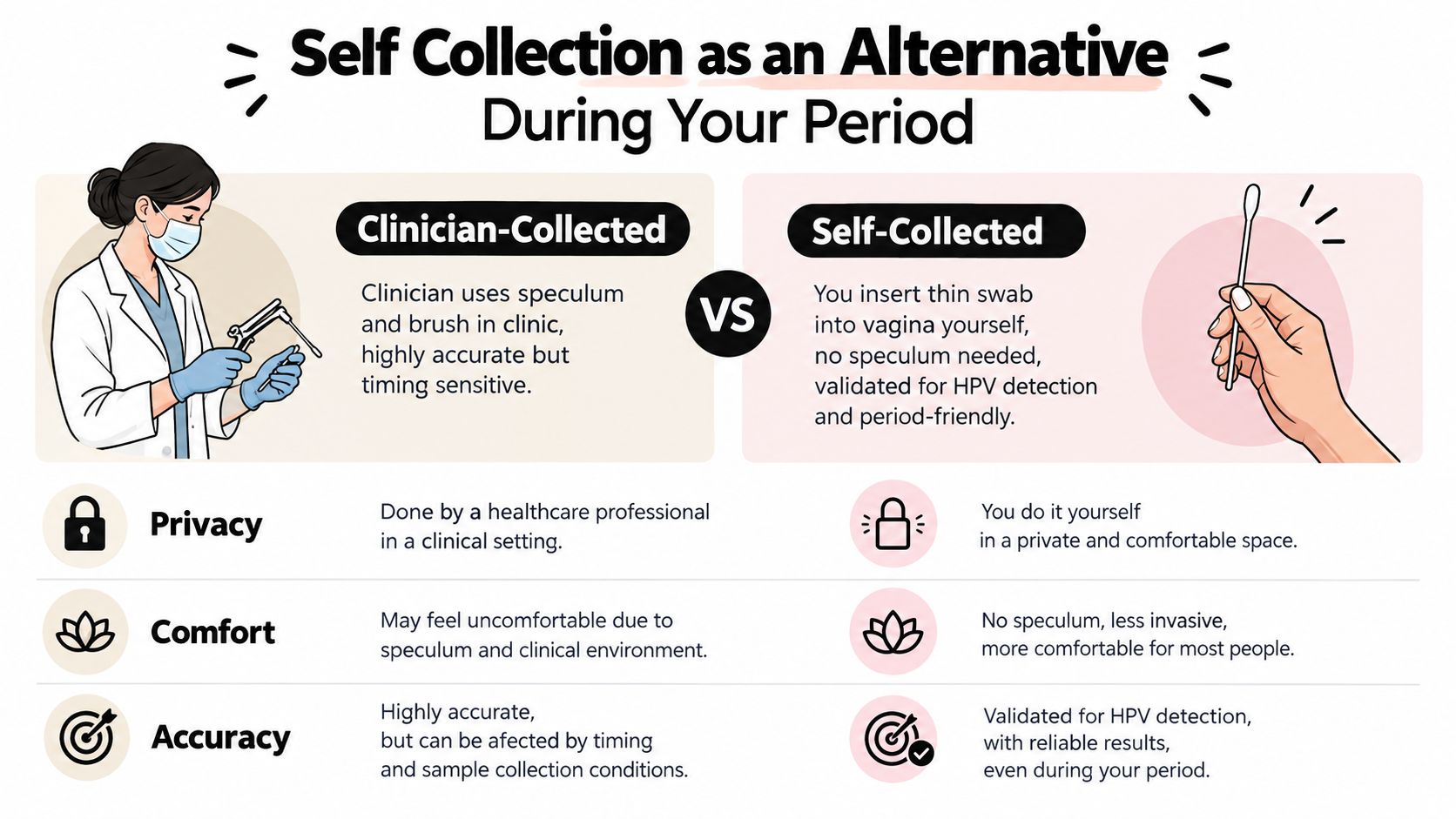
Many people assume menstruation makes every cervical screening option unusable. That's not accurate. In Australia, a self-collected vaginal swab can be collected while menstruating, and blood only rarely inhibits the sample. Guidance may still suggest attending when you aren't bleeding if that's easy, but it also says not to defer the test if you're unlikely to return later (Cancer Council Australia provider FAQs).
Self-collection uses a thin swab that you insert into the vagina, rotate as instructed, and place into a tube. There's no speculum and no need for the clinician to visualise the cervix for the collection itself. The sample is used for HPV testing, which is why this option can be more flexible around period timing.
Who may find self-collection useful
Self-collection may suit someone who feels anxious about a speculum, has a history of sexual trauma, experiences heavier bleeding, or finds clinic attendance difficult. It can also remove the pressure of finding a narrow appointment window that matches both a menstrual cycle and clinic availability.
There is an important boundary. Self-collection checks for HPV, not abnormal cervical cells directly. If HPV is detected, the person may need a clinician-collected sample for cytology and further assessment. That isn't a failure of self-collection. It's the next stage of a screening pathway.
People with symptoms still need medical assessment. Bleeding between periods, persistent bleeding after sex, or bleeding after menopause shouldn't be handled by choosing self-collection and waiting for a result. The symptom itself needs to be discussed with a clinician.
For more information about home-based reproductive health testing, see this guide to an at-home fertility test in Australia. Fertility tests and cervical screening answer different questions, so one cannot substitute for the other.
What to Tell Your Clinician Before the Test
You don't need a perfect medical vocabulary. A short, factual description gives the booking nurse and clinician the information they need.
At booking, share three details:
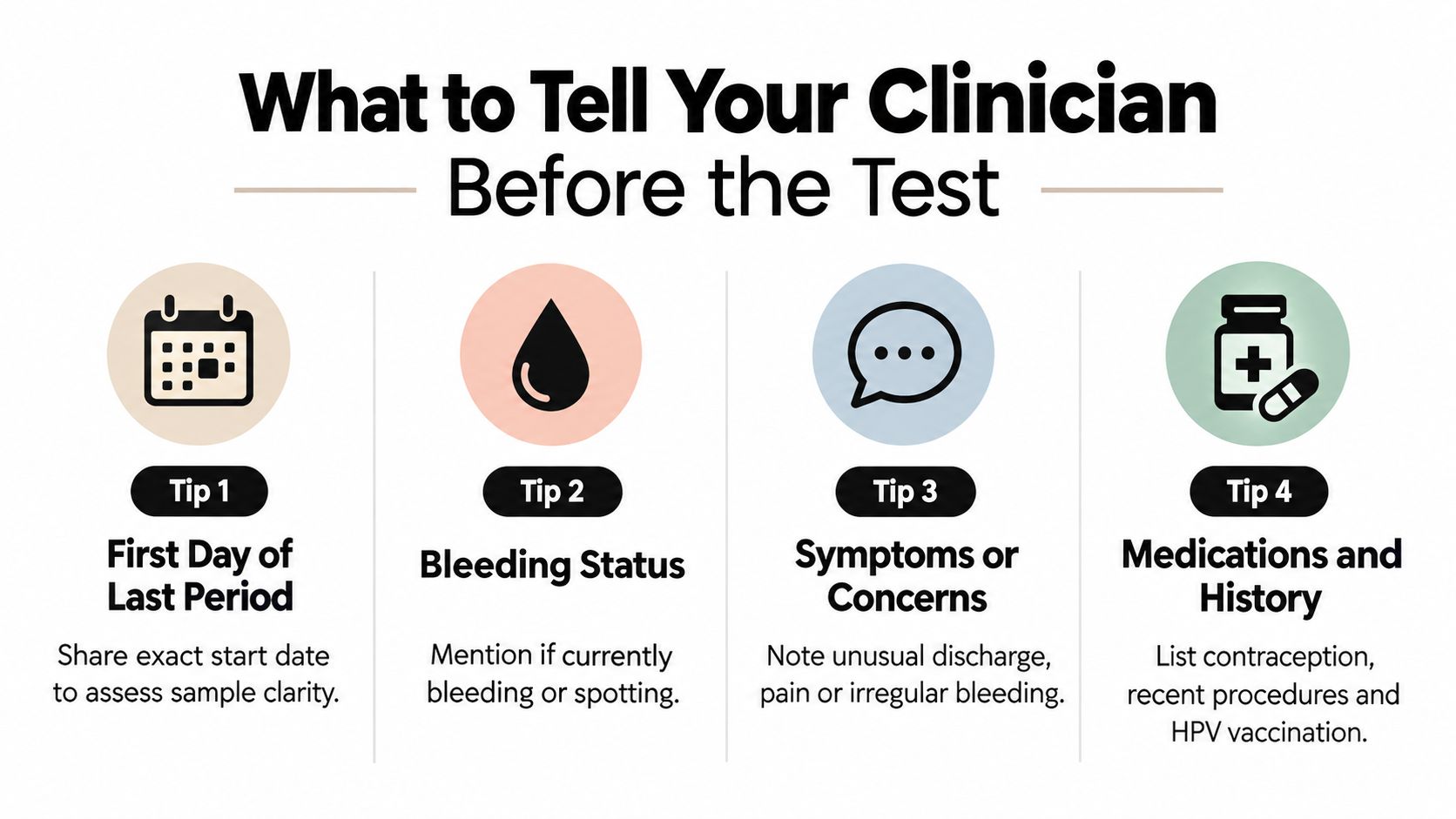
- The first day of your last period. This helps the practice understand where you are in your cycle.
- Your expected flow on appointment day. Say whether you expect spotting, light bleeding, or a heavy day.
- Any bleeding that doesn't fit your usual pattern. Mention bleeding between periods, after sex, after menopause, or a change in your normal flow.
The clinician can then decide whether the appointment is suitable for routine screening or whether symptoms need a different assessment.
A script you can use in the room
Try saying: “I'm bleeding today, and it's [light, moderate, or heavy]. Is the sample likely to be reliable if we proceed, or would you recommend rescheduling?”
Also mention:
- Pain or unusual symptoms: Pelvic pain, unusual discharge, or bleeding after sex may change the priority from routine screening to investigation.
- Recent vaginal products: Tell the clinician about recent creams, pessaries, douching, or tampons, because they may affect collection conditions.
- The reason for the visit: Explain whether this is a routine screen, a follow-up after a previous result, or an appointment prompted by a symptom.
- Relevant history: Mention recent cervical procedures, contraception changes, or HPV vaccination if they're relevant to your care.
Ask directly: “If we proceed today, will the result be reliable, or would you recommend rescheduling?”
That question invites clinical judgement instead of making you carry the entire decision. Your clinician can see the amount of bleeding, assess the cervix, and explain the likely trade-off between completing the test today and obtaining a clearer sample later.
The Decision Rule to Walk Away With
If your period starts before screening day, separate three questions: will the examination be comfortable, can the clinician collect an adequate sample, and does the bleeding itself need assessment? Those questions can lead to different next steps.
Comfort is personal. You may manage light bleeding during the examination, while someone else may prefer a day without bleeding. A technically possible test does not have to be a comfortable choice for you.
Sample adequacy concerns whether blood could interfere with collecting or interpreting the specimen. HPV-based screening generally tolerates small amounts of blood better than older cell-focused Pap testing, but heavy flow can still make collection harder or lead to an unsatisfactory sample.
Symptom checking is separate from routine scheduling. Bleeding after sex, between periods, after menopause, or unusually heavy or prolonged bleeding should be described to the clinician. The appointment may need to address the symptom, not just be moved to another date.
Use this decision rule
- Keep the appointment when you have light spotting or minimal flow. Call the clinic first if you are unsure about its policy.
- Ask about rescheduling when bleeding is heavy. Waiting for a non-bleeding day may improve comfort, make collection easier, and reduce the chance of needing another visit.
- Give the bleeding clinical attention when it is new, unexplained, occurs after sex, between periods, or after menopause, or is unusually heavy or prolonged. Mention it even if screening is also due.
- Ask whether self-collection is suitable for a future eligible screen if speculum examinations, heavy periods, or clinic arrangements repeatedly make screening difficult. Menstruation does not automatically rule out self-collected HPV testing, but the service can explain the appropriate timing and process.
A heavy period does not mean the visit was pointless. The clinician may examine you, discuss the bleeding, and decide whether to collect the sample or return on another day. If the sample is inadequate, repeating the test is inconvenient, but it is different from leaving unusual bleeding unexplained or failing to rebook.
A body-composition device cannot decide whether cervical screening is appropriate. The Venus AI Smart Scale, Body Composition & Body Fat Scale is designed for body-composition tracking and app-based wellness reports, not for diagnosing menstrual bleeding or judging sample quality.
Venus Health Co. offers app-connected tools for cycle awareness, including basal body temperature tracking and ovulation testing, alongside body-composition monitoring. Visit Venus Health Co. to explore options for recording patterns before reproductive health appointments.
The practical rule is simple: light spotting may be compatible with keeping the appointment, heavy flow warrants a call, and unusual bleeding deserves a clear clinical explanation rather than being labelled “just my period”.