

Can You Ovulate Without a Period? What Really Happens
Dr. Adeyinka AdegbosinThe egg comes first and the period comes second, roughly 10 to 16 days later. That one fact explains most of the confusion around quiet cycles: a bleed is the last event of a cycle, so when it never arrives, the ovary may already have released an egg weeks earlier with no outward sign at all.
Most of us learn the cycle backwards. We treat the period as the starting gun and count forward from it, so when the bleed doesn't arrive, the whole system looks switched off. Calendar tracking makes the same assumption, predicting fertile days from the date of the last bleed. No bleed means no starting date, and a prediction with no starting date is guesswork.
This is why the absence of a period and the absence of ovulation are two different questions that deserve separate answers. If you're trying to conceive, a missing period takes away the date you'd normally count from, which makes timing harder even though the chance of pregnancy stays open. If you're trying to avoid pregnancy, that same silence offers no protection, because ovulation can restart at any point without warning. The sections below separate the two situations, show what confirms whether an egg is being released, and set out when home tracking should give way to a doctor's appointment.
Yes, You Can Ovulate Without a Period
| Situation | Can ovulation happen? | Can pregnancy happen before a period? |
|---|---|---|
| Regular cycle, period a few days late | Usually yes, ovulation has already happened | Yes, if intercourse fell in the fertile window |
| Periods stopped for 3 months or more | Possible, but often irregular or absent | Yes, take a pregnancy test first |
| PCOS or irregular cycles | Can occur at unpredictable times | Yes, calendar predictions are unreliable |
| Breastfeeding with lactational amenorrhoea conditions met | Usually suppressed, but not guaranteed | Protection holds only while all conditions apply |
| Breastfeeding with fewer feeds or solids started | Can resume before the first period | Yes, possible before bleeding returns |
| Perimenopause | Irregular or absent | Yes, contraception is still needed |
A missing bleed is a blank calendar, not aclosed door. People asking can you ovulate without a period may mean a period that is five days late, periods that stopped in March, cycles that swing between 24 and 60 days, or no bleed since birth. From the outside, these can look like one situation. They carry different timing and different pregnancy risk, so start with the row that fits, then use the detail below to understand what the blank calendar can and cannot show.
Reading your own row
A late period in an otherwise regular cycle is the least confusing row. Ovulation probably happened on time or a little later, and the bleed is following it. The body works like a two-step sequence: the egg comes first, then the uterine lining leaves if pregnancy has not happened. When the second step is late, the first may already be over.
Long gaps and PCOS sit in a middle zone. The ovaries may still release an egg, just not on a schedule you can count on. Calendar tracking becomes weak in this situation. A usual 28-day pattern gives you a starting point, but irregular cycles make the same date estimates far less dependable. If cycle length is unknown, testing should start 11 days after the last period began, based on an average 28-day cycle. Cycle length itself is counted from the first day of a period to the day before the next period starts.
Breastfeeding is the row people misread most often. Protection depends on conditions holding all at once, not on the absence of blood alone. Once feeds become less frequent or solids start, ovulation can return before bleeding does. Perimenopause can also involve irregular or absent ovulation, while contraception is still needed if pregnancy is not the goal.
Practical rule: if there is any chance of pregnancy, take a test before you trust any cycle pattern. A missing period can hide a pregnancy, and no chart, app or temperature curve can rule one out.
This table is a guide to likelihood, not a diagnosis. The same row can cover very different hormone patterns, which is why the confirmation steps later matter more than the label you land in.
Causes of Absent or Irregular Ovulation
Absent periods and absent ovulation often travel together, but they come from different disruptions to the same hormone pathway. The signal begins in the brain, travels to the ovaries, and any interruption along that route can delay or cancel egg release. That is why calendar tracking becomes shaky when bleeding is missing: a bleed is a later outcome, not the trigger itself. Common interruptions and accompanying signs include the following.
| Cause | Effect on ovulation | Common signs |
|---|---|---|
| Polycystic ovary syndrome | Irregular or unpredictable ovulation | Irregular cycles, excess hair growth |
| Excessive exercise | Can suppress ovulation | Light or missed periods |
| Eating disorders or nutritional restriction | Can disrupt ovulation | Absent periods, weight loss |
| Significant weight change | Can alter hormone signalling | Irregular cycles |
| Stress | Can delay or prevent ovulation | Late or missed periods |
| Thyroid or prolactin disorders | Can disrupt the hormone pathway | Cycle changes, nipple discharge |
| Breastfeeding | Prolactin can suppress ovulation, not reliably | Absent periods after birth |
| Perimenopause | Ovulation becomes irregular | Hot flushes, irregular cycles |
Why one row rarely explains everything
Causes stack. A runner in a heavy training block who is also under fuelled and sleeping badly has three inputs pushing the same signal down, and removing only one may not bring cycles back. Someone with PCOS can have cycles shift from 30 days to 70 days without changing a single habit, because the underlying hormone pattern itself is variable. If that is your pattern, our guide to PCOS and irregular periods, why it happens and what you can do walks through the mechanism in more detail.
A recreational runner's periods went from clockwork to nothing over three months after she built up to marathon mileage while eating the same amount she ate at half the volume. Nothing is "broken" in the ovaries. The body has downgraded reproduction because available energy is tight. Restore fuel and reduce load and cycles often return, though not on a fixed timetable.
Nutrition sits underneath several of these rows. Practical material on women's nutrition and hormone support from Vitamin Planet is useful alongside any training or weight changes you are making. Food is a hormone input, not just a calorie count.
Signs that need a doctor, not more tracking
Missed periods plus excess hair growth, hot flushes, nipple discharge or a major weight change point towards a specific cause that testing can identify. Those symptoms turn a vague "my cycles are off" into a question a GP can answer.
Why No Period Does Not Mean No Ovulation
A period works like a receipt. The event happens first, and the confirmation arrives later. A missing receipt doesn't prove nothing was bought, it just means you haven't seen the confirmation yet. With cycles, that gap matters because bleeding is a later sign, while ovulation is the hormone event you are trying to identify.
Here's the sequence the diagram below traces, one stage at a time.
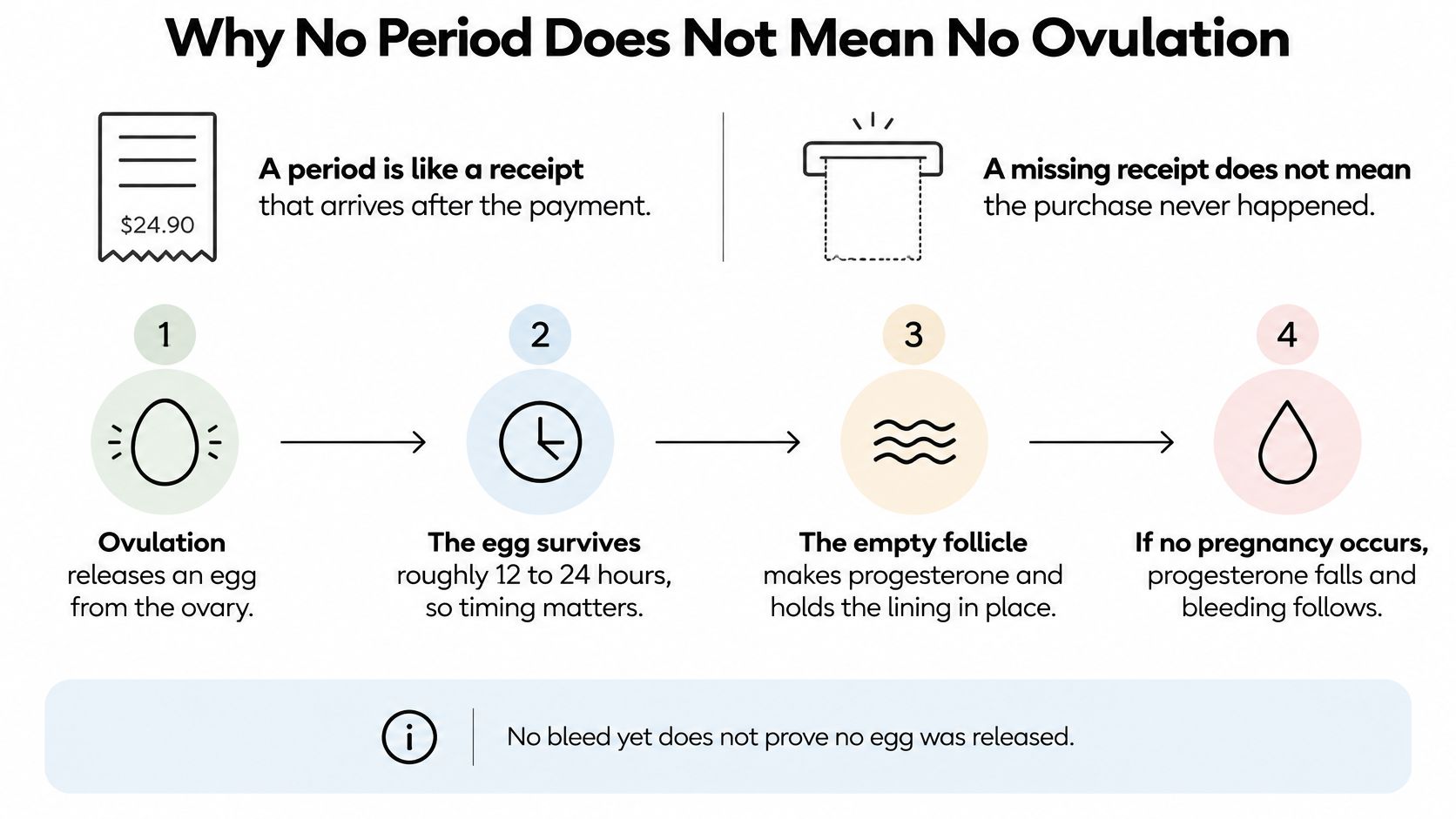
The four stages in order
Ovulation. An egg is released from the ovary. The Victorian Government's Better Health Channel explanation of ovulation places this generally about two weeks before the next menstrual period, and notes that in amenorrhoea an egg may be released first, with a period following approximately 10 to 16 days later if pregnancy doesn't occur.
The egg's short life. Once released, the egg survives only about 12 to 24 hours, according to healthdirect's guidance on fertility awareness and natural family planning. That's a narrow target, which is why the days before ovulation matter more than the day itself.
The lining holds. The empty follicle produces progesterone, which keeps the uterine lining in place. No bleed happens during this phase, and that silence is normal, not a malfunction. Think of the lining as being held steady while the hormone signal does its work.
The bleed, or not. If the egg isn't fertilised, progesterone falls and the lining sheds. If it is fertilised, pregnancy prevents the expected bleed, so the receipt never arrives at all.
Where the calendar breaks
Conception is most likely during the 5 days before ovulation and on the day of ovulation, as healthdirect states. In a predictable cycle, counting backwards from an expected period can sketch that window. Remove the expected period and the anchor disappears. That is why calendar tracking becomes shaky after months without bleeding: the method depends on a future date that may not appear.
No bleed yet does not prove no egg was released.
Keep the two ideas separate in your head: no bleeding is an observation, no ovulation is a hormone finding. Australian Prescriber's fertility testing article identifies serum progesterone as the most appropriate laboratory test for detecting ovulation, so a history of amenorrhoea or irregular cycles needs assessment rather than an assumption that the ovaries are idle.
How to Confirm Whether Ovulation Is Happening
Start with a test, not a date. Bleeding patterns alone can't establish whether an egg was released, so confirmation has to come from hormone evidence rather than from counting days. Think of the steps below as narrowing down a suspect list: each one rules something out until what remains is a clear answer.
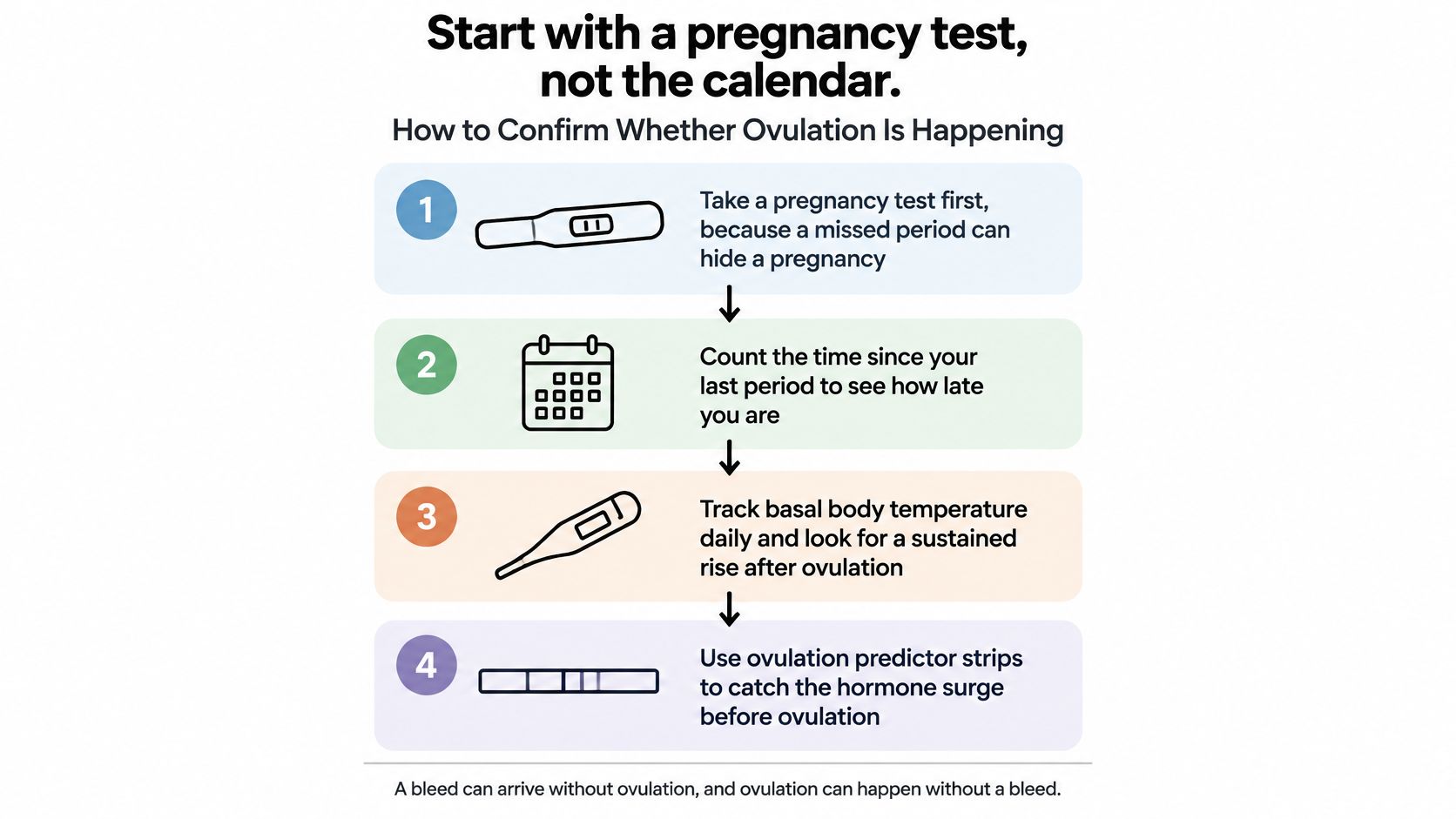
- Take a pregnancy test first. As the opening section explains, this is the possibility every other interpretation depends on, so rule it out before anything else. The common slip is assuming a negative test from three weeks ago still stands.
- Write down the time since your last period. Note the first day of your last bleed and any pattern you remember. Don't reconstruct dates from memory of "around Easter", check your messages or photos if you need a real date. Your GP will ask, and a precise answer changes which tests they order.
- Ask your GP for a serum progesterone test. This is a blood test, and it only means something when the sample is timed against your cycle. The slip here is booking it on an arbitrary day, which produces a number no one can interpret.
- Time the test and read the result together. Australian Prescriber's fertility testing article identifies serum progesterone as the most appropriate laboratory test for detecting ovulation, generally measured about 7 days before the expected period, with a concentration above 20 to 25 nmol/L confirming that ovulation occurred in that cycle. A lower result may mean anovulation or mistimed testing, and one low value doesn't condemn every future cycle.
- If progesterone is low or unclear, ask about further hormones. FSH, LH, oestradiol, thyroid-stimulating hormone and prolactin are considered when clinically indicated. Bring your symptom list so the choice of tests is targeted rather than scattershot.
- Treat home tracking as supporting evidence. A sustained basal temperature shift or a positive ovulation test gives timing clues, not proof of egg release. These clues work like witnesses rather than verdicts: they support the hormone evidence, they don't replace it.
Making the temperature data usable
Basal temperature only means something when it's taken the same way each morning, before you sit up, talk or drink anything, and read as a trend across weeks rather than a single number. One restless night or one late alarm can move a reading, so the pattern matters more than any individual point on the chart. The Venus Smart Basal Thermometer for Ovulation, a Bluetooth BBT tracker with app syncs each morning reading to your phone automatically, so the chart builds without manual entry. If your cycles run long or unpredictable, our walkthrough on how to track ovulation with irregular periods covers how to read a chart that doesn't look textbook.
What to bring to the appointment
Turn up with the dates of your last few periods (or the date bleeding stopped), every medicine and supplement you take, and the symptoms you've noticed, including hair growth, hot flushes, nipple discharge or weight change. A page of notes usually shortens the diagnostic path more than any app screenshot, because it lets your GP see the whole pattern in one glance rather than extracting it question by question.
Why Ovulation Tests Miss Cycles Without Periods
The common assumption is that a positive ovulation test proves you ovulated. It doesn't. A home strip detects the luteinising hormone (LH) surge, the signal that usually precedes egg release. Detecting the signal and confirming the event are two different things, and the gap between them widens when hormone patterns are disrupted or periods have been absent for a long time.
In a cycle with no bleeding to anchor it, that gap becomes a trap. You test for three weeks, see faint lines and occasional darker ones, and read the noise as a cycle finally getting going. Meanwhile the underlying question, why did bleeding stop, goes unasked. Our article on LH surge but no ovulation explains what repeated surges without a temperature rise can look like.
Reading a strip honestly
The Venus Ovulation Predictor Test Kit is a home LH strip format: a positive result is when the test line is as dark as or darker than the control line, and ovulation is likely in the next 24 to 36 hours. It's for home use only, it isn't a contraceptive, and it isn't a test of fertility. Used inside a cycle you understand, that's useful timing information. Used as a substitute for investigating absent periods, it's the wrong tool.
Two practical cautions before you trust a result:
- Check your medicine list: some fertility medications may affect the test result, while most common medicines, supplements, antibiotics and contraceptives won't interfere.
- Don't borrow a start day from an old cycle: charts built on past cycle lengths can't predict fertile days when cycles are absent, so a "day 11" instruction has nothing to attach to.
Tracking adds information. It can't replace a pregnancy test or a medical review when periods are missing.
If you never get a positive result across weeks of testing, that's a finding to take to a GP, not a reason to buy more strips.
Breastfeeding and Postpartum Pregnancy Risk
Breastfeeding is the clearest everyday example of bleeding being absent while ovulation returns, and it's where the timing catches people out most often.
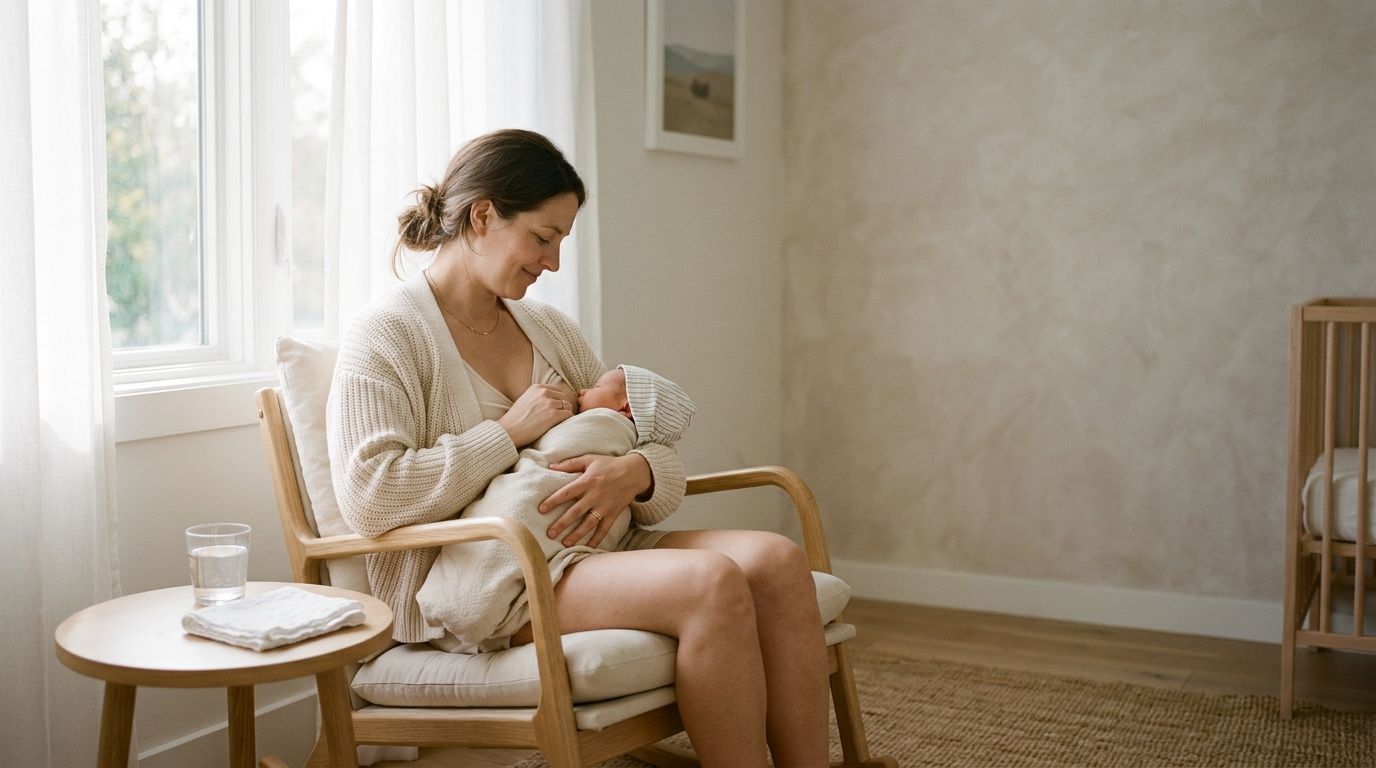
Frequent feeding raises prolactin, which can suppress the hormonal chain that drives follicle development and ovulation. Healthdirect's guidance on the lactational amenorrhoea method puts LAM at up to 98% effectiveness against pregnancy during the first 6 months after birth, only when used correctly, with exclusive or nearly exclusive breastfeeding, no return of menstruation, and an infant younger than 6 months. All three conditions, all the time. Suppression holds only while those conditions do.
The changes that quietly weaken protection
What matters is the feeding pattern in front of you, whatever the calendar says. Healthdirect's guidance on periods while breastfeeding notes that fertility and ovulation may return before menstruation resumes, and that reduced or less frequent feeds, formula supplementation, overnight weaning or starting solids weaken LAM's conditions.
- Night feeds drop out: the longest gap between feeds gets longer, and prolactin falls with it.
- Formula or expressed bottles replace breastfeeds: "nearly exclusive" stops being true even if the baby is still nursing often.
- Solids begin: feeding frequency slides gradually, usually without anyone deciding to wean.
At four months, the baby finally sleeps through, and the 2am feed disappears. Feeding still feels frequent, there's still no period, and the six-month mark hasn't arrived. But one of the three conditions has slipped, ovulation can resume before the first postpartum bleed, and conception is possible with no warning bleed at all. For a broader picture of the hormone shifts and bleeding patterns after birth, Momotaro Apotheca's guide to what to expect postpartum hormonally is a useful companion read.
The video below covers postpartum cycle changes in more depth.
If you've had unprotected sex while your periods are absent, take a pregnancy test according to the test instructions, and seek medical advice if it's negative but bleeding stays absent or symptoms appear. The same logic applies to irregular cycles and perimenopause: ovulation may be irregular or absent and pregnancy can still occur, so contraception is still needed when pregnancy isn't wanted.
When to See a Doctor and Your Next Step
The rule that matters most is simple: unexplained absence of periods for 3 months or more warrants medical assessment, with pregnancy testing considered first, as set out in healthdirect's overview of menstruation. Three months is the point where waiting stops being informative, because the most common causes (thyroid changes, high prolactin, polycystic ovary syndrome, under-fuelling) are all easier to address the earlier they're found.
The timing cuts both ways, as the earlier sections showed. You shouldn't assume infertility just because bleeding has stopped, and you shouldn't assume safety either. What you need is a clear order of action.
Timing by situation
| Situation | When to act | First step |
|---|---|---|
| Trying to conceive, under 35 | After 12 months of trying | See a doctor |
| Trying to conceive, over 35 | After 6 months of trying | See a doctor |
| Trying to conceive, over 40 | Straight away | See a doctor |
| No period for 3 months or more | Now | Pregnancy test, then a medical assessment |
| Possible pregnancy with no bleeding | Now | Pregnancy test according to instructions |
| Absent periods after breastfeeding | If bleeding stays absent or symptoms appear | Seek medical advice |
The decision order
- Confirm pregnancy status. Test first, because a missed period can hide a pregnancy and everything downstream changes if it's positive. Follow the instructions on timing rather than testing at random.
- Book the GP visit if a row above fits you. Three months without bleeding, or a trying-to-conceive timeline that's elapsed, is enough. You don't need to arrive with a theory about the cause.
- Gather your history before you go. Dates of the last few periods, all medicines and supplements, and symptoms you've noticed. Include training load, weight change and stress, because those are clinical information, not confessions.
- Only then use cycle tools, as supporting records. Ovulation strips and a basal temperature chart are useful context to bring, not evidence to argue with. The Venus app shows both LH test results and morning temperature on one chart, and your BBT chart, cycle and sleep trends are available with no fertility subscription required, which makes the record easy to hand over.
What happens at the appointment
Your clinician checks pregnancy status, reviews your cycle history and medicines, then decides whether progesterone, prolactin or thyroid testing is needed and whether ovarian function should be assessed. Urine LH tests can be difficult to interpret when hormone patterns are persistently abnormal, which is one reason a doctor's assessment outranks a stack of used strips. Expect a direct conversation about weight, exercise and stress too, since those inputs are often the most modifiable part of the picture.
Most causes of absent periods can be identified, and many are treatable, though no one can promise a particular outcome or timeline. In Australia, a GP or a reproductive-health clinician is the right first point of contact, and you can ask for a longer appointment if you have several months of history to cover.
A missing period is a starting point for action. It tells you nothing final about your fertility.
One clarification about devices, including ours: Venus Duo isn't a contraceptive and shouldn't be used to prevent pregnancy. If pregnancy isn't what you want, get contraception advice regardless of what any tracker shows, because a temperature curve can describe a cycle but it can't protect you.
At Venus Health Co. we build tools that record what your body is doing, so a gap in bleeding becomes data you can act on rather than a guessing game: our Bluetooth basal thermometer syncs each morning reading automatically, our LH strips log into the same app, and your temperature, LH results and symptoms sit on one chart you can take straight to your GP. None of it replaces a pregnancy test or a medical assessment, and none of it works as contraception, but it makes the conversation with your doctor far more specific. Visit Venus Health Co. to see the thermometer, test kits and app, and start building a cycle record that reflects your real hormones rather than your last period date.