

Best Fertility App Australia 2026: How to Choose One
Dr. Adeyinka AdegbosinChoosing the best fertility app Australia can't start with pretty charts. The key question is whether the app helps you understand your cycle, protects your reproductive data, and matches the way your body behaves.
That matters in Australia because fertility timing is increasingly tied to later parenthood and narrower planning windows, not just convenience. A useful app has to earn trust on three axes, prediction reliability, privacy governance, and hardware integration.
| App approach | What it measures | Best fit | Main trade-off |
|---|---|---|---|
| Calendar estimator | Period dates and averages | Simple cycle awareness | Weak when cycles shift |
| Symptom and LH tracker | Symptoms, LH tests, cycle history | Active trying to conceive | Needs consistent logging |
| BBT-connected system | Basal body temperature, LH, symptoms | More detailed fertility tracking | Requires daily discipline and often hardware |
Choosing the Right Fertility App in Australia
The Australian market is crowded with apps that sound confident but don't say what they're measuring. That's the first problem to solve, because an app that guesses from dates is very different from one that uses temperature, LH tests, and cycle history.
Start with the question that matters
If you're trying to conceive, you need more than a cycle diary. If you're tracking for awareness, simplicity may matter more than algorithmic depth. If your priority is privacy, then the app's data handling matters as much as its fertile-window display.
Practical rule: choose the app type before you compare logos, because the right tool depends on whether you want prediction, confirmation, or just pattern awareness.
For Australian users, the decision usually comes down to whether you want a lightweight app, a test-strip workflow, or a connected system with a thermometer. The difference isn't cosmetic. It changes how the app interprets irregular cycles, whether it can show conflicting signals clearly, and how much of your cycle data ends up stored on someone else's servers.
A good fertility app should also be honest about its limits. It can help organise observations, but it can't promise conception, and it shouldn't replace medical advice when cycles are irregular or conception is delayed.
The Australian Accuracy Reality for Fertility Apps
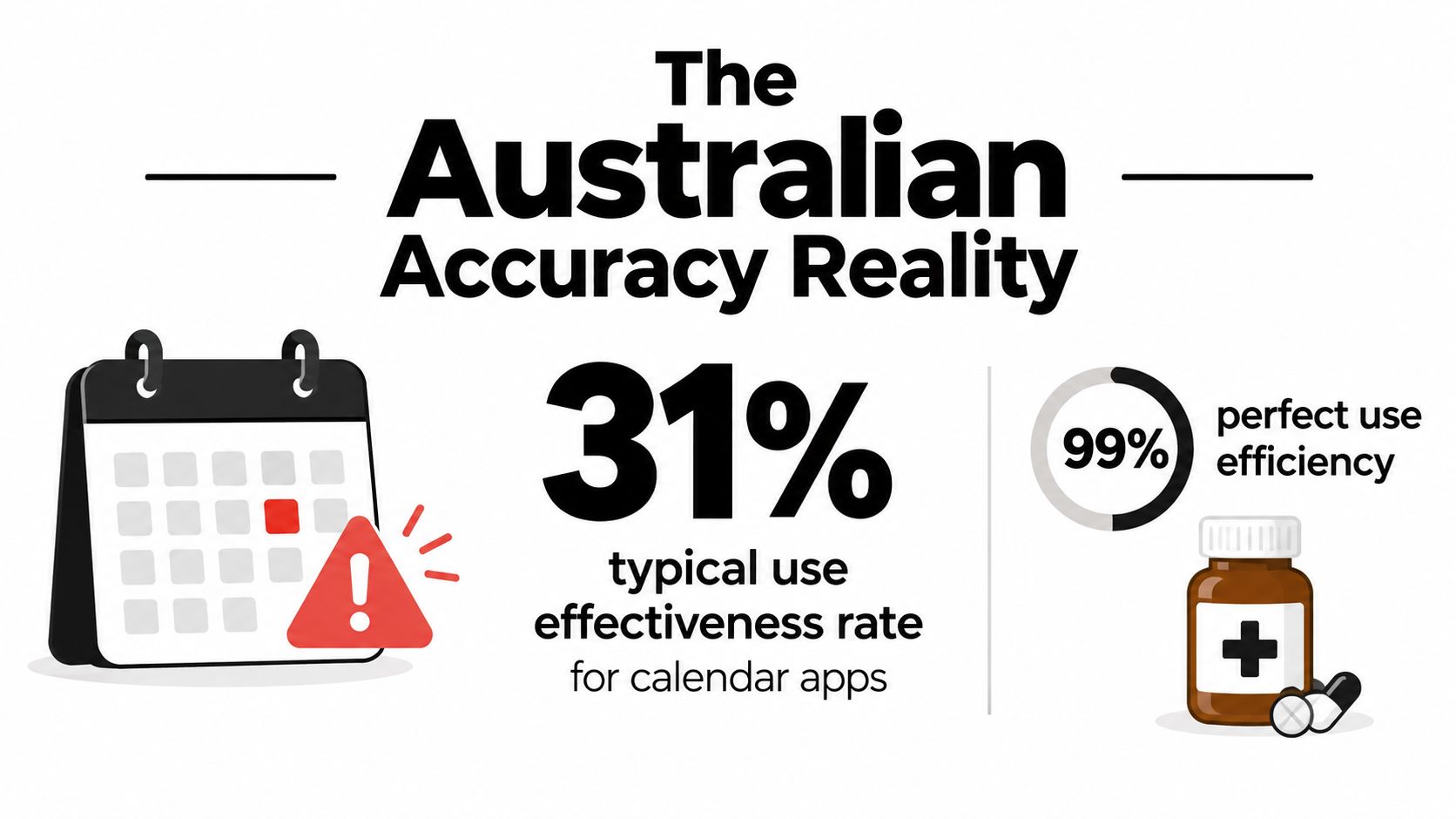
Why do so many fertility apps miss the mark? Because a calendar estimate is not the same as a biological measurement. Australian testing shows the gap clearly. An analysis of the 36 most-downloaded English-language fertility apps on iTunes and Google Play found that only 42.7% predicted the correct ovulation date, while just 17.1% predicted the correct estimated due date, according to the ABC's report on the study (ABC).
What better tracking actually looks like
Apps still have value. The difference is in the inputs and the claims they make. Calendar-only prediction is the weakest option when cycles vary. Longer-term tracking with basal body temperature using a basal body temperature thermometer, LH results, and cervical-fluid observations gives a clearer view of a person's own pattern.
An app should show which signal drove the fertile-window estimate. If it can't explain the input, don't trust the output.
That distinction matters even more with hardware-based products. The Venus Smart Basal Thermometer for Ovulation - Bluetooth BBT Tracker with App is a good example of the category because it centres on automatic BBT sync rather than a date guess. It gives you a more transparent workflow than a calendar app, but it still depends on consistent daily readings and careful interpretation.
The better benchmark is simple. Does the app separate retrospective confirmation from prospective prediction? That is the practical line between a tool that helps you understand your cycle and one that overpromises.
Comparing App Types for Australian Cycle Tracking
Different app types suit different levels of effort. A calendar estimator is easy to live with, but it's also the least biologically grounded. Symptom and LH-based trackers ask for more input, yet they usually give you more useful information about the fertile window.
Fertility App Approaches Compared for Australian Users
| Approach | Core Inputs | Prediction Basis | Best For | Limitations |
|---|---|---|---|---|
| Calendar-based estimator | Period dates, averages | Historical cycle length | Beginners who want simplicity | Poor fit for irregular cycles |
| Symptom and LH tracker | LH strips, symptoms, cycle notes | Hormone surge plus observed signs | People actively trying to conceive | Needs regular testing and interpretation |
| Integrated BBT system | BBT, LH, symptoms, cervical mucus | Temperature pattern plus test data | Users who want deeper cycle insight | Morning routine discipline is non-negotiable |
The cleanest low-tech option is a strip-based workflow like the Venus Ovulation Predictor Test Kit, which detects an LH surge in an at-home format and can be logged alongside any app you already use. That approach works well if you want a simple signal without committing to a full hardware stack.
Where each approach fits
Calendar apps are fine if you just want a rough reminder of where you are in your cycle. They're not enough if you're dealing with postpartum changes, travel, shift work, breastfeeding, or inconsistent sleep. LH-based testing gives a sharper signal, but it still benefits from context, because a positive result tells you something different from a temperature rise.
If you want to understand your pattern over time, BBT-connected systems are stronger. They're more work, but they show how your cycle behaves in everyday life rather than in an idealised app forecast.
For broader cycle-health context, a practical companion read is period nutrition tips for women, especially if food, energy, and symptoms affect how you interpret your chart.
Why Privacy Governance Is the Missing Comparison Criteria
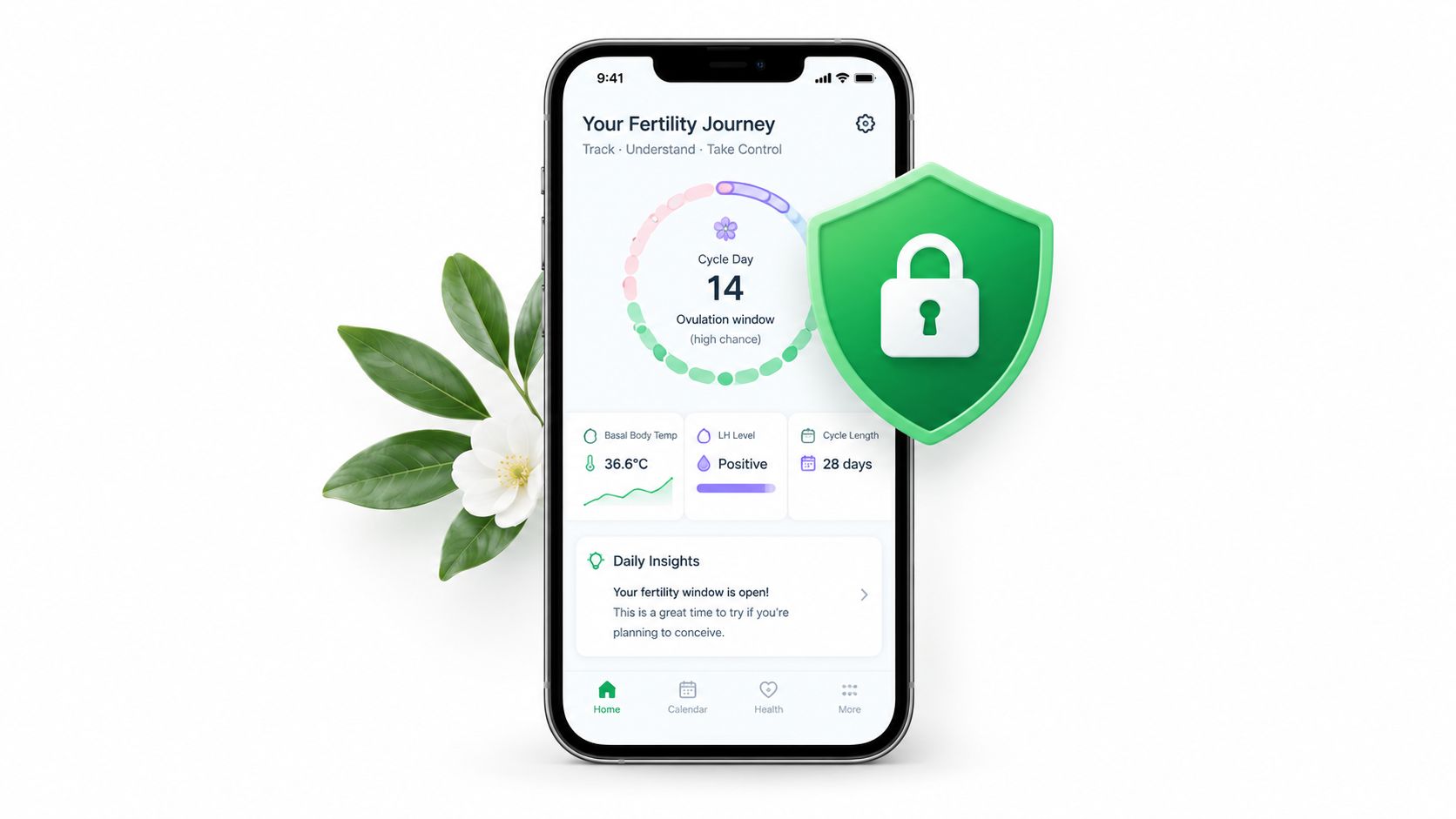
Privacy is not a side issue in fertility apps, it's one of the main reasons people hesitate to use them. UNSW analysis of popular apps found misleading or confusing privacy messages, limited user choice over secondary data uses, inadequate de-identification, and retention periods extending to at least three years after account closure in many cases, and up to seven years for one app (UNSW). The data involved included sexual activity, contraception, pregnancy, miscarriage, and infertility treatment.
What to check before you log a single symptom
A strong Australian fertility app should make its privacy position obvious. Look for explicit, granular consent, data minimisation, deletion workflows that include backups and third-party processors, encryption in transit and at rest, access logging, and clear disclosure of overseas processing. If an app cannot explain who sees the data and how long it stays, that's a problem.
The broader policy picture is just as uncomfortable. A 2025 Australian policy brief reported that more than 70% of FemTech apps shared user data with third parties for research or business purposes without meaningful choice (NZ Apps privacy overview). That's a warning sign for anyone trying to conceive, especially if they're also thinking about miscarriage, fertility treatment, or workplace concerns.
A fertility app should treat reproductive history as sensitive health data, not as raw material for analytics by default.
An app can still be useful if its privacy policy is plain, its deletion process is real, and its data use is narrow. The question isn't whether any data exists. The question is whether you're being asked to trade intimacy for convenience without understanding the exchange.
For a plain-English approach to this issue, Venus Health Co.’s privacy overview is worth reading at https://www.venushealth.co/blogs/fertility-wellness-journey/data-security-and-privacy.
Matching Fertility Apps to Australian User Needs
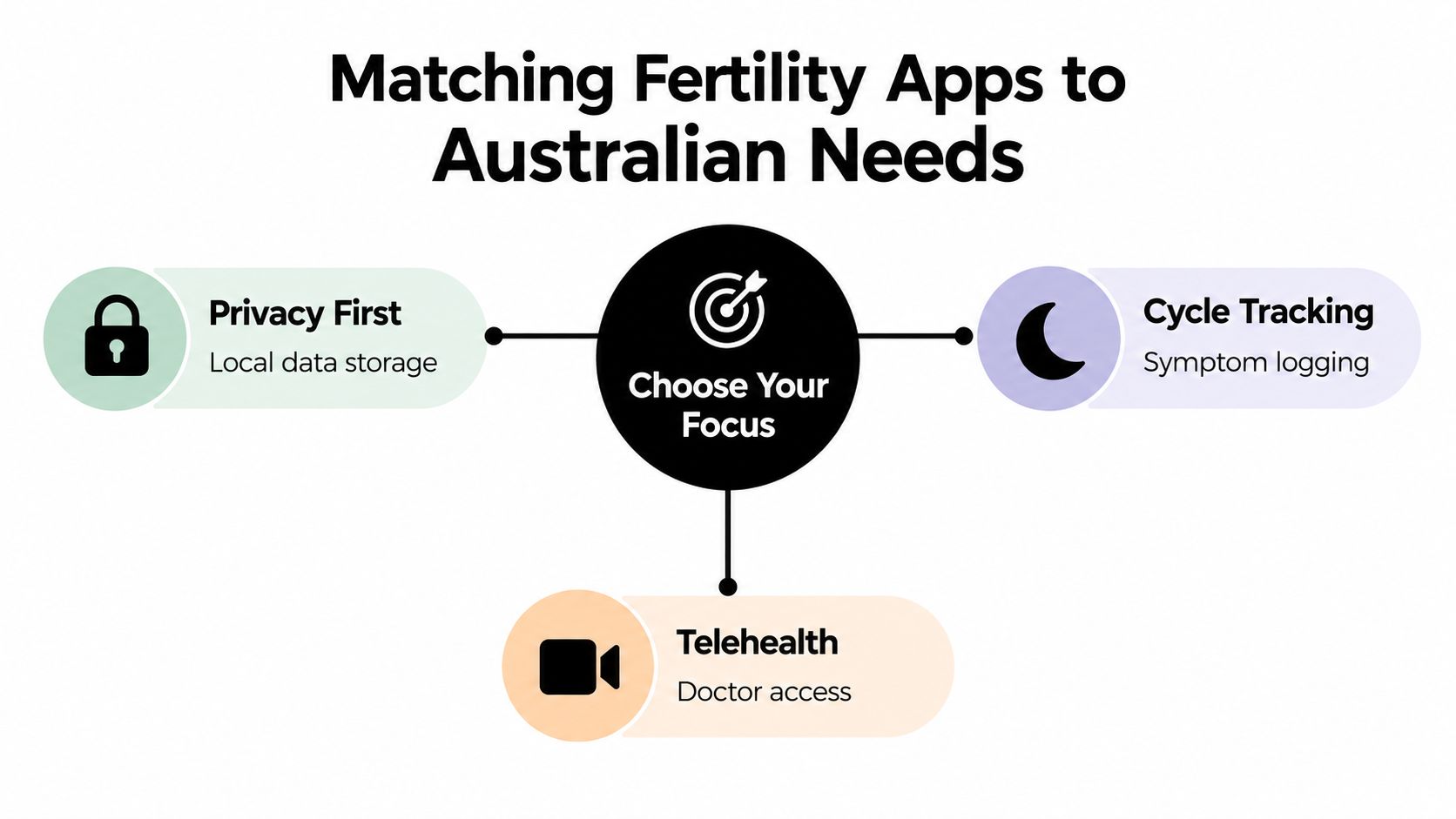
The right app depends on what you're trying to do with your cycle data. A person who wants to conceive now has different needs from someone who just wants cycle awareness, and both are different again from someone who wants to keep data exposure as low as possible.
Match the tool to the life stage
If you're actively trying to conceive, use a tool that combines BBT with LH and symptom logging. That gives you more than one signal, which matters when timing is the goal. If you practise fertility awareness methods, prioritise a thermometer-led app that clearly shows temperature shifts and lets you see pattern changes over time. The internal guide on fertility awareness methods is a useful way to think about that workflow.
If privacy comes first, a stripped-back app with minimal data capture may be better than a feature-heavy system. If you're overwhelmed by logging, don't buy complexity you won't maintain. A perfect app that you stop using after two weeks is less useful than a simpler one you can keep up with.
People with irregular cycles, postpartum changes, breastfeeding, travel, poor sleep, or menopause transitions usually need more than calendar maths. They need longitudinal tracking and clear signposting when the data is too noisy to interpret confidently. That's where BBT and LH data can help, because they anchor the conversation in what your body is doing now, not what a template expects.
If you want an app-connected option that keeps cycle inputs together, Venus Health Co. offers a Bluetooth BBT thermometer and a companion app that also logs LH tests and symptoms. That kind of setup suits users who want automatic syncing and a single place to review their data.
A Practical Checklist for Evaluating Fertility Apps
A fertility app should be judged like a health tool, not a design accessory. Before you commit, check the questions that change outcomes and risk.
Use this checklist before you download
- What does it measure? Look for an app that tells you whether it uses calendar estimates, LH tests, BBT, cervical mucus, or a mix. If the inputs aren't clear, the output probably won't be either.
- Can I see the logic behind the fertile-window prediction? Transparency matters because users need to know whether the app is guessing from dates or reading from actual cycle signals.
- How does it handle irregular cycles? A rigid calendar model is a poor fit when your cycle shifts from month to month.
- What happens to my data if I delete my account? This is one of the most important privacy questions, because deletion should include backups and downstream processors where possible.
- Does the app make medical claims? If software analyses symptoms, predicts health outcomes, or influences decisions, it may move closer to regulated-device territory under TGA expectations.
- Are subscriptions hiding core features? Some apps make the basic tracking work only after payment, which is a bad fit if you want a simple long-term record.
- Is support available in Australia? Local shipping, local timing, and local customer support reduce friction when you need help quickly.
Decision checkpoint: if the app can't answer the privacy question clearly, move on. Prediction quality doesn't cancel out weak data governance.
A sensible rule is to test the app with your real routine, not an ideal one. If you travel, work shifts, or wake at inconsistent times, see whether the app still makes sense after a messy week. If it falls apart when life gets normal, it isn't a good fit.
Choosing Your Fertility App with Confidence
The best choice in Australia is the one that matches your body, your privacy tolerance, and your level of effort. For some people, that means a simple symptom tracker. For others, it means a BBT-led system that combines temperature, LH, and cycle history in one place.
Practical rule: if you want more confidence, ask for clearer inputs, not louder claims.
Integrated systems make the most sense when you want automatic sync and daily pattern learning. That's where an option like Venus Health Co. fits well, because the platform combines a Bluetooth basal body thermometer, LH compatibility, and app-based cycle tracking without forcing you into a subscription-first model. It's not the only route, but it is a coherent one for people who want physiological tracking without manual spreadsheets.
What doesn't work is buying on feature lists alone. App icons, streaks, and polished graphics don't tell you whether the tool understands irregular cycles, protects reproductive data, or explains its predictions with transparency. The right fertility app should help you observe, not mislead.
If you want a fertility tracking setup that connects cycle data, temperature, and LH testing in one place, visit Venus Health Co. and review the app and thermometer options for your routine. It's a practical way to compare automatic BBT tracking against calendar-only guessing, especially if you want clearer data and tighter privacy controls.