

Sustainable Weight Loss Plan That Actually Works
Dr. Adeyinka AdegbosinYou wake up, step on the bathroom scale, and the number is up again. You didn't binge, you didn't skip the gym on purpose, and yet the reading makes the whole week feel like a failure. That's the trap many people fall into, because weight loss isn't a single-number problem, it's a weekly pattern problem, and the body changes in more ways than a scale can show.
In Australia, this matters at population level, not just in one household. The ABS reported that in 2022, 66.0% of adults aged 18 and over were living with overweight or obesity, including 31.7% who were obese, with 67.7% of men and 64.4% of women above a healthy range weight-loss statistics overview. The broader trend has been rising for decades, with adult overweight and obesity increasing from 56.3% in 1995 to 67.0% in 2022, and obesity alone climbing from 19.4% to 31.7% AIHW trend context. That's why a durable plan has to be practical enough for ordinary weeks, not just perfect ones.
Why the Bathroom Scale Is the Wrong Starting Point
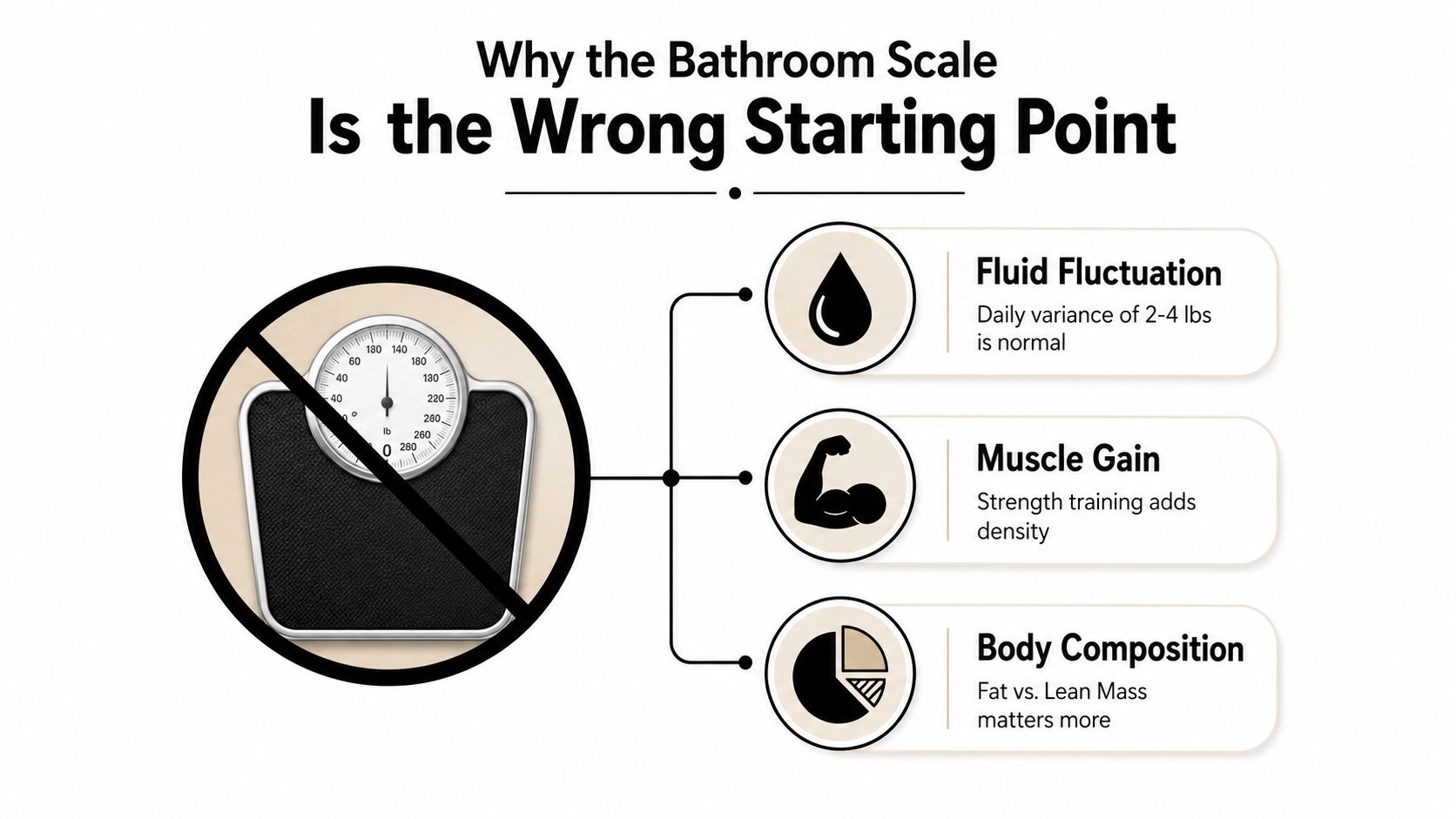
The scale usually gets blamed for being “stubborn”, but it's often just telling you about the wrong thing. A salty dinner, a later meal, a hard training session, or a day with less sleep can move body weight around fast, long before any real change in fat tissue has happened. If you judge progress from one morning reading, you're measuring noise and calling it truth.
I've watched people do everything right from Monday to Friday, then unravel on Saturday because the number barely changed or went the “wrong” way. The better starting point is a weekly routine that includes waist measurement, a weight trend average, and body composition data where possible. That gives you a clearer read on whether you're losing fat, holding muscle, or carrying more fluid this week.
What to watch instead
A smart weekly check-in asks three questions. Is the waist shrinking, is the trend weight moving the right way, and is muscle being preserved rather than lost? Those three together tell you more than a daily weigh-in ever will.
Practical rule: if the scale is noisy but your waist is easing down and your strength is steady, the plan is probably working.
For people who want a simple safety-oriented starting point, the XO weight loss guide is a useful reference to compare against your own habits. If you're trying to get more precise with weekly readings, the internal guide on accurate bathroom scales is worth a look because accuracy matters before interpretation does.
The point isn't to ignore the scale. It's to stop treating a daily number as if it were a verdict. When you switch to weekly tracking, you can separate actual progress from the normal ups and downs of living, eating, training and recovering.
Setting a Realistic Goal and Calorie Target
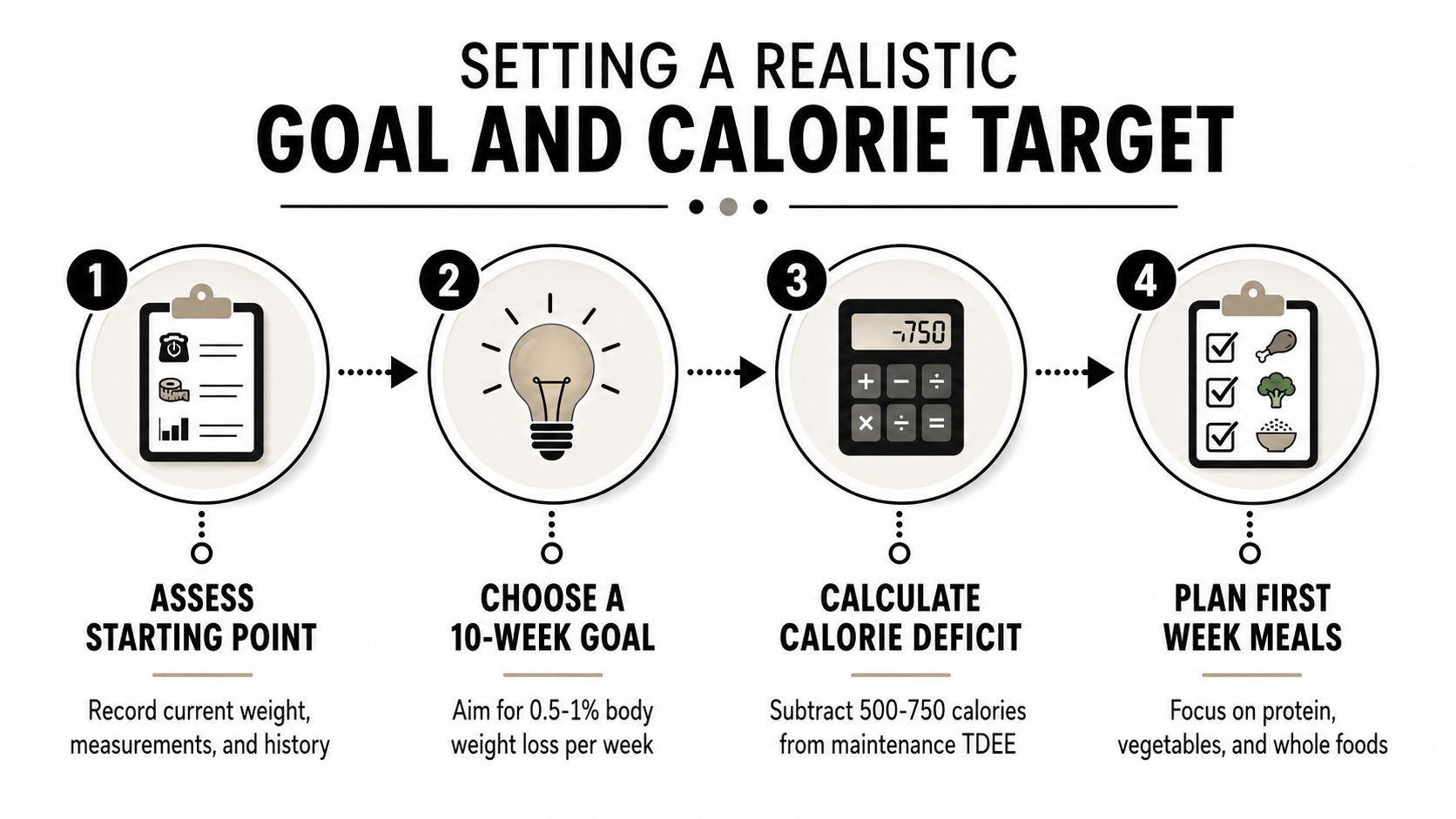
A realistic goal is the difference between a plan you finish and one you abandon by week three. People usually overreach here. They set a dramatic target, cut too hard, feel flat and hungry, then call the whole thing a failure when the body doesn't cooperate.
Start with a number you can repeat. For many adults, that means choosing a moderate intake change rather than a crash diet, then letting the weekly trend tell you whether it's enough. If you want a practical calculation framework, the Telomyx RMR and body composition insights piece is a helpful companion because it keeps the focus on body composition rather than guesswork.
A simple way to set the first target
Begin by recording current weight, waist, and training schedule. Then estimate what you can hold while still eating normally enough to work, sleep and train. If you're using a smart scale such as the Venus AI Smart Scale: Body Composition & Body Fat Scale, the weekly body composition summary can help you see whether you're losing mostly fat or giving away muscle at the same time.
A 90 kilogram adult doesn't need a heroic first cut. They need a repeatable one. In practice, the early aim is to lose steadily enough that the routine feels manageable and the gym sessions still have some quality left in them.
Coach's note: if your energy, sleep and training all collapse in the first fortnight, the deficit is probably too aggressive.
Keep the macronutrient structure simple. Protein should stay high enough to protect muscle, carbohydrate should support training and daily function, and fat should stay present rather than being stripped out in a panic. The exact split depends on food preferences and schedule, but the hierarchy matters more than perfection. Protect the lean mass, because that's what keeps the body looking better as the number comes down.
For anyone with repeated yo-yo dieting, medication use, or a long history of disordered eating patterns, medical supervision is sensible. Aggressive restriction can backfire fast, and the older the cycle of loss and regain, the more careful the reset needs to be.
Eating for Fat Loss Without Extreme Rules
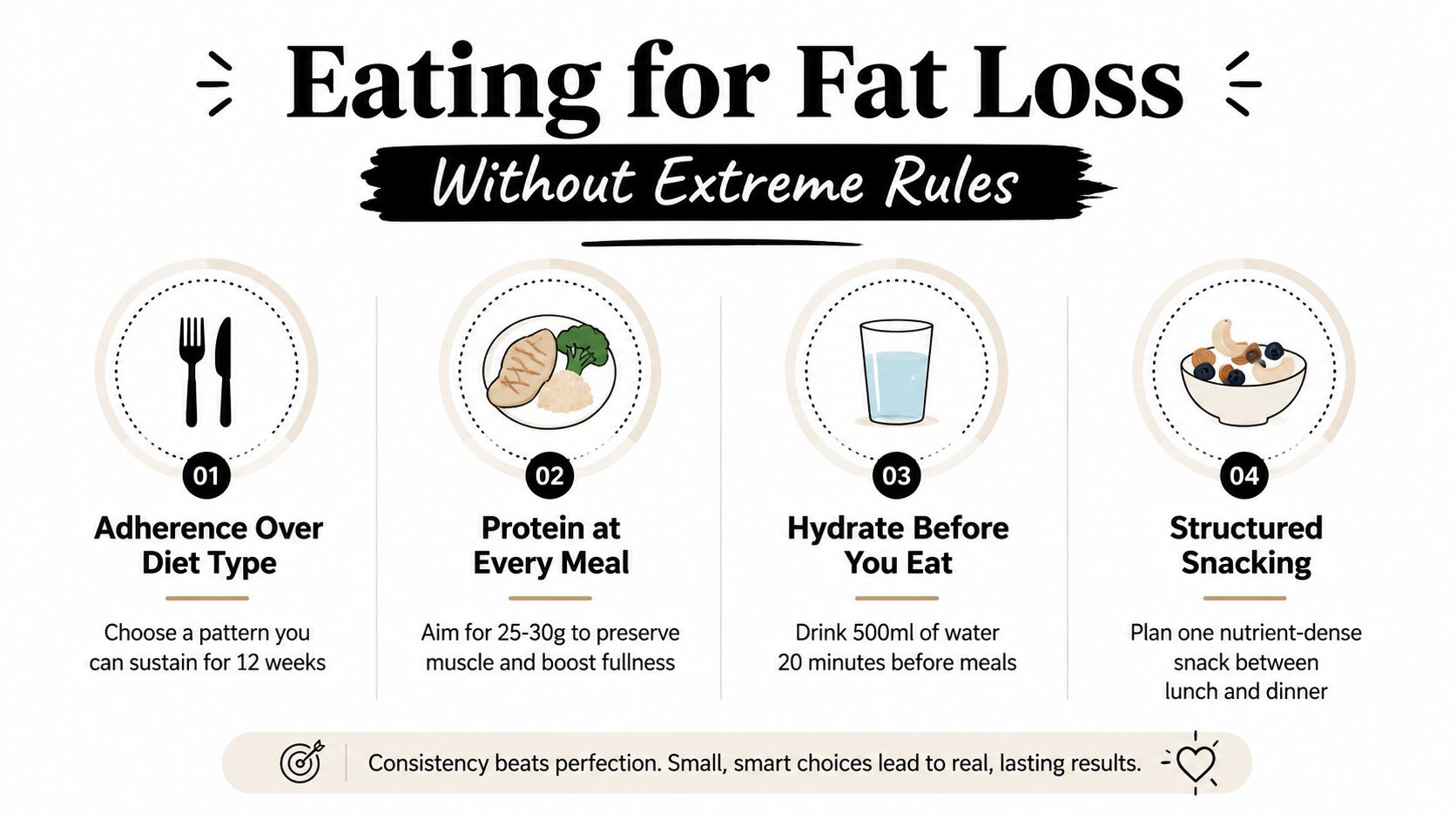
The food side of weight loss works best when it is predictable enough to repeat through a normal week. Fancy rules look impressive at the start, but they are usually the first thing people drop when work runs long, children get sick, or dinner shifts by an hour. Adherence beats diet type because the body responds to what you do, not what you planned to do.
A 2024 systematic review found that short-term diet-plus-physical-activity programs lasting 6 months or less produced measurable weight loss, with pooled mean differences of −2.59 kg overall and −2.40 kg for programs lasting 13 to 26 weeks. The same review also reported that completion of the program mattered more than the label attached to the diet. The message is plain, consistency matters more than the marketing around the plan.
Build the week around three habits
Start with a protein target you can hit at breakfast, lunch and dinner. Then log food in a way that does not take over your day, whether that is an app, a photo log, or a short written note. Review the week once, not every hour, so you can see whether the plan and real life matched.
A normal day does not need to be complicated. Breakfast can be protein-led, lunch can be a plain portable meal, and dinner can still fit the family table without becoming a second job. If you travel or eat out often, keep your default choices simple, protein first, vegetables second, then fill the rest of the plate with whatever fits the target.
The Just Cook It magazine guide is a useful reference if you want more ideas for straightforward food structure without crash-diet language. If you are tracking health from home, the Venus Smart Basal Thermometer for Ovulation - Bluetooth BBT Tracker with App is a separate option for cycle tracking, though it is not a weight-loss tool. For a closer look at how body composition changes fit into fat loss, see how to lose fat and gain muscle.
Food insecurity changes the advice. If budget or access is tight, the answer is not more discipline. It is making the best available foods do more work. That may mean repeating a cheaper protein source, choosing frozen vegetables, or planning the one meal you are most likely to control each day. The gap is often access, not knowledge.
Building a Progressive Training Plan
Exercise is where people usually go too hard or not hard enough. Cardio has value, but strength training is the lever that protects muscle while the deficit does its job. If you don't give the body a reason to keep lean tissue, it becomes much easier to lose the wrong kind of weight.
A four-phase structure that stays realistic
| Phase | Weeks | Resistance Sessions | Cardio Sessions | Focus |
|---|---|---|---|---|
| Foundation | 1 to 2 | 2 | 1 to 2 | Learn movements, build consistency |
| Build | 3 to 6 | 3 | 2 | Add load, keep recovery steady |
| Push | 7 to 10 | 4 | 2 to 3 | Preserve muscle, increase weekly work |
| Consolidate | 11 to 12 | 3 to 4 | 2 | Hold progress, avoid burnout |
The first phase should feel almost too easy. Two short resistance sessions, full-body work, and enough cardio to build routine without turning recovery into a problem. By the time you reach the third phase, training can become more frequent, but only if sleep and food are still supporting it.
For time-poor readers, a 30-minute session is enough if it stays focused. Hit a squat pattern, a push, a pull and a hinge, then leave before you start inventing extra work to feel virtuous. The goal is not to leave the gym exhausted, the goal is to leave having done enough to preserve muscle and keep the habit intact.
Use cardio strategically. Zone 2 work fits best as a support tool, not a punishment for eating dinner.
The internal guide on how to lose fat and gain muscle is useful if you want a body-recomposition frame that matches this approach. That's the right mindset here, because the outcome you want is not just lower body weight, it's a better ratio of fat to lean tissue.
Progression should be simple. Add a little load, one rep, or one set when the current work feels controlled. If performance drops for more than a week, the body is telling you the plan needs a smaller step, not more punishment.
Tracking Progress With Body Composition Data
Most plans earn their keep. If you only track kilograms, you can't tell whether the plan is stripping fat, preserving muscle, or doing both badly. Body composition gives you the missing context, especially when the scale is flat but the body is changing.
What actually matters on a weekly dashboard
The most useful metrics are fat mass, muscle mass, visceral fat, and the trend over a rolling few weeks rather than the mood of one morning reading. A smart body composition scale can make this easier by showing the week-to-week picture automatically, instead of forcing you to interpret a random number with no context. The internal guide on how to measure body fat gives you a useful practical baseline for that.
The Venus AI Smart Scale's weekly summary is an example of the kind of home tool that fits this style of tracking, because it pairs a measurement with a body composition readout and trend view rather than leaving you with a single number. That matters if your weight is coming down slowly while muscle is being preserved, because recomposition can look disappointing on the scale and excellent in the mirror.
Two people can weigh the same and be in completely different places. One can be losing fat while protecting muscle, the other can be losing both. The number on the scale is identical, the outcome isn't.
What you're looking for is direction, not drama. If fat mass is easing down and muscle is holding, the plan is working even before the jeans feel looser.
Keep the routine steady when you travel, get sick, or have a disrupted week. Skip the panic response and compare the next clean reading to the last clean reading. If visceral fat stays stubborn while body weight improves, that's a sign to tighten the training and food basics rather than chasing a more aggressive cut.
The best dashboard at home is simple. Weight trend, waist, muscle, fat, and one note on adherence. If those stay visible every week, the next decision gets easier.
Troubleshooting Plateaus, Cravings and Slip-Ups
Every plan breaks eventually. The difference is whether you treat the break as data or as a reason to quit. Many don't fail because of one bad meal, they fail because one bad meal turns into a lost week.
Three common derailers and what to do
A true plateau means the trend has stalled, not just one weigh-in. When that happens, the fix is usually to tighten one variable at a time, either food structure, step count, or training consistency. Don't slash everything at once, because then you won't know what changed.
Cravings are often a routine problem, not a moral one. If you're under-eating all day, sleeping badly, and then raiding the fridge at night, the answer is often better meal timing and more structured food earlier, not more shame. Stress and poor sleep can make the whole process feel harder than it should.
Slip-ups need a fast reset. One missed meal plan doesn't require a new identity, it requires the next ordinary meal. If you planned a higher-calorie social meal, treat it as part of the week and move on, instead of trying to “make up for it” with punishment exercise or starvation the next day.
If you've already got the basics right but the body still won't move, review recovery and medical factors with a GP or dietitian. People often want a hidden trick, but usually the body is signalling that the inputs are inconsistent or the pressure is too high to sustain.
Your First 12 Weeks, One Priority at a Time
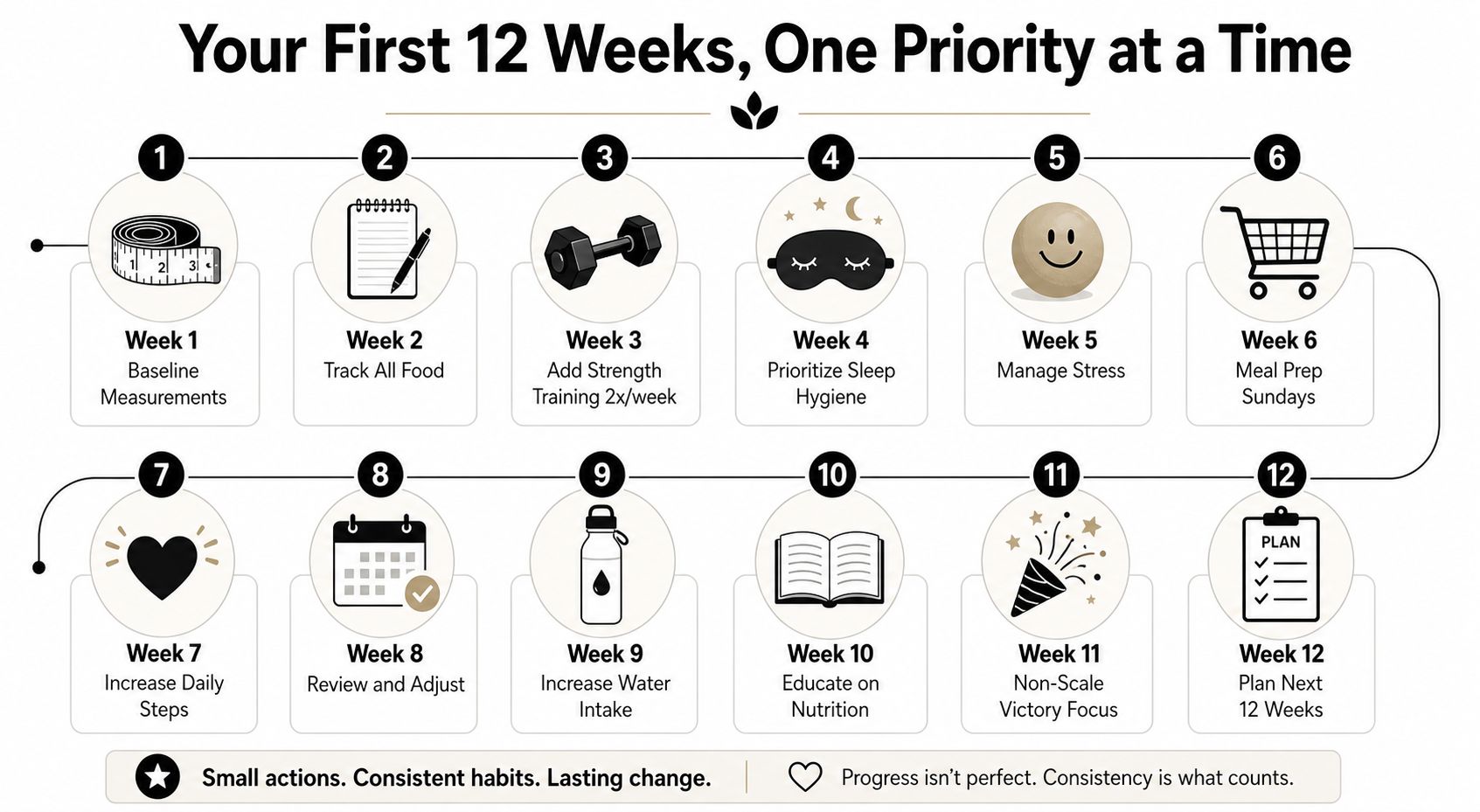
The cleanest starter plan is one priority per week, not ten. Week one is baseline measurements, week two is food tracking, week three is resistance training, and by week four you're reviewing sleep and adherence instead of reacting to a single scale reading. That rhythm matters because success comes from repeating the same behaviours long enough for them to become normal.
Checkpoints that keep the plan honest
At week four, review whether the routine is happening. At week eight, check the body composition trend and make a small adjustment if needed. At week twelve, decide whether to continue, tighten the plan, or get more support.
Maintenance matters from the start, because the habits that got the weight off are the same ones that keep it off. If you stop measuring, stop training, and stop thinking about food the moment the scale improves, the old pattern usually comes back.
Use the same caution with every shortcut. If a plan asks you to ignore hunger, skip strength training, or live on shakes indefinitely, it's probably solving the wrong problem. A sustainable approach fits your work, family, budget and recovery.
If you're ready to start this week, choose one measurement system, one food routine, and one training habit, then stick to them for 12 weeks without rewriting the script every Monday. For a practical at-home setup that ties body composition, weekly summaries and app-based tracking together, take a look at Venus Health Co..