

Sex After C Section Pain How to Heal and Feel Safe Again
Dr. Adeyinka AdegbosinYou've waited, checked that your incision is healing, and finally decided to try intimacy again. Then penetration feels uncomfortable, your lower abdomen pulls, or your body tightens before anything has really begun. You may be wondering whether the pain is coming from the C-section scar, your pelvic floor, breastfeeding-related dryness, or fear of being hurt again.
Sex after C-section pain is common, and it isn't a sign that you've failed to recover. Australian research found that 85.7% of women who had resumed vaginal sex by 12 months postpartum experienced pain during their first postnatal intercourse. Pain also remained common over time, affecting 44.7% at three months, 43.4% at six months, 28.1% at 12 months, and 23.4% at 18 months postpartum in the same cohort (Australian cohort data).
This guide will help you identify what may be driving your discomfort, understand when it's medically appropriate to try again, use lower-pressure intimacy strategies, and recognise when a GP, obstetrician, or women's health physiotherapist should assess you.
When Sex After a C Section Feels Different Than Expected
A woman I'll call Mia felt ready for sex several weeks after her postpartum review. Her bleeding had settled, her incision looked healed, and she and her partner moved slowly. As soon as penetration began, however, she felt a sharp tug across her lower abdomen and a deep internal ache.
She stopped. Later, she said she was confused because she had expected a caesarean birth to spare her the vaginal soreness friends had described. Instead, she had pain, worry, and the unsettling question of whether something had gone wrong.
Mia's experience did not mean her body was broken. A C-section avoids vaginal birth, but recovery still includes pregnancy-related changes, abdominal surgery, hormonal shifts, poor sleep, and protective muscle tightening after pain. The discomfort can behave like an alarm system with several sensors. Scar sensitivity may pull at the surface, pelvic floor muscles may brace around the vaginal opening, lower oestrogen may cause dryness, and the nervous system may guard an area it now associates with danger.
The Australian evidence is helpful because it shows that caesarean birth doesn't eliminate the risk of painful sex. In one study, women who had a caesarean were more likely to report more intense dyspareunia at six months, with an adjusted odds ratio of 2.35 and a confidence interval of 1.2 to 4.6 (Australian prospective cohort report).
Pain doesn't measure your recovery
Pain during sex does not automatically mean the incision has reopened, the uterus is damaged, or you have caused harm. It signals that one or more tissues, muscles, hormonal changes, or protective responses may need attention.
A simple pattern check can guide your next step. Pain close to the scar, especially with stretching or pressure, points you toward abdominal sensitivity. Burning or tightness at the entrance suggests pelvic floor guarding or dryness. Deep aching, or pain that continues after stopping, deserves a clinician's assessment. Fear can also make muscles tighten before penetration, so the nervous system may be adding protection to an already sensitive area.
Closeness does not have to include penetration. Kissing, massage, mutual touch, or lying together can restore connection while your body relearns what feels safe. You can pause, change position, add lubricant, or stop completely without treating that choice as a setback.
The useful question is not only, “How long has it been?” Ask, “Where is the pain, what does it feel like, and what changes it?” That information helps you respond to the likely driver instead of pushing through discomfort or avoiding intimacy indefinitely.
Why Sex Can Hurt After a C Section
C-section-related pain during sex usually has more than one possible driver. The scar matters, but it's only part of the picture. Pregnancy itself affects the pelvic floor, and the nervous system can continue protecting an area long after the original injury has begun to heal.
The following pain map can help you notice patterns. It isn't a diagnosis, but it can give you clearer language for your next conversation with a clinician.
Abdominal scar sensitivity
A healed incision can still feel numb, tender, tight, itchy, prickly, or unusually sensitive. Movement during sex may stretch the skin and connective tissue across the lower abdomen, especially when your hips are extended or your partner's weight presses against the scar area.
Ask yourself: Does the discomfort feel close to the scar, or does it feel deep inside the pelvis? If changing position or supporting your lower abdomen changes the sensation, scar sensitivity or restricted abdominal tissue may be contributing.
Adhesions can also limit how freely the layers around the scar move. You may notice pulling with rolling, standing, exercise, or sexual movement rather than a simple surface sting.
Pelvic floor tension
The pelvic floor can be tight, weak, or both after pregnancy and birth. A C-section doesn't bypass the months of pregnancy-related load on these muscles, and pain can cause them to brace automatically.
A tense pelvic floor may create burning at the entrance, pressure, deep aching, or a feeling that penetration meets resistance. Try this reflection: Can you consciously soften your jaw, belly, buttocks, and pelvic floor when you breathe out? If relaxing feels difficult, guarding may be part of the pattern.
Hormonal vaginal dryness
Postpartum hormonal shifts can reduce natural lubrication, particularly while breastfeeding. Friction can then create soreness at the vaginal entrance or a raw, irritated feeling afterwards.
Dryness usually feels different from scar pain. It tends to be more superficial and linked to rubbing, and it may improve with longer arousal and a suitable lubricant. A water-based lubricant can reduce friction, while a vaginal moisturiser may be useful for ongoing dryness. Ask a GP or pharmacist what's appropriate for you, particularly if symptoms persist.
Anxiety and nervous system guarding
If your first attempt hurt, your brain may predict danger the next time. That prediction can make the pelvic floor tighten before penetration, even when you consciously want intimacy.
Notice whether pain increases when you're rushed, worried, or monitoring every sensation. A slow pace, clear permission to stop, and breathing with a longer exhale can interrupt the cycle of fear, bracing, and pain.
If you're also tracking cycle changes after birth, the Venus Smart Basal Thermometer for Ovulation - Bluetooth BBT Tracker with App records basal body temperature and syncs readings to a phone via Bluetooth. That kind of tracking can support cycle awareness, but it doesn't assess whether sex is medically safe or explain pain.
When It Is Medically Safe to Have Sex Again
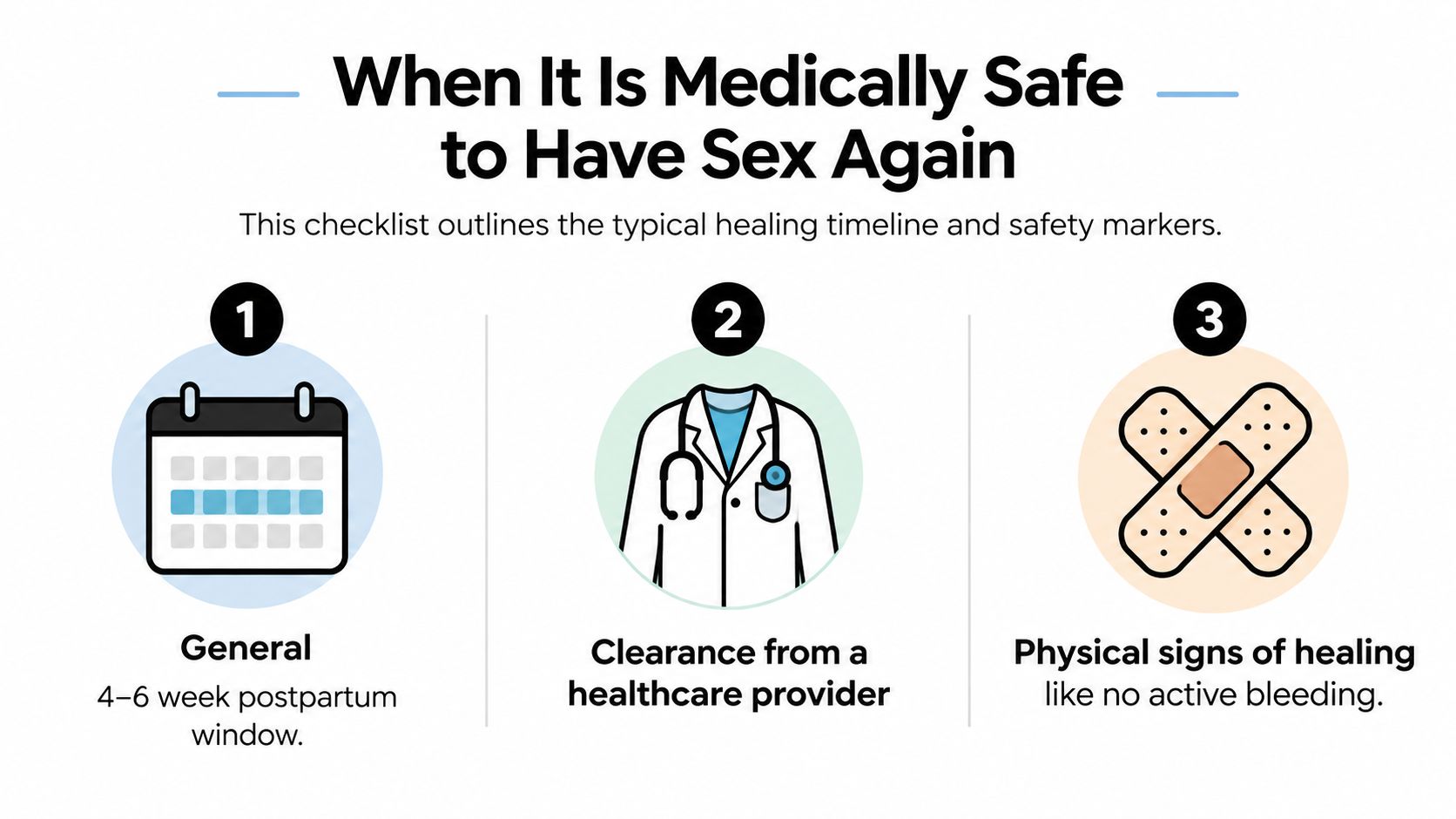
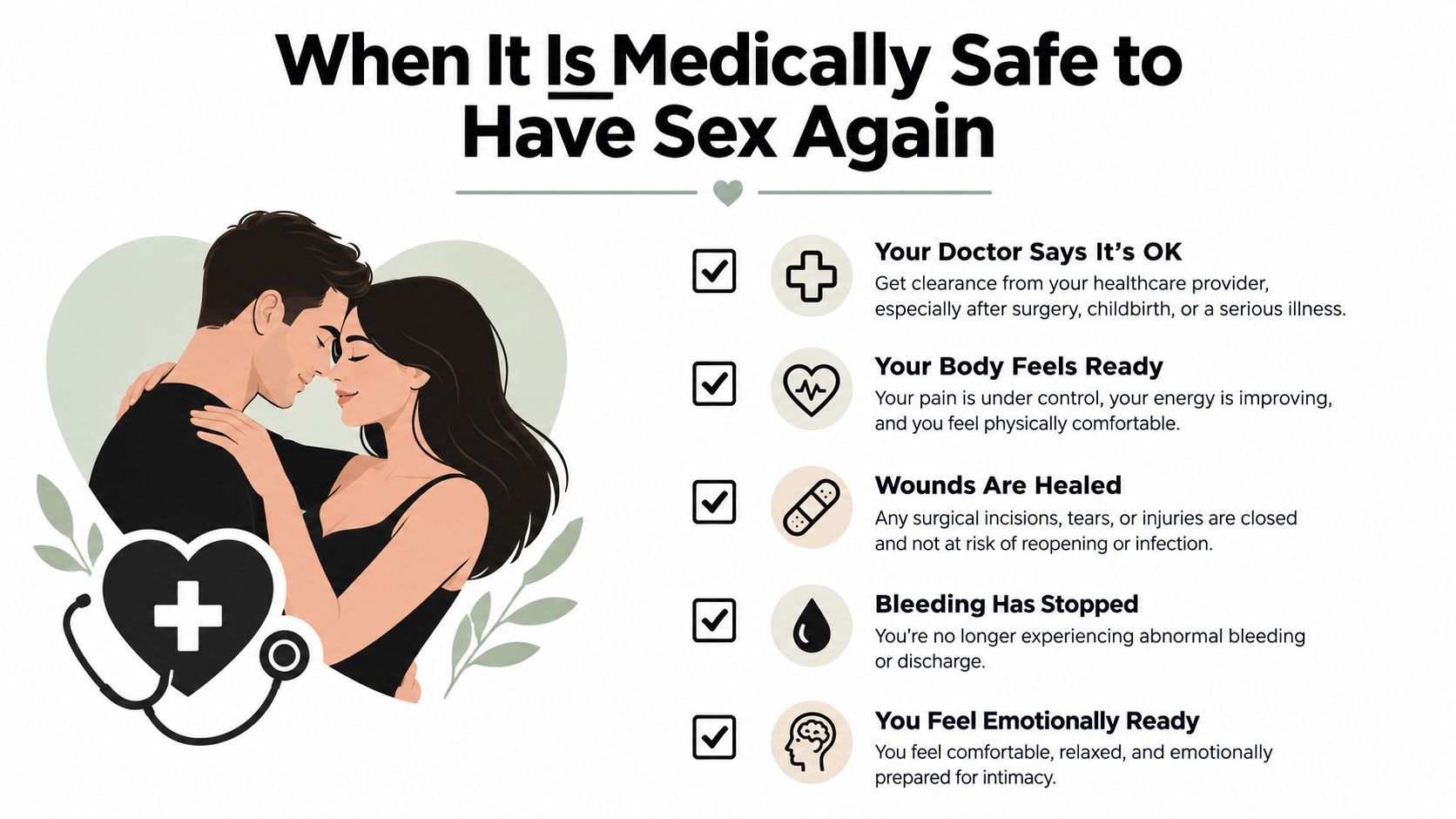
Australian postpartum guidance advises waiting until vaginal bleeding has settled and any stitches have dissolved, which is usually around four to six weeks after birth. It also notes that caesarean scar tenderness can last for weeks, and pain may continue for a few months, so sex should be resumed only when it feels comfortable (Australian postnatal guidance).
That timeframe is a general healing window, not a deadline. Your readiness depends on physical recovery, symptoms, comfort, and emotional safety.
Use a practical readiness check
Before attempting penetration, consider these questions:
- Has bleeding settled? Ongoing or increasing bleeding deserves medical advice rather than an attempt at intercourse.
- Is the incision healing normally? Worsening redness, swelling, discharge, or escalating tenderness needs review.
- Can you move comfortably? Rolling in bed, walking, coughing, and getting up from a chair shouldn't provoke severe or worsening pain.
- Do you feel emotionally willing? Feeling pressured, frightened, or disconnected matters. Consent includes being able to pause at any time.
- Do you have a plan for discomfort? Agree on a stop signal, use lubrication, and choose a position where you control depth and movement.
A postpartum appointment is a good opportunity to ask directly about sex. You might say, “I've tried intercourse and it hurts at the entrance,” or, “I feel a deep pulling sensation near my scar.” Specific details help your clinician decide whether you need wound review, pelvic floor assessment, hormonal advice, or another examination.
If you're checking other aspects of physical recovery, you can also read this practical guide on driving after a C-section. Returning to driving and returning to penetrative sex are different decisions, but both depend on comfortable movement and your ability to respond safely if pain occurs.
If pregnancy isn't desired, discuss contraception before resuming sex. Breastfeeding and irregular periods can make cycle timing difficult to predict. A Venus Ovulation Predictor Test Kit can be used for cycle awareness or conception planning, but an ovulation test isn't contraception and doesn't determine whether intercourse is safe after surgery.
Here's an educational video you may find helpful before discussing your symptoms with a clinician:
Gentle Ways to Make Sex More Comfortable Again
Once you've been medically advised that sexual activity is appropriate, treat the first attempts as exploration rather than a test you need to pass. The aim is to gather information without provoking a flare-up.
Start before penetration
Begin with closeness that doesn't involve penetration. Cuddling, kissing, massage, external touch, or mutual stimulation can help your body associate intimacy with choice and comfort rather than pressure.
Allow more time for arousal than you might have before pregnancy. Arousal supports natural lubrication and gives the pelvic floor an opportunity to soften. If you're breastfeeding or noticing dryness, add a generous amount of water-based lubricant and reapply when needed.
Choose positions that give you control
Side-lying can reduce pressure on the lower abdomen and limit the range of movement. It can be a useful first option if direct pressure on the scar feels uncomfortable.
Being on top may allow you to control depth, speed, and angle, but only if your abdominal wall feels supported. You can use pillows for comfort and keep movements small. If kneeling or holding your body weight feels tiring, return to side-lying rather than forcing the position.
Positions with deep thrusting or substantial pressure across the abdomen may be less comfortable early on. There's no need to avoid them forever, but they don't need to be your starting point.
Use a stop-and-reset agreement
Tell your partner exactly what you need before you begin. Useful phrases include:
- “Let's start with touch only and decide together.”
- “If I say pause, please stop without asking me to continue.”
- “I'm feeling pressure near my scar, so I need a different position.”
- “That sensation is uncomfortable, but I'm not sure whether it's pain yet. Let's slow down.”
If pain appears, stop rather than testing whether it will disappear. Take several slow breaths, relax your shoulders, unclench your jaw, and decide whether you want to continue with non-penetrative touch or finish for the day.

A useful rule: intimacy should leave you feeling informed and safe, not as though you've had to endure pain to prove you're recovered.
Notice the quality of discomfort
A light stretching sensation that settles when you change position is different from sharp pain, burning, or deep pain that continues afterwards. Keep a simple note of what happened, including position, lubrication, arousal, scar pressure, and how you felt emotionally.
That information can reveal a pattern. For example, pain only with abdominal pressure points towards a different strategy than burning caused by dryness or entrance pain linked to pelvic floor tightening.
Pelvic Floor Recovery and Scar Desensitisation at Home
Comfort during sex and rehabilitation are related, but they aren't the same task. In the moment, you're trying to reduce friction, pressure, and fear. Over time, you're helping your abdominal tissues and pelvic floor tolerate movement and touch again.
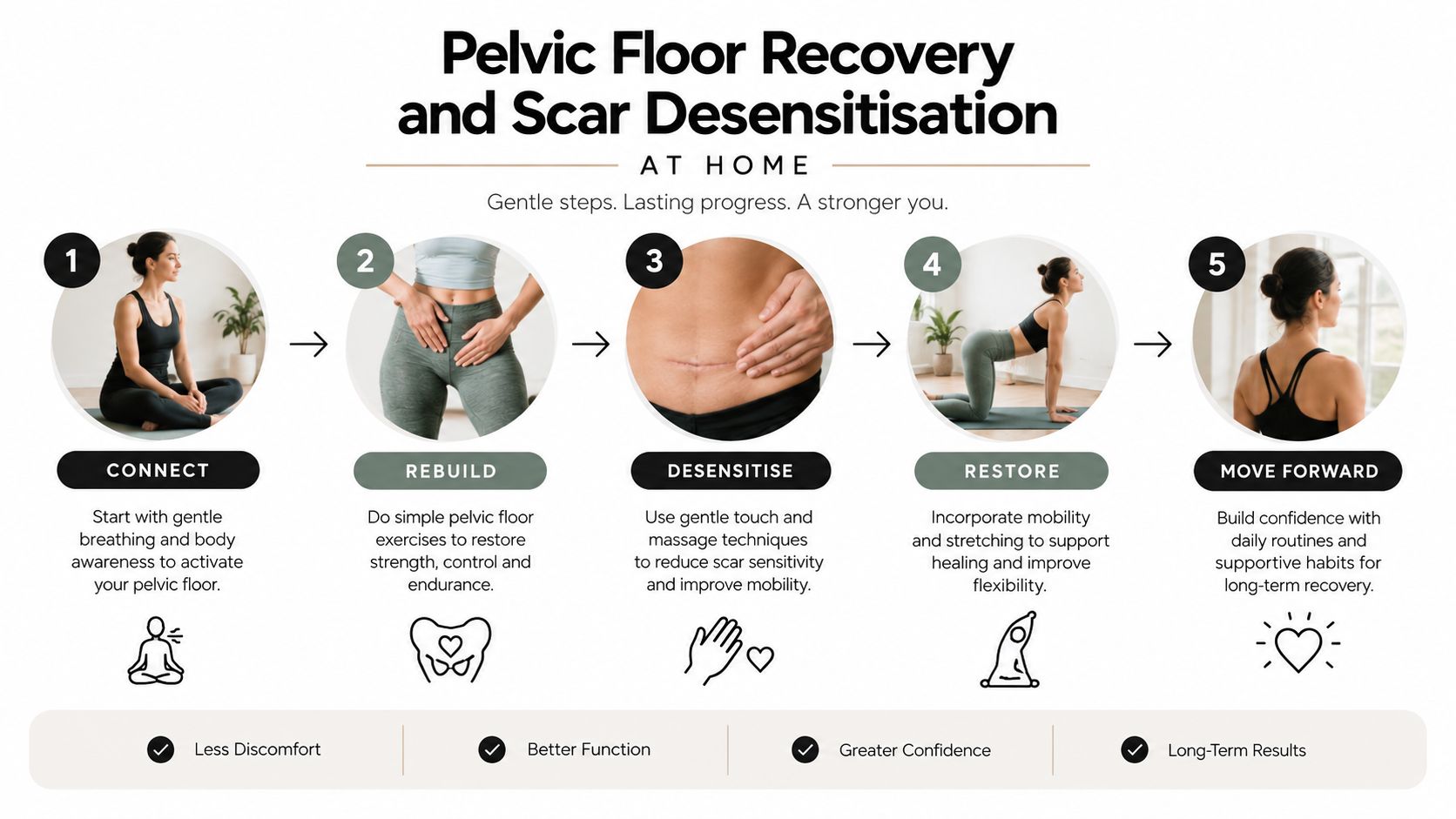
Start with breathing. Lie on your side or back with your knees supported. Let your ribs widen as you inhale, then allow your belly and pelvic floor to soften as you exhale. Don't push down forcefully. The goal is a sense of release, not strain.
Relax before you strengthen
Many postpartum people hear “pelvic floor” and immediately think of repeated squeezes. Strengthening can be useful when weakness is present, but repeated tightening may aggravate pain if your main problem is overactivity.
Try a gentle reverse Kegel instead. As you breathe out, imagine the sit bones widening and the muscles around the vaginal opening becoming heavy. Keep the effort subtle. If you feel bearing down, pressure, pain, or increased urinary or bowel symptoms, stop and seek individual guidance.
A women's health physiotherapist can assess whether your pelvic floor is weak, tense, poorly coordinated, or showing more than one issue. For general background on strengthening, this pelvic floor strengthening guide offers additional education, but exercises should be adjusted if they increase your symptoms.
Reintroduce scar touch gradually
Only touch the scar once the wound has closed and your treating clinician has confirmed that it's appropriate. Wash your hands, use a comfortable position, and begin with light contact on the skin around the scar rather than pressing directly into a sensitive area.
You might progress through:
- Resting your hand over the lower abdomen.
- Touching the skin beside the scar with a soft fabric.
- Moving gently up, down, and side to side around the scar.
- Exploring small areas of numbness, tightness, or sensitivity without forcing them.
- Building towards light scar massage as the tissue tolerates it.
Stop if the area becomes increasingly painful, swollen, hot, red, or irritated. Scar work should feel manageable during and after the session. It shouldn't create a significant symptom flare.
Build a small weekly routine
Choose a few minutes for breathing, gentle pelvic floor release, and scar desensitisation on separate occasions if combining them feels overwhelming. Track symptoms with plain language, such as “less pulling when rolling” or “entrance burning after penetration”.
You can also read about exercise after a caesarean, particularly if returning to movement exposes abdominal pulling or pelvic pressure. Rehabilitation should progress according to symptoms, not according to a fixed challenge.
When to Seek Help and How to Talk About Pain
Pain deserves attention when it's sharp, severe, persistent, worsening, or associated with other symptoms. Contact a GP, obstetrician, midwife, or women's health physiotherapist if you have heavy bleeding, fever, offensive discharge, increasing redness or swelling around the incision, new wound discharge, or significant scar pain.
Deep pain that continues after sex also warrants assessment, particularly if it's repeatedly stopping intimacy. Burning, marked dryness, involuntary tightening, or fear that prevents any attempt can be treated as real health concerns, not something you're expected to tolerate.
Ask directly because clinicians may not
Australian research found that women who had a caesarean had equivalent or higher odds of persistent sexual health problems, yet lower odds of being asked directly about sexual problems, with an odds ratio of 0.58 and a confidence interval of 0.4 to 0.9 (Australian birth cohort research). If your clinician doesn't raise the subject, you can.
Try one of these openings:
- “Sex has become painful since my C-section, and I'd like an assessment.”
- “I'm not sure whether this is scar pain, dryness, or pelvic floor tension.”
- “I'm avoiding intimacy because I'm afraid it will hurt.”
- “Can you refer me to a women's health physiotherapist?”
Your partner also needs clear information. Explain whether you want touch, space, slower movement, or a complete stop. If pain and fear are affecting communication or closeness, professional Interactive Counselling couples support may provide a structured place to talk.
Recovery rarely follows a straight line. Australian evidence shows that pain can remain relevant beyond the traditional postpartum check, so waiting longer or asking for targeted care is reasonable. This post-pregnancy recovery guide can sit alongside, but not replace, individual medical advice.
Your next step can be simple: pause penetrative sex if it hurts, write down the exact location and quality of the pain, and book an appointment with a GP or women's health physiotherapist. You don't need to prove that the pain is serious before asking for help.
Venus Health Co. offers app-connected tools for tracking reproductive and broader health data at home, including basal body temperature and ovulation signals. Visit Venus Health Co. to explore practical tools that can help you notice body patterns while you work with your healthcare team on comfortable, supported recovery.