

Nutrition Recommendations That Actually Work in 2026
Dr. Adeyinka AdegbosinOnly 6.1% of Australian adults met the recommended intake for both fruit and vegetables in 2020–21. That leaves a 93.9% gap, and it explains why knowing the Australian Dietary Guidelines often doesn't translate into better meals, steadier energy, or improved body composition. The figures come from the Australian Bureau of Statistics Dietary behaviour release, which also found that 44.8% of adults met the fruit recommendation, while only 8.7% met the vegetable recommendation.
The problem usually isn't a lack of information. People need a practical way to turn broad guidance into portions, body-weight-based targets, shopping swaps, and weekly adjustments. The approach below treats nutrition recommendations as a working system, not a rigid menu. You'll learn how to use the Australian benchmark, adjust protein and carbohydrates to your goal, identify quiet nutrient gaps, and use body-composition trends to decide what to change next.
Why Most Australians Miss the Mark on Nutrition Recommendations
Australia's national nutrition framework is built around the Australian Dietary Guidelines, released in February 2013. The guidelines remain the national standard for healthy eating and set five recommendations covering healthy weight, variety across the five food groups, limits on foods high in saturated fat, salt, added sugars and alcohol, breastfeeding support, and safe food handling. The official Australian Dietary Guidelines also provides daily serving guidance, including at least 5 serves of vegetables and 2 serves of fruit.
Yet the ABS data show that many aren't reaching those targets. A person can believe they're eating “lots of vegetables” while counting tomato sauce, a few salad leaves, or a small amount mixed through dinner as a full serve. The result is a gap between perceived compliance and actual intake, with meals that may look balanced but still provide limited fibre and micronutrient variety.
Why general advice breaks down
Generic advice fails because it doesn't answer the questions people face at 6 pm. How much is a serve? Which packaged food contributes most of the sodium? Should protein stay the same on a rest day? What changes when body weight or lean mass shifts?
These details affect outcomes. Too little carbohydrate around training can leave glycogen availability short, making hard sessions feel harder and recovery less reliable. A poorly planned calorie deficit can also reduce protein and micronutrient intake at the same time. For people preparing for pregnancy, overlooking iron and folate-rich foods creates a different nutritional concern than missing a weight-loss target.
Start with measurement rather than judgement. For packaged foods, learning how to read nutrition labels helps you compare serving sizes, sodium, added sugars, protein, and energy before a product reaches the trolley. For body-composition claims and scale readings, use the practical explanations in Diet Myths Exposed to avoid treating a single number as a complete health assessment.
Practical rule: Keep the family meal familiar, then change the ratio on your plate. Add vegetables, anchor the meal with protein, and adjust the carbohydrate portion according to training rather than cooking separate food for everyone.
The useful bridge is a weekly loop. Set a target, observe body-composition trends and training response, then make one small adjustment. That process is more sustainable than collecting new rules every week, and it gives nutrition recommendations a place in real household routines.
The Five Core Nutrition Recommendations You Should Anchor On
The Australian Dietary Guidelines provide five core recommendations. Their value comes from turning them into repeatable behaviours rather than treating them as a poster on the fridge.
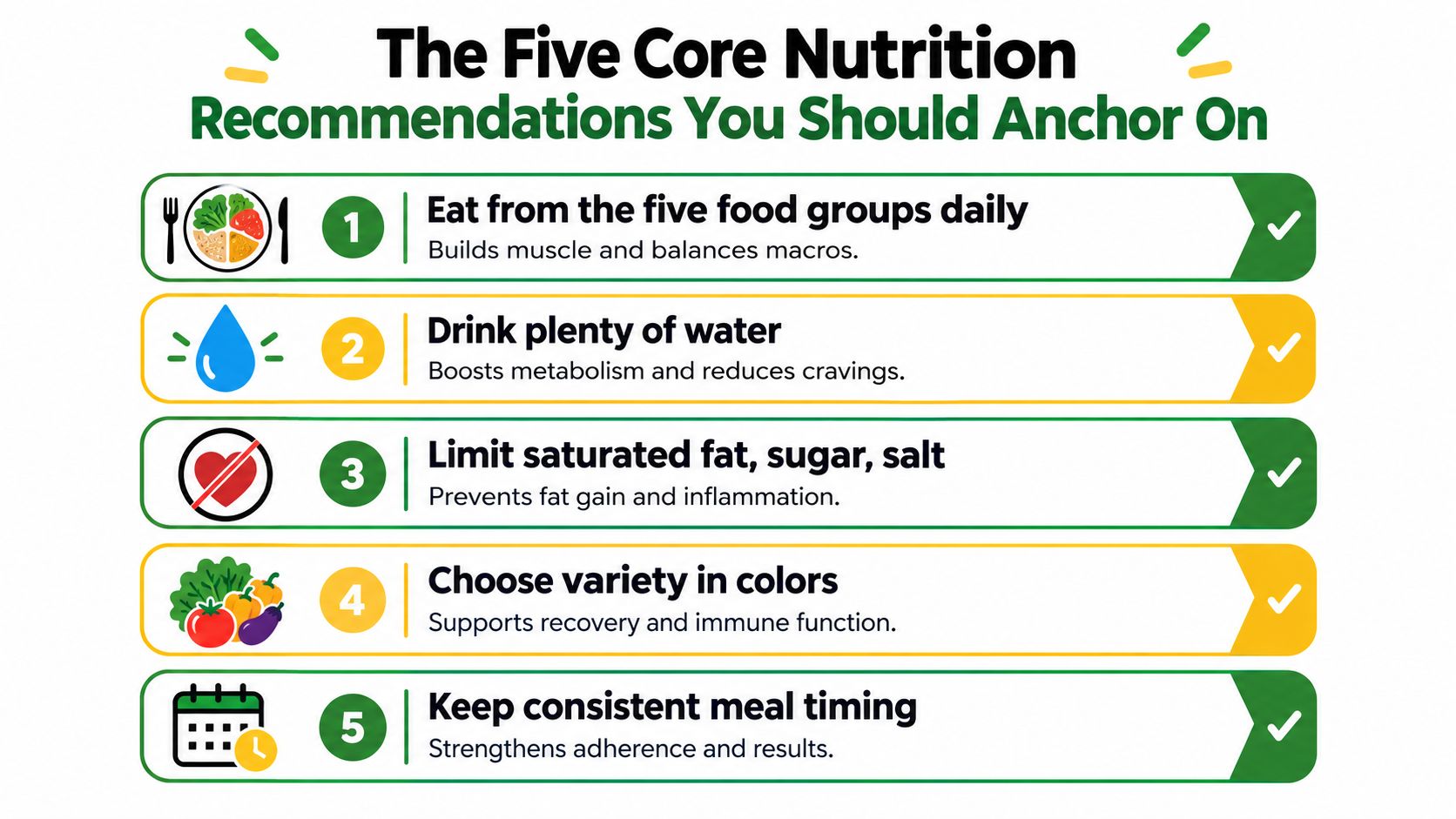
Five principles, five weekly actions
- Maintain a healthy weight through appropriate food and drink intake. This isn't a command to chase a smaller body. It means matching intake to your needs, activity, age, and health goals. Use a weekly trend, not one weigh-in, and record whether waist comfort, training performance, and hunger are moving in the right direction.
- Eat a wide variety of nutritious foods from the five food groups every day. The groups are vegetables and legumes, fruit, grain foods, lean meats and alternatives, and dairy or alternatives. The guideline's serving guidance changes according to age and sex, but the practical dinner test is simple: include a substantial vegetable component, a clear protein source, and a minimally processed carbohydrate where it suits your appetite and activity.
- Limit foods high in saturated fat, salt, added sugars and alcohol. Food selection matters more than willpower. A lower-sodium staple, unsweetened drink, or sauce used more sparingly can improve the meal without changing its identity. The Guiding Growth nutrition resource is also useful when meals need to accommodate different sensory preferences or household needs.
- Encourage and support breastfeeding. This recommendation applies to families and health professionals, not as a judgement on individual circumstances. Feeding decisions involve health, access, work, recovery, and personal preference, so appropriate clinical support matters.
- Handle food safely. Keep raw and ready-to-eat foods separate, follow storage directions, and cook food appropriately. A nutritious ingredient can still create a problem if it's stored or handled unsafely.
Choose one measurable action for each principle. For example, plan vegetable-rich lunches, put fruit beside breakfast, compare sodium on two similar products, keep a water bottle visible, and set a weekly food-preparation routine. Five small anchors create a reliable pattern without requiring a complete diet overhaul.
Building Your Personalised Calorie and Macro Targets
Calories are the household budget of nutrition. Protein is the building material, carbohydrates are the readily available fuel, and fat supports essential functions while adding energy density. You don't need perfect accounting, but you do need a reasonable starting point and a way to judge whether the plan is working.
Begin with maintenance. Estimate what you currently eat while your body weight is broadly stable, then change the total according to your goal. A weight-loss plan commonly uses a moderate deficit, while lean gain requires a modest surplus. Because the verified Australian guidance supplied here doesn't establish a calorie-adjustment figure, use a qualified practitioner or validated calculator for the energy estimate rather than treating a generic number as universal.
Protein first, then distribute the rest
The Australian reference guidance gives adult protein targets of about 0.84 g per kilogram per day for men and 0.68 g per kilogram per day for women, with higher age-adjusted requirements for older adults. That means a 75 kg male would typically need roughly 63 g of protein daily at the adult reference level, based on the NHMRC Australian Dietary Guidelines PDF.
That reference level isn't automatically the right training target. Victorian Health guidance recommends 1.0 to 1.2 g/kg/day for daily sport lasting 45 to 60 minutes, and 1.2 to 2.0 g/kg/day for endurance or strength athletes. During reduced-energy dieting, intake up to 2.0 g/kg/day can help limit lean-mass loss, as described in Victorian Health's sporting performance and food guidance.
Fat can occupy a moderate share of the day's energy, with the exact amount depending on food preference, medical needs, and total calories. Carbohydrate then acts as the flexible remainder, rising with training volume and falling when activity is lighter.
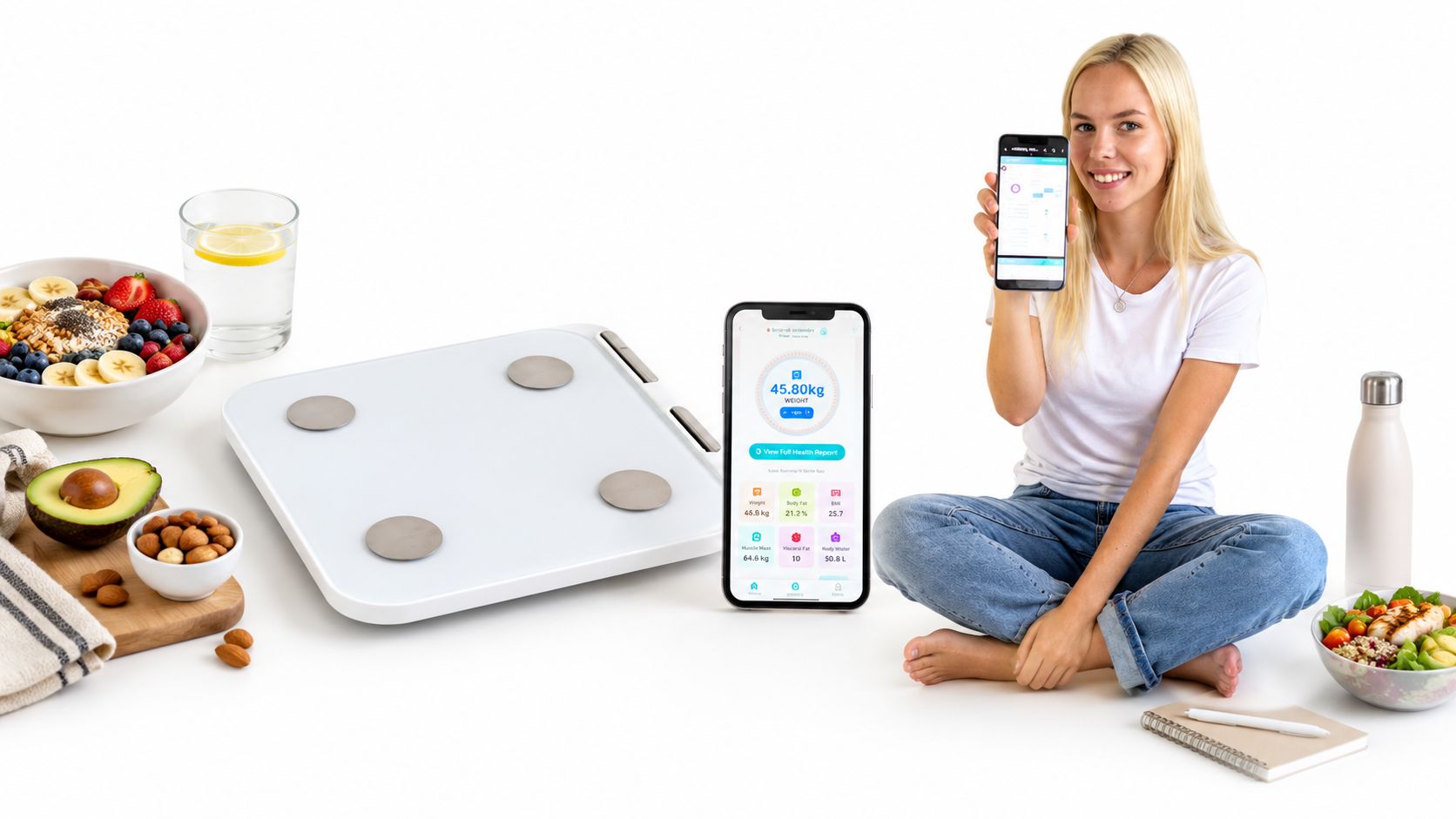
A body-composition trend can refine the starting point. The Venus AI Smart Scale: Body Composition & Body Fat Scale records body-composition metrics and provides a weekly report, nutrition tracking, and a personalised action plan. Treat those readings as trend information, not a diagnosis, and look for consistent movement across several readings.
The table below is an illustrative planning framework, not a prescription. The calorie and macro combinations are examples for a 75 kg adult and should be adjusted to the person's maintenance intake, training, health status, and professional advice.
Macro targets by goal for a 75 kg adult
| Goal | Calories | Protein (g) | Carbs (g) | Fat (g) |
|---|---|---|---|---|
| Weight loss | Individual maintenance minus a moderate deficit | 120 | 200 | 65 |
| Maintenance | Individual maintenance | 120 | 240 | 65 |
| Lean gain | Individual maintenance plus a modest surplus | 135 | 280 | 70 |
For a practical 2,000 kcal day, one option is about 120 g protein, 240 g carbohydrate, and 65 g fat. Breakfast could combine Greek yoghurt, oats, berries, and seeds. Lunch could use chicken or tofu with rice, legumes, and a large salad. Dinner could feature salmon, lean mince, or beans with potatoes and several vegetables. Portions, cooking fats, and snacks determine the final totals, so use the plate as the guide first, then refine with labels or an app if needed.
For fertility-focused planning, the personalised nutrition plan resource can sit alongside advice from a GP or accredited practising dietitian. Nutrition targets should support health, not encourage aggressive restriction.
How Recommendations Shift Across Weight Loss, Muscle, Fertility and Metabolic Goals
The same meal can serve different goals, but the portion balance and nutrient emphasis may change. A weight-loss plate might use more vegetables and a measured starch portion, while a strength-training plate may add carbohydrate around the session. Fertility support generally calls for nutrient sufficiency and regular eating rather than aggressive restriction, while metabolic goals often benefit from replacing saturated fats and processed foods with higher-fibre choices.
Protein and vegetable variety remain useful across all four goals. What changes is the amount of energy, carbohydrate, and attention given to nutrients such as iron, calcium, iodine, and omega-3 fats.
Goal-by-goal nutrition recommendations compared
| Goal | Calorie Direction | Protein (g/kg) | Carbohydrate (g/kg) | Priority Micronutrients | Key Food Focus |
|---|---|---|---|---|---|
| Weight loss | Moderate deficit | 1.6–2.0 | Flexible to activity | Iron, calcium, folate | Vegetables, legumes, lean protein, fruit |
| Muscle gain | Slight surplus | 1.2–2.0 | Increased with training | Calcium, iron, magnesium | Protein-rich foods, grains, potatoes, dairy or alternatives |
| Fertility support | Adequate energy, avoid aggressive restriction | Individualised | Steady intake from minimally processed foods | Folate, iodine, iron, omega-3 fats | Leafy greens, legumes, seafood, eggs, whole grains |
| Metabolic health | Sustainable energy balance | Individualised | Fibre-rich carbohydrate choices | Sodium, calcium, iron | Vegetables, legumes, whole grains, unsaturated fats |
These ranges aren't interchangeable prescriptions. The Victorian Health guidance supports protein from 1.2 to 2.0 g/kg/day for endurance or strength athletes, while the Australian adult reference guidance uses lower baseline values for the general population. Your training status explains why two healthy adults can reasonably need different protein targets.
For metabolic health, sodium has a clear Australian upper target of 2,000 mg per day, while the practical emphasis is on reducing processed and discretionary foods rather than focusing only on the salt shaker. Fertility planning deserves individual care, particularly before supplements are added, because pregnancy preparation and medical history can change requirements.
The shared foundation: Keep the food quality and protein structure consistent. Flex the portions, carbohydrate timing, and nutrient priorities around the outcome you're actually pursuing.
Fueling Training and Recovery With Smarter Carbohydrate and Protein Numbers
Carbohydrate works like fuel in a training vehicle. A short, easy journey doesn't need the same tank size as a long endurance session, and eating the same amount every day can leave some athletes under-fuelled while others accumulate unnecessary energy.
Victorian Health guidance scales carbohydrate to training load: 3 to 5 g/kg/day for light training, 5 to 7 g/kg/day for moderate training, 6 to 10 g/kg/day for endurance sessions lasting 1 to 3 hours, and 8 to 12 g/kg/day for extreme endurance work over 4 hours. The same source recommends 1.0 to 1.2 g/kg/day of protein for daily 45 to 60 minute sport and 1.2 to 2.0 g/kg/day for endurance or strength athletes.
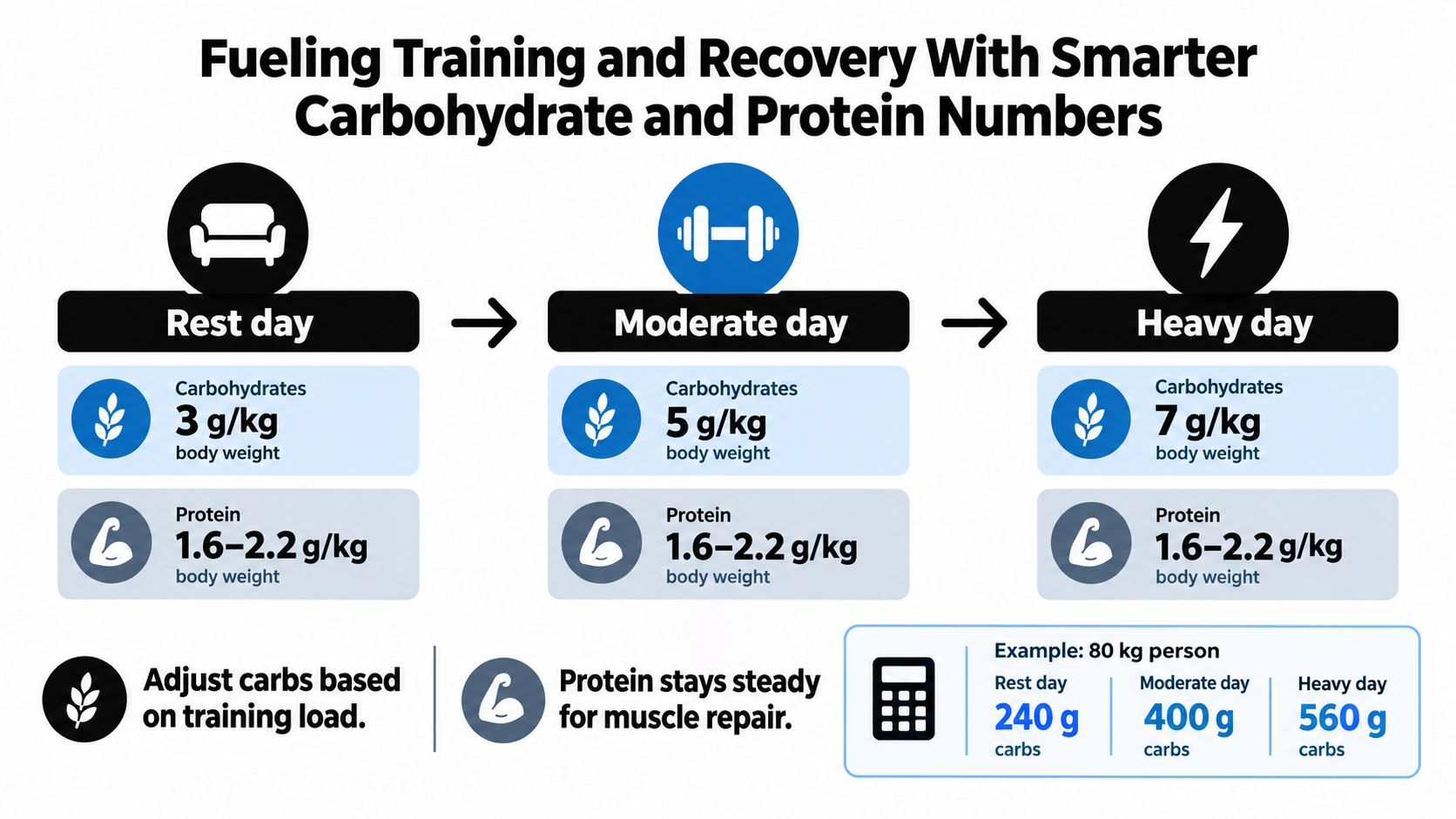
Turn training load into dinner portions
For a 75 kg adult, the lower end of the light-training range is about 225 g carbohydrate, calculated from 3 g/kg. At 5 g/kg, moderate training would be about 375 g carbohydrate, while 7 g/kg would be about 525 g for a heavier training day. These examples use the Victorian Health ranges and should be adapted to session duration, intensity, recovery demands, and total energy needs.
Spread carbohydrate through breakfast, lunch, and the meal after training rather than trying to force it into one sitting. A post-workout meal might combine rice, potatoes, pasta, or bread with a substantial protein serving and colourful vegetables. Protein doesn't need to be consumed in a single large dose. Dividing it across meals makes the target easier to reach.
Watch for persistent fatigue, declining training quality, irritability, unusually poor recovery, or stalled lifts. Those signs don't prove under-fuelling, but they justify reviewing sleep, total intake, carbohydrate distribution, and medical factors with a qualified professional.
A weekly body-composition check can add context. If carbohydrate rises and training improves while lean mass remains stable or increases without an unwanted fat trend, the adjustment may be useful. If the trend moves in the opposite direction, change one variable at a time instead of cutting several foods at once.
Closing the Nutrient Gaps That Diets Quietly Create
A diet can appear disciplined and still miss important nutrients. Restricting dairy, reducing meat, relying on takeaway meals, or cutting calories without planning can create gaps that aren't obvious from the plate.
Australian ABS food-and-nutrition data show that 65.6% of adults had usual sodium intake above the Suggested Dietary Target, 63.7% didn't meet calcium requirements, and inadequate iron intake was more common among females than males, 26.8% compared with 8.2%. These figures are reported in the ABS food and nutrition data, and they point to a need for nutrient-specific swaps rather than another broad instruction to “eat healthier”.
Sodium is often hidden in ordinary foods
The Australian adult sodium upper target is 2,000 mg per day, according to the NHMRC guidance cited earlier. Bread, processed meats, packaged soups, takeaway meals, stocks, spreads, and sauces can contribute more than people expect, so table-salt control alone isn't enough.
Choose a lower-sodium version of a regular staple where available, then build flavour with lemon, vinegar, garlic, herbs, spices, or chilli. You don't need to remove every convenient food. Compare similar products and make the lower-sodium choice often enough that it becomes automatic.
Calcium and iron need deliberate planning
When dairy is limited, calcium can come from calcium-fortified plant milks, tofu set with calcium sulphate, tahini, and canned salmon with bones. Check the label on fortified products because calcium content varies. Pair iron-rich meals with vitamin C foods such as capsicum, citrus, tomatoes, or berries to support absorption.
For people who eat meat, lean red meat and seafood can provide iron, while legumes, tofu, lentils, beans, and fortified foods can contribute in plant-forward patterns. Iron needs can be especially important for menstruating women and active people, but supplementation should follow professional assessment rather than guesswork.
Iodised salt and seafood can contribute iodine, while oily fish provides EPA and DHA omega-3 fats. If you're pregnant, trying to conceive, managing a medical condition, or taking supplements, ask your GP or accredited practising dietitian to review your personal requirements.
How AI-Driven Weekly Insights Turn Numbers Into Better Choices
A recommendation only helps when it changes what someone does at the next meal. The useful behavioural loop is simple: choose a target, record enough information to notice patterns, review the trend, and make one adjustment for the coming week.
A weekly body-composition brief can help separate a short-term scale fluctuation from a longer pattern. Meal-photo logging can reduce the friction of recording food, while voice-based coaching can make a question easier to ask when someone is cooking, commuting, or preparing a family meal. These tools don't replace clinical advice, and they shouldn't turn uncertain measurements into diagnoses.
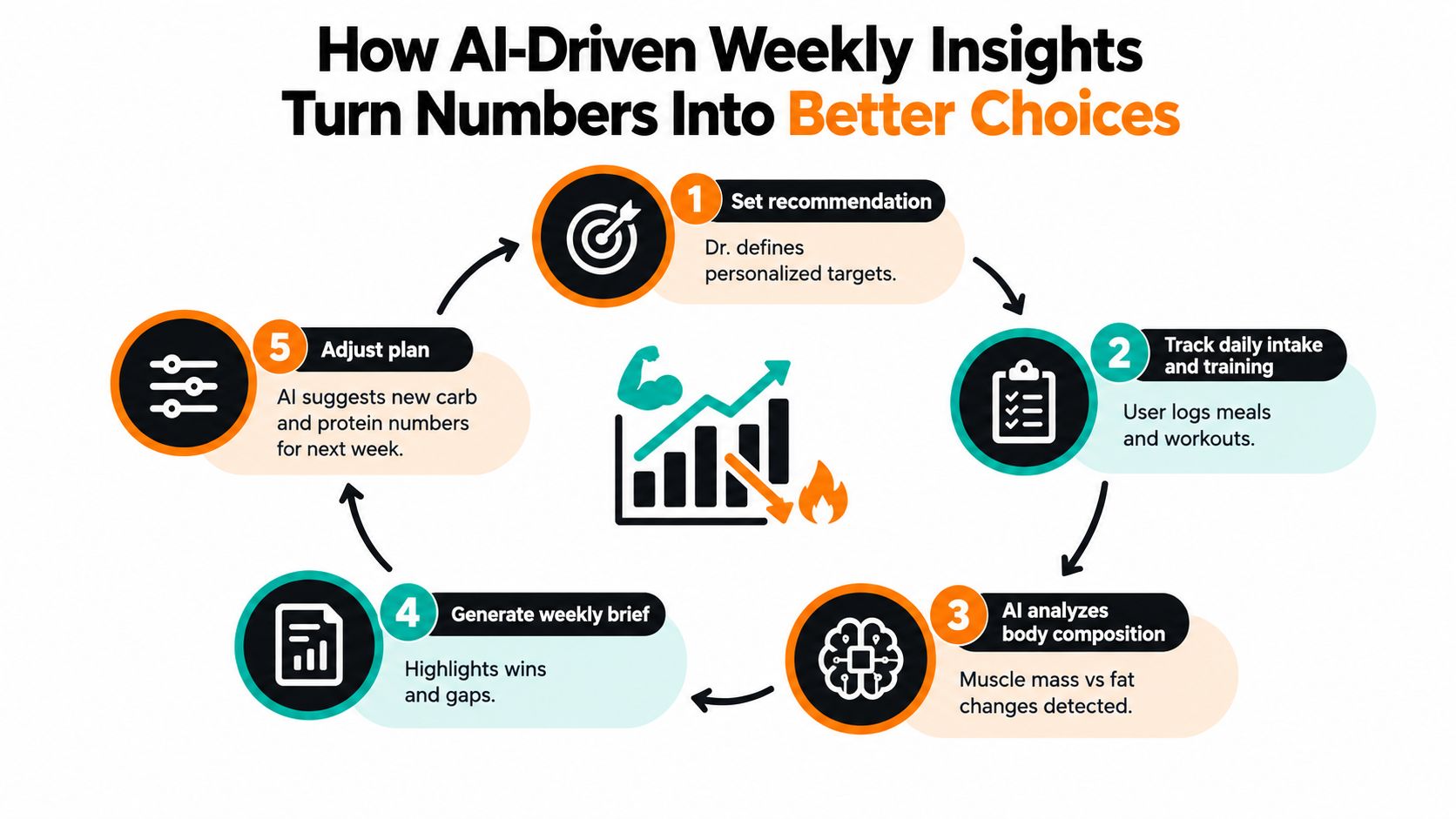
Make one recommendation visible
Suppose a person meets protein targets at home but regularly misses them while travelling. A useful weekly brief might identify the pattern and suggest a practical protein-forward snack or a different breakfast structure. The same principle works for vegetables: instead of displaying five separate targets, the daily priority might be “add a vegetable to lunch”.
The guide to making the most of the Venus AI Smart Scale explains how weekly readings and app-based insights can support this review process. For people tracking fertility alongside nutrition and body data, the Venus Smart Basal Thermometer for Ovulation, Bluetooth BBT Tracker with App automatically syncs basal body temperature to the Venus app via Bluetooth, according to the supplied product information.
AI personalisation works best when it narrows the next action. It shouldn't tell you to rebuild your entire diet. It should help you decide whether tomorrow's lunch needs more vegetables, whether training requires more carbohydrate, or whether a recurring food choice is pushing sodium higher than intended.
A 7-Day Starter Plan and Common Tracking Questions
Use the next seven days to build consistency, not to chase a perfect score. Each day has one decision that takes little time and can fit around the meals your household already eats.
Seven-day starter plan
| Day | Nutrition Recommendation | Meal Anchor | Tracking Focus |
|---|---|---|---|
| Monday | Increase vegetable variety | Add two generous handfuls of vegetables to lunch | Record the vegetable types |
| Tuesday | Include fruit deliberately | Add fruit to breakfast or an afternoon snack | Note whether it replaced a discretionary snack |
| Wednesday | Anchor each main meal with protein | Add eggs, yoghurt, tofu, legumes, fish, chicken, or lean meat | Estimate protein across the day |
| Thursday | Review sodium sources | Compare two versions of a usual bread, stock, sauce, or packaged meal | Record the lower-sodium choice |
| Friday | Support training fuel | Place carbohydrate around the hardest session | Note energy and recovery |
| Saturday | Protect nutrient density | Build dinner around vegetables, protein, and a minimally processed carbohydrate | Photograph the plate |
| Sunday | Review the week | Choose one change for the next seven days | Check trends, hunger, energy, and adherence |
Common tracking questions
Should I log food on rest days? Yes, if rest-day intake affects your weekly pattern or if you're learning portion sizes. Carbohydrate may change with training load, but protein and nutrient quality still matter.
What if body weight stalls? First check the trend, portions, liquid calories, weekend differences, sleep, and training changes. If the pattern persists, adjust one part of the plan and observe rather than making several cuts at once.
How often should targets change? Recalculate when your body weight, lean mass, training load, medical situation, or goal changes meaningfully. A weekly review is useful, but weekly changes aren't always necessary.
Do I need an app? No. A plate method, repeatable meals, food labels, and a short weekly review can work. An app or connected device is useful when you want help spotting patterns that are difficult to see manually.
The practical target isn't flawless compliance. It's a repeatable system that turns the Australian Dietary Guidelines into meals you can prepare, share, and adjust.
Venus Health Co. offers connected tools for reviewing body composition, nutrition logs, weekly trends, and fertility-related basal temperature data in one app-based system. Visit Venus Health Co. to explore the available health-tracking options and choose the level of support that fits your routine.