

Loss of Appetite Pregnancy Guide: Causes and Relief
Dr. Adeyinka AdegbosinYou open the fridge, look at the meal you usually enjoy, and close the door again. Even the thought of eating feels uncomfortable, yet you're worried about getting enough nourishment for your baby. Loss of appetite during pregnancy deserves attention, especially when drinking becomes difficult too.
When Food Suddenly Feels Impossible
Perhaps you feel hungry until someone starts cooking. Perhaps you manage a little toast, then spend the rest of the morning trying not to feel sick. Or you don't vomit at all, but every food suggestion sounds wrong.
These are useful descriptions to give your maternity team. Saying that you've lost your appetite can mean anything from disliking a particular meal to being unable to swallow more than occasional sips. What you can eat and drink matters more than the label.
Common doesn't mean easy
Pregnancy-related appetite loss often sits alongside nausea, vomiting and food aversions. Those experiences can overlap, so you don't need to decide which category you fit before asking for support.
It can also feel unexpectedly isolating. Someone may suggest a healthy dinner when you're concentrating on tolerating the smell of the kitchen. You might feel guilty about rejecting food, particularly if you've spent time planning how you'd eat during pregnancy.
Try replacing that judgement with a more useful check-in:
- What stays down? Include drinks, snacks and small amounts, not just meals.
- What feels different? Notice whether the obstacle is nausea, smell, texture or fullness.
- What can't you manage? Tell your clinician if eating difficulties are stopping ordinary daily activities.
Reassurance needs a safety check
There's an important distinction between needing flexible meal choices and needing medical treatment. Being able to tolerate a limited menu is different from being unable to maintain intake, becoming dehydrated or losing weight.
You don't need to prove that your symptoms are worse than someone else's before asking for care.
A practical approach starts with understanding the pattern, then making eating and drinking more manageable. It also includes knowing when home strategies aren't enough. This is general education, not a diagnosis or an individual nutrition prescription.
For now, set aside the expectation of a normal-looking meal. The more useful question is whether your current intake is manageable and whether you need help to improve it.
Why Appetite Drops During Pregnancy
Appetite is not a matter of wanting food. During pregnancy, hormonal changes, digestive changes and altered sensory responses can make eating feel physically unpleasant. Several influences may operate together rather than producing a single, obvious cause.
Nausea, fullness and sensory changes
Pregnancy-related hormonal and gastrointestinal changes can contribute to nausea, while changes in smell and taste can trigger food aversions. Australian guidance describes symptoms typically beginning at 4–7 weeks, peaking around 9–12 weeks, and resolving by approximately 20 weeks for most patients, although individual experiences vary (South Australian pregnancy guidance).
The diagram separates these influences, but it shouldn't be read as a way to identify a particular hormone from your symptoms.
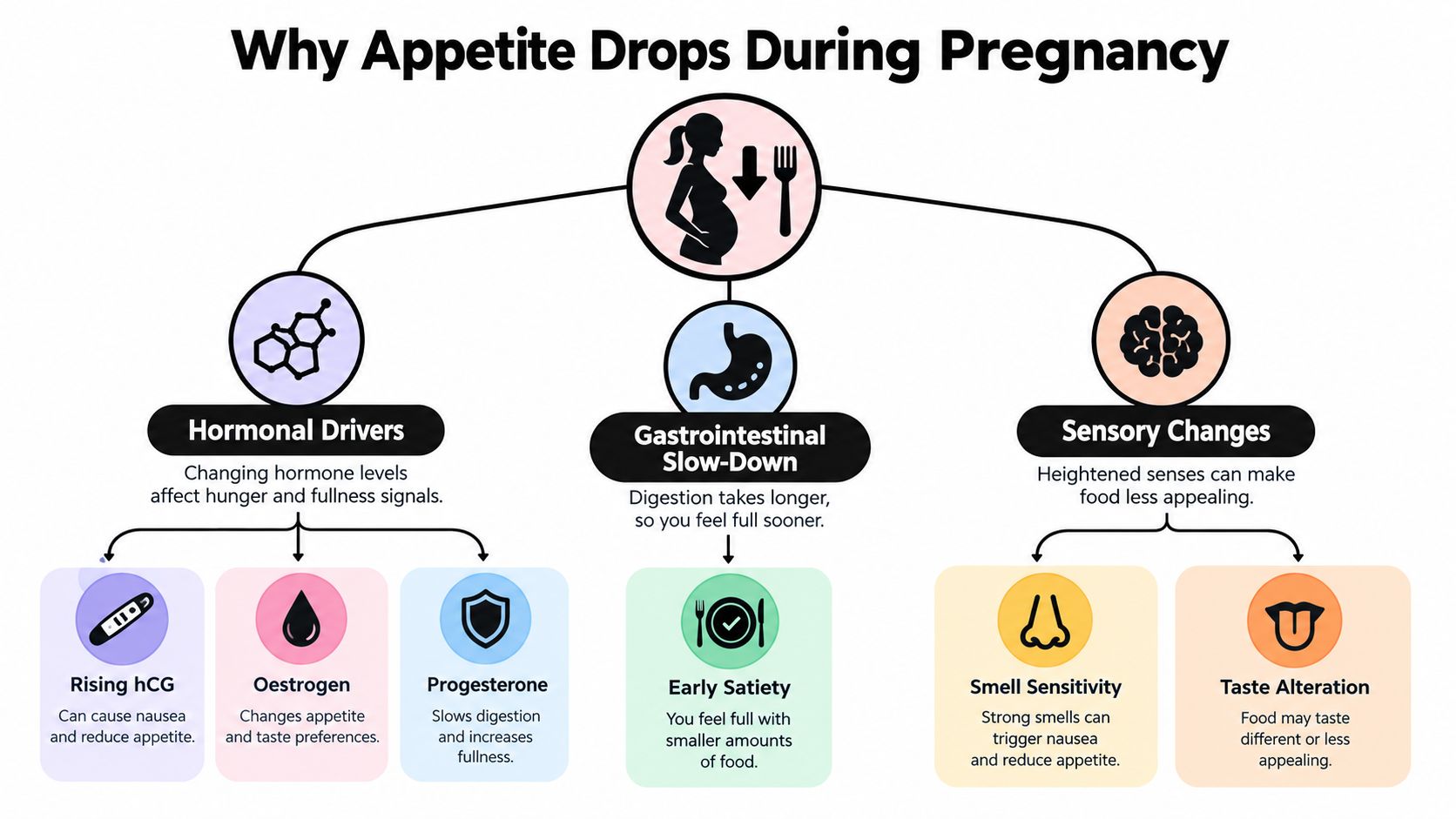
You don't need to pinpoint a hormonal cause to describe what's happening. It's often more helpful to explain what interrupts eating.
| Your experience | A useful description for your clinician |
|---|---|
| Food sounds appealing, but eating brings queasiness | Nausea is limiting intake |
| A particular smell or texture feels unbearable | Aversion is narrowing food choices |
| You want to eat but feel full very quickly | Fullness is limiting meal size |
| Eating feels harder when you're worried or overwhelmed | Emotional distress also needs discussion |
Notice the pattern without diagnosing yourself
For example, you might tolerate a food when someone else prepares it but struggle when you're beside the stove. That observation gives you something practical to change without requiring you to force yourself through the trigger.
If worry is part of the experience, mention it alongside the physical symptoms. That doesn't mean the nausea is psychological or that you should be able to think your way out of it.
Bring up medicines and supplements too, including iron and prenatal vitamins, particularly if you notice symptoms around the time you take them. Rather than assuming they're responsible or stopping prescribed treatment yourself, ask for a review.
New symptoms or a marked change in your usual pattern also deserve assessment. Pregnancy shouldn't become the automatic explanation for every episode of poor appetite.
From Mild Aversion to Hyperemesis Gravidarum
The important difference along this spectrum is how symptoms affect intake and daily life, not whether you've vomited. Someone who feels continuously nauseated may struggle substantially even without frequent vomiting.
The visual below shows increasing difficulty, not an inevitable progression. Mild aversion doesn't mean you'll develop a severe illness.
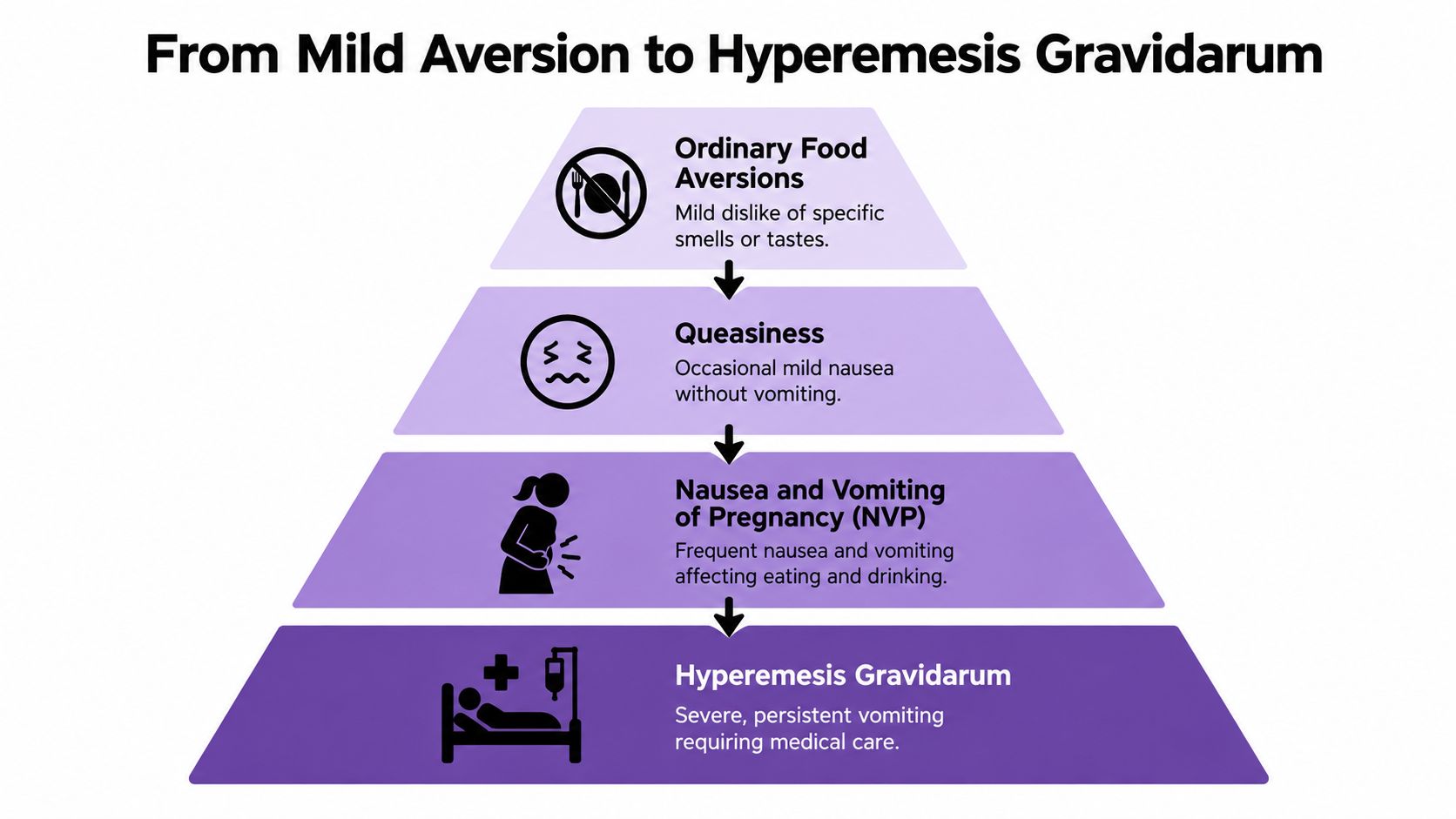
Where ordinary difficulty becomes clinically important
With a mild aversion, you may reject a particular food but still find alternatives. With nausea and vomiting of pregnancy, often shortened to NVP, eating and drinking can become difficult more broadly.
NSW Health estimates that NVP affects approximately 69% of pregnancies, while hyperemesis gravidarum, or HG, affects approximately 1.1%. Its guidance describes HG as severe nausea and/or vomiting with inability to eat or drink normally, dehydration and possible weight loss or vitamin deficiencies, and identifies it as the main cause of hospitalisation in the first half of pregnancy (NSW Health guidance on pregnancy sickness and HG).
HG isn't an unpleasant meal or a stronger dislike of food. It's a condition that may require treatment beyond home adjustments.
Understanding the severe end
In an Australian consumer survey of people who currently or previously experienced severe NVP or HG, 98% reported great difficulty eating and drinking, 75% reported weight loss, and 72% reported admission for intravenous fluids (Australian survey of severe pregnancy sickness experiences). These findings describe a severe subgroup, not the likelihood of those outcomes for everyone with reduced appetite.
The practical message is to describe your limitations. Don't minimise symptoms because you can occasionally manage a snack.
For everyday coping ideas, the guide to managing nausea and morning sickness during pregnancy offers a companion resource.
The following video is optional viewing, not a tool for deciding whether you need assessment.
A Minimum Viable Intake Plan
Minimum viable intake is a short-term organising approach, not a nutritional target or a substitute for treatment. It means choosing the next manageable action rather than trying to recreate your usual diet while you feel unwell.
Think of the priorities as hydration, then tolerable food for energy, then a clinician-supported plan for micronutrients. These aren't separate tasks you must complete perfectly before moving on.
Start with what you can drink
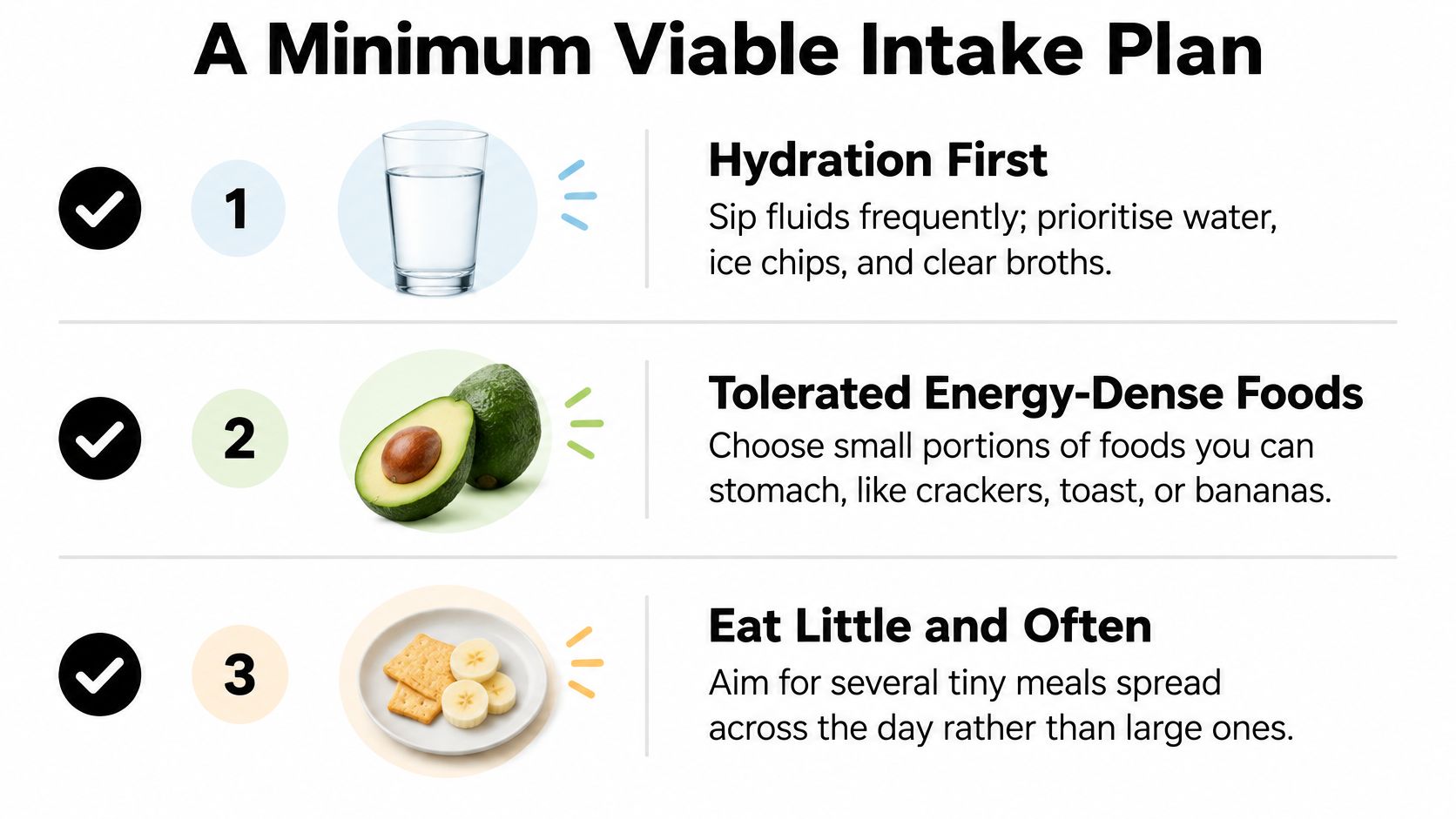
Try small, regular sips rather than confronting a full glass. Options in Australian hospital guidance include ice, diluted drinks, smoothies, soups, broths and oral rehydration solutions, alongside small, frequent meals and dietitian support when symptoms are moderate to severe (WA hospital guidance on managing hyperemesis gravidarum).
Choose according to tolerance, not what looks most virtuous. If drinking alongside food makes you feel worse, try having fluids separately. Ask a pharmacist or maternity clinician about an oral rehydration solution if you're unsure what's appropriate.
This visual summarises the practical starting points.
Build around tolerated food
Make a short list of foods that currently feel possible. For example, your list might include toast, crackers, banana or a smoothie. These are starting options, not a prescribed menu.
- Reduce the amount presented. Put a little food on a small plate and leave the option of more.
- Try a manageable addition. If plain toast works, you could test a topping you normally tolerate rather than replacing it with an entirely different meal.
- Change the preparation setting. If cooking smells are the obstacle, ask someone else to prepare food or trial a cold alternative.
- Keep choices flexible. A food that doesn't work today doesn't need to disappear from your options permanently.
Energy-dense foods can help make small portions more useful, but tolerance comes first. Don't turn every mouthful into a test of nutritional quality.
Practical rule: Start with something you can manage, then consider what you can add.
Discuss prenatal vitamin timing and formulation with your clinician or pharmacist if taking them worsens nausea. Ask whether your easiest eating window would be a suitable time, and what to do if you vomit after a dose.
For broader eating guidance once intake is more manageable, see nutritional needs and diet tips during pregnancy.
Tracking What Matters at Home
A useful home record helps a clinician understand your day. It doesn't need to calculate every nutrient or produce a perfect chart. A phone note, paper diary or existing app can all serve that purpose.
Record function, not just food
Write down what you managed and what happened afterwards. Include whether fluids stayed down, whether nausea prevented eating, and whether symptoms stopped you from working, showering or preparing food.
A simple record could contain:
- Intake. Foods and drinks tolerated, described in ordinary household amounts.
- Symptoms. Nausea, vomiting, triggers and changes through the day.
- Hydration observations. Urine becoming darker or less frequent, alongside how you feel.
- Treatment. Medicines taken, whether they stayed down, and questions for your clinician.
This is more informative than recording only that you had a bad day. It also avoids making memory do all the work when you're exhausted at an appointment.
Put weight information in context
Weight trends can support assessment, but don't interpret a reading on its own. Ask your maternity team whether home weighing would be useful and how they want you to record it.
Pregnancy-related fluid shifts make scale-derived fat and muscle estimates clinically unreliable. Don't use those estimates to decide whether you're nourished, dehydrated or recovering, and don't follow automated weight-loss advice during pregnancy without clinical review.
A consumer scale is optional within a clinician-agreed routine.
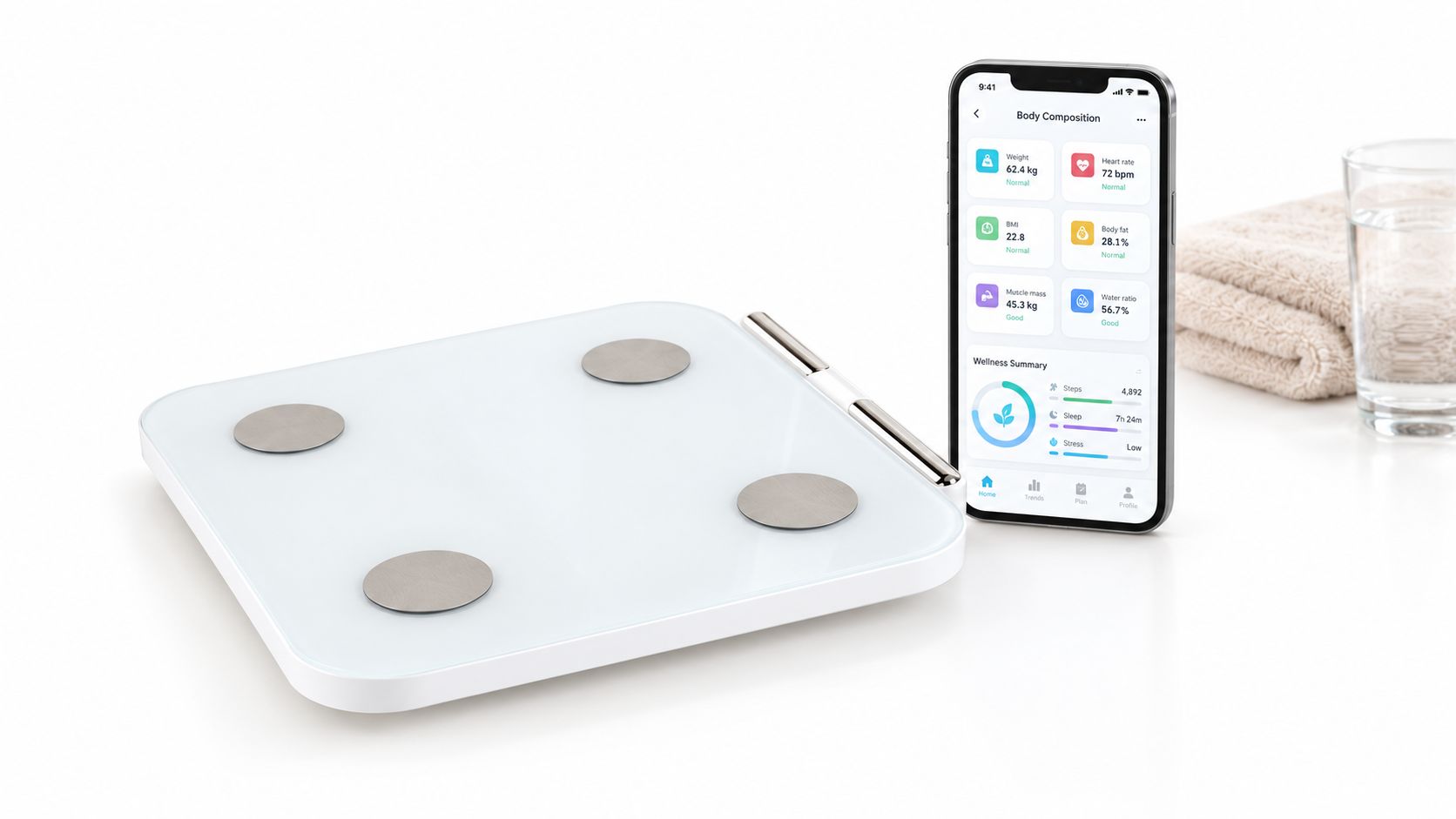
The Venus AI Smart Scale: Body Composition & Body Fat Scale offers app-connected weight tracking and nutrition logging. Those functions are organisational aids, not evidence that its body-composition outputs or automated recommendations are suitable for pregnancy care.
If you already keep basal body temperature records from fertility tracking, don't let maintaining that routine distract from describing your present symptoms. You don't need a consumer device, a complete log or a trend report before seeking help.
Warning Signs You Should Not Ignore
Contact your GP, midwife or maternity assessment service promptly when you can't maintain intake or you're deteriorating. Seek emergency assessment for severe symptoms, fainting, blood in vomit or significant abdominal pain. Don't wait for your next routine pregnancy visit.
Check what you can observe
Use these warning signs to explain why you need assessment:
- Fluids won't stay down. You can't retain drinks or can't tolerate prescribed anti-nausea medicine.
- Urine is very dark or minimal. You're passing noticeably less urine or hardly urinating.
- You feel dizzy, faint or markedly weak. Standing or ordinary movement feels difficult.
- Your weight is falling. You've noticed ongoing loss rather than a single unexpected reading.
- Other symptoms appear. Abdominal pain, fever, blood in vomit or continuing deterioration need clinical attention.
- Daily life is substantially limited. Symptoms prevent basic activities, even if you aren't vomiting frequently.
Clinical thresholds aren't waiting targets
South Australian guidance considers loss exceeding 5% of pre-pregnancy body weight significant. Victorian guidance also emphasises that inability to eat or drink, significant weight loss or major activity limitation indicates severity regardless of the PUQE-24 symptom score, a structured assessment of pregnancy sickness (Victorian clinical guidance on nausea and vomiting).
You don't need to reach that weight-loss threshold before calling. You also don't need to calculate a symptom score yourself or wait a fixed number of hours while you become more unwell.
An inability to drink is a reason to ask for help, not a challenge to keep testing at home.
Clinicians may consider urine ketones, called ketonuria, alongside the wider assessment. Don't use a home test or any single measurement to decide that symptoms are safe to ignore.
Understanding electrolytes when pregnant may help you prepare questions, but a drink product can't replace assessment when you're unable to retain fluids.
If you're unsure which service to contact, call your maternity team and describe the specific warning sign. State plainly if you can't safely travel without help.
What to Expect at the Appointment
You don't need polished medical language. Start with what you can't manage, such as difficulty keeping drinks down or being unable to eat enough to carry out ordinary activities. That gives the clinician a clearer starting point than saying your appetite is a bit low.
Bring the information you have
Your intake record can help, but don't delay an appointment to create one. An approximate account is still useful.
- Describe fluid tolerance. Explain what you've tried and whether it stayed down.
- Give the symptom history. Say when difficulties began, whether they're worsening and what daily activities you've stopped.
- Bring treatment details. Include prescribed medicines, supplements and anything bought from a pharmacy.
- Share weight information. Bring your pre-pregnancy weight if known and any recent readings, without trying to diagnose the change.
Tell the clinician if you've already tried small meals and regular sips without enough improvement. That isn't a failure of effort. It helps explain why you need more support.
Ask for a treatment and follow-up plan
Depending on the assessment, treatment may include antiemetics, medicines used to reduce nausea and vomiting, rehydration and nutritional assessment. Intravenous fluids may be needed when drinking isn't sufficient.
Prolonged vomiting also warrants attention to thiamine, a vitamin whose deficiency can cause serious neurological complications. The Australian clinical guidance discussed earlier highlights thiamine assessment and replacement considerations before carbohydrate-heavy intravenous fluids.
Dietitian referral may be appropriate when symptoms are moderate to severe or food choices remain very restricted. A dietitian can work with your actual tolerances rather than handing you an ideal pregnancy menu.
Before leaving, ask what improvement to expect, what to do if medicine won't stay down, and who to contact if treatment isn't helping. Request clear instructions about when you should be reviewed again.
You should leave with a practical next step, not just reassurance that pregnancy sickness is common. If something remains unclear, ask the clinician to write the plan down.
Caring for Yourself While You Wait It Out
Struggling to eat can make pregnancy feel very different from what you expected. You may miss enjoying food, feel frustrated by advice, or worry whenever someone asks whether you've eaten. Those feelings deserve space alongside the physical symptoms.
“Waiting it out” shouldn't mean enduring worsening illness without support. It means using a manageable plan while staying connected to care and changing that plan when it isn't enough.
Make support specific
Ask someone to help with a task rather than asking them to solve your appetite. They could collect a tolerated drink, prepare food away from you, handle the washing-up or help arrange an appointment.
- Reduce decisions. Keep a short list of currently manageable options.
- Share the workload. Let someone else organise shopping or speak with the clinic while you rest.
- Name the concern. Explain whether you need practical help, company or medical assessment.
You don't have to defend why a particular meal feels impossible. A simple explanation of what you can tolerate is enough.
Keep the conversation open
Australian guidance supports repeated assessment of pregnancy sickness rather than a one-off assumption that it will settle. Bring up ongoing symptoms at pregnancy visits, including when the difficulty is nausea without much vomiting.
Don't treat a better meal as proof you no longer need support, or a harder day as evidence you've done something wrong. Tell your clinician how you're managing over time.
Keep the priorities straightforward: manageable fluids, tolerated food and timely escalation when warning signs appear. The purpose is to support you through the symptoms, not to ask you to become better at enduring them.
Venus Health Co. offers app-connected home health tools and food logging that can help organise information for conversations with your maternity team. Visit Venus Health Co. to explore those options, and ask your clinician which tracking, if any, is appropriate while you're managing appetite loss during pregnancy.