

LH Surge Test: When, How, and What Your Results Mean
Dr. Adeyinka AdegbosinYou're standing in the bathroom with a test strip between your fingers, tilting it towards the light and wondering whether that second line is positive or visible. You tested yesterday and saw almost nothing. Today the line is darker, but you're unsure whether you should have intercourse now, test again later, or wait until tomorrow.
An LH surge test can make cycle timing much clearer, but only if you know what the result represents and how quickly the hormone pattern can change. The test is a timing tool, not a verdict on whether ovulation definitely happened. Used consistently, then logged alongside other cycle signs, it can turn a confusing strip into a useful plan.
What an LH Surge Test Actually Detects
An ovulation strip measures luteinising hormone, or LH, in urine. The rise in LH is the hormonal signal that tells the ovary an egg is approaching release. Australian guidance describes a positive urine result as indicating that ovulation is likely within the next 24 to 36 hours, although urinary testing can be difficult to interpret and is most useful when cycles are regular. Australian Prescriber explains how fertility tests detect the LH rise.
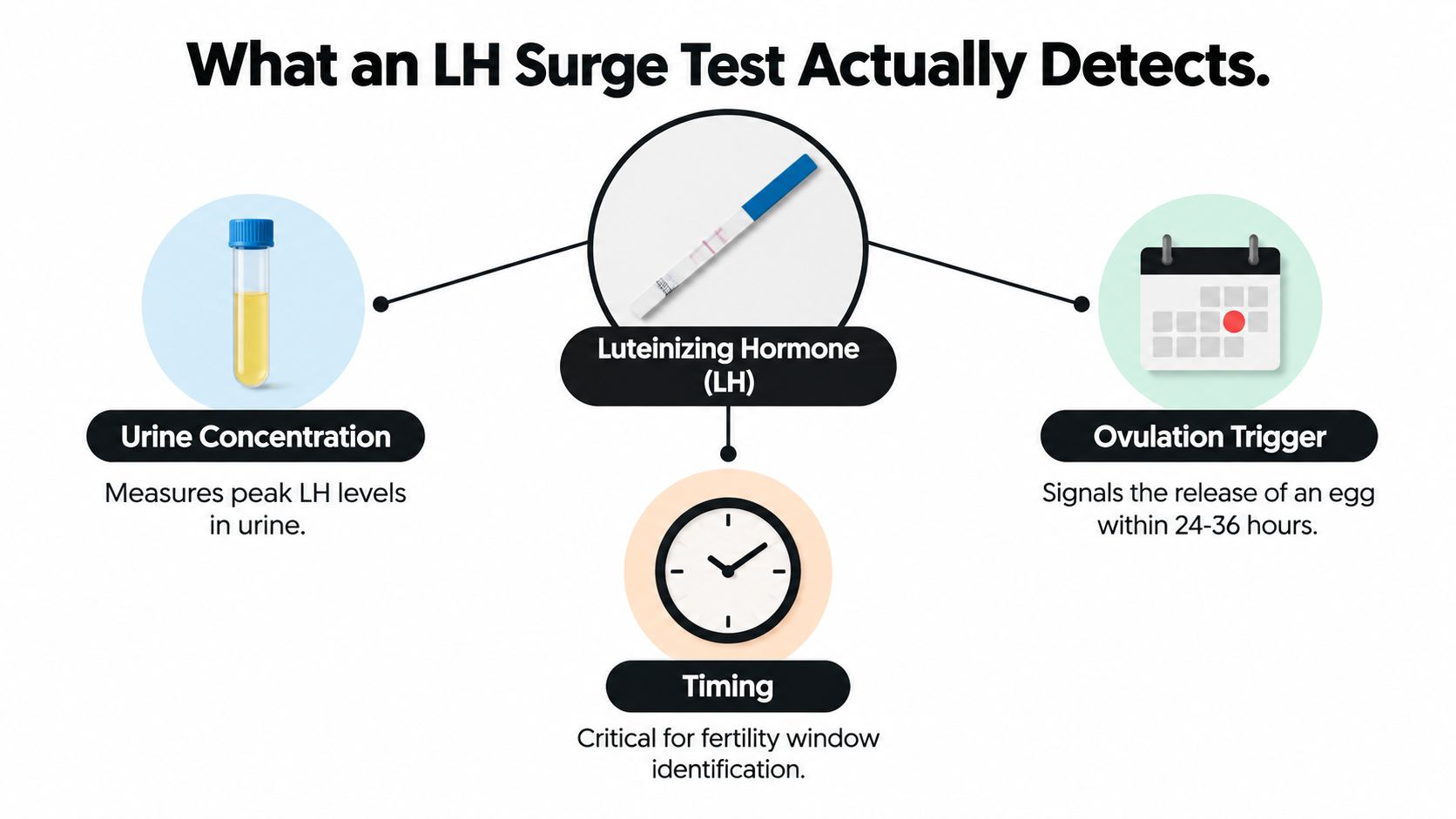
Think of the test as detecting the instruction, not checking whether the final event has occurred. A positive result means LH has reached the kit's detection threshold. It doesn't confirm that the follicle released an egg, and it doesn't detect pregnancy. If you need confirmation, a clinician may use progesterone testing or ultrasound rather than relying on an LH result alone. Australian clinical information also notes that progesterone confirmation is often used around day 21 in a 28-day cycle. This Australian explanation of ovulation timing gives a helpful plain-language overview.
Practical rule: Treat a positive result as a prompt to use the fertile window, not as proof that ovulation has already happened.
The reason timing matters is that LH doesn't rise in a perfectly smooth line. The Australian TGA says the surge appears in urine after it appears in serum, is released in pulses, and typically comes before ovulation by about 36 hours. The TGA's medical-device update outlines these testing limitations. Testing at a consistent time helps you notice the change before it rises and fades.
If cycle hormones are also causing symptoms associated with the menopause transition, it helps to keep those concerns separate from ovulation testing. A resource on menopause symptom solutions may be useful for understanding that different hormonal questions require different assessments.
When to Start Testing in Your Cycle
Start with cycle day one, which is the first day of full menstrual flow, not the last day of spotting. Then estimate your testing start by subtracting 17 days from your usual cycle length. This is a starting point, not a promise, because illness, stress, hormonal changes and natural cycle variation can move ovulation.
| Cycle Length | Start Testing On Cycle Day | Notes |
|---|---|---|
| 26 days | 9 | Begin before the likely middle of the cycle |
| 28 days | 11 | Use the first day of full flow as day one |
| 30 days | 13 | Continue if the result stays negative |
| 32 days | 15 | A later surge may still vary between cycles |
| 35 days | 18 | Give yourself extra testing days if timing is uncertain |
The most common first-cycle mistake is starting too late because a calendar app predicts ovulation on a fixed day. A shorter cycle can bring the fertile window forward, while a longer cycle can push it back. If your cycles vary, use the shortest recent cycle as your baseline and keep testing for extra days rather than stopping at the first expected date.
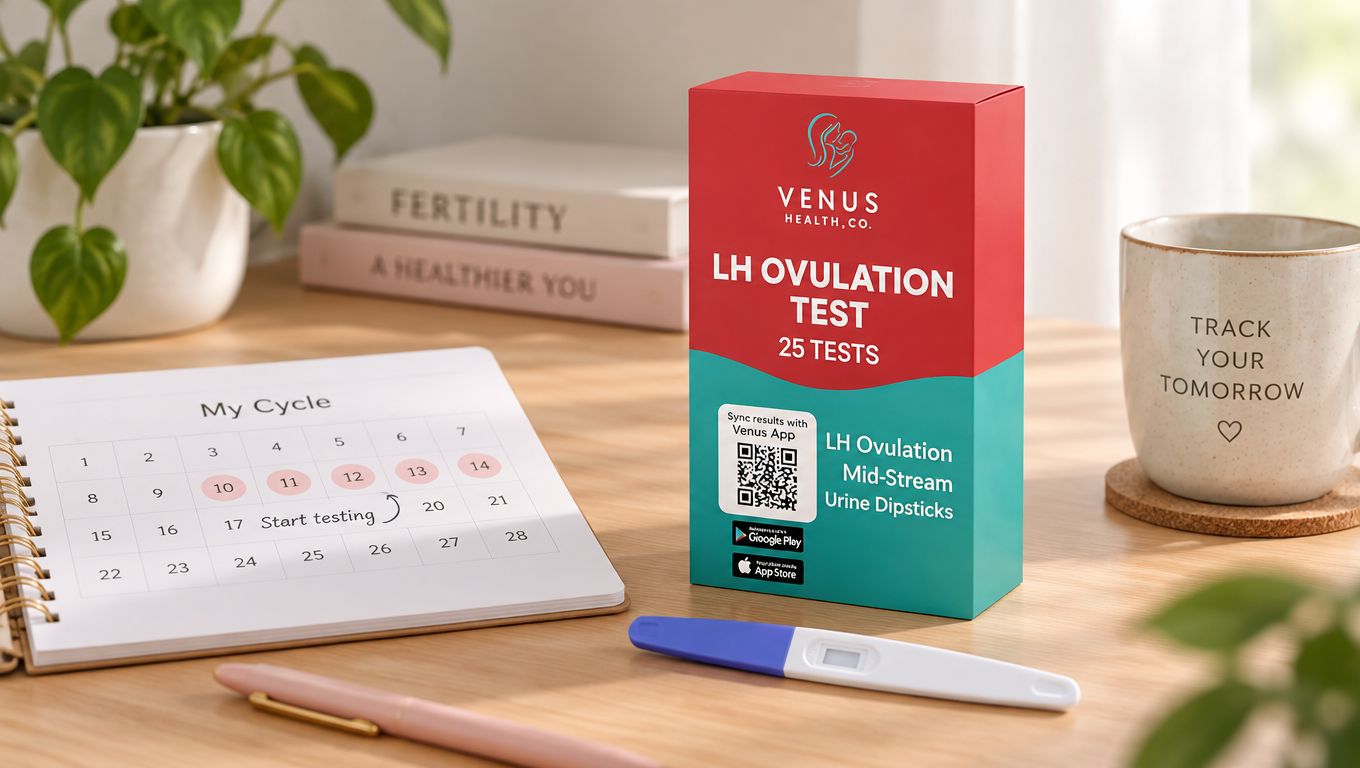
After choosing your start day, choose a daily testing window you can repeat. Australian consumer guidance commonly recommends testing at the same time each day, then testing more often once the line begins to darken. This guide to selecting an LH ovulation test explains why consistency is more useful than relying on a single arbitrary test.
The Venus Ovulation Predictor Test Kit is described as an at-home strip format, with results read in under 10 minutes and compatibility with manual logging or fertility apps. Its product information also states that it's manufactured in a TGA-compliant facility. If you're coming off hormonal contraception or your cycles have returned after giving birth, don't assume your old cycle length still applies. Start earlier, allow a longer testing window, and ask a clinician for guidance if periods remain unpredictable.
How to Run the Test Without Contaminating the Sample
A clean routine makes a bigger difference than a complicated one. Before testing, wash and dry your hands, check the expiry date, and use a clean, dry cup to collect urine. A cup gives you control over the dip depth and avoids the uneven flow that can happen with midstream testing.
Follow the instructions supplied with your kit, especially for the sample level and read time. For many strip formats, the strip is dipped for several seconds, often around 5 to 10 seconds, with the absorbent end immersed but the result window kept above the urine. Don't soak the strip beyond the marked limit.
Lay it flat on a clean, dry surface. Holding it at an angle can let the liquid run unevenly across the strip, which may create streaks or confusing colour distribution. Set a timer and read the result at the manufacturer's stated time, commonly around 5 minutes. Discard it after the permitted window, often 10 minutes, because evaporation marks can appear later and look like a faint positive.
Keep the urine concentrated enough to read
You don't need to dehydrate yourself. The problem is drinking a large amount of water immediately before testing, which can dilute the urine and leave a genuine LH rise looking weak. Australian consumer guidance recommends keeping fluid intake moderate and avoiding a large drink shortly before the sample.
Try to test at roughly the same time each day. If your work schedule changes, choose a window you can maintain rather than chasing a supposedly perfect hour. A steady routine makes a darker result easier to recognise because you're comparing similar conditions.
Separate testing from other measurements
Pregnancy tests and LH tests detect different hormones, so don't use the same interpretation rules for both. If you're also tracking temperature, record it separately. The Venus Smart Basal Thermometer for Ovulation is described as syncing basal temperature readings to a phone app by Bluetooth, where users can also log LH results and symptoms.
The simplest reliable sequence is: collect, dip, lay flat, set the timer, read within the stated window, photograph or record the result, and dispose of the strip. Repeating that sequence removes much of the uncertainty from a first cycle.
Reading Positive, Negative, and Faint Lines Correctly
The control line tells you the test worked. The test line tells you how much LH the strip detected. Compare the test line with the control line on the same strip, not with yesterday's strip, because lighting, urine concentration and strip batches can change how colours appear.
| Result | What You See | What It Means | What to Do Next |
|---|---|---|---|
| Positive | Test line is as dark as, or darker than, the control line | LH has reached the kit's positive threshold | Treat the result as a fertile-window signal and follow your timing plan |
| Negative | Test line is lighter than the control line, or absent | The test hasn't detected a positive LH level | Continue testing at the planned time |
| Faint or darkening | Test line is visible and becoming darker but remains lighter than control | LH may be rising, but the kit has not reached its positive threshold | Test again, especially later that day if the line is changing |
A faint line is still a negative result on a standard line-based LH test if it's lighter than the control. This is where many people get caught, particularly when the line has darkened over several days. A progressing line can suggest that the hormone level is changing, but it isn't the same as a positive reading.
Some people see a darker line, then a lighter line, without ever seeing a clear positive. That can happen if the surge is brief and the testing schedule misses its strongest point. It can also happen when LH rises without successful ovulation, particularly in cycles affected by irregular hormonal patterns. The test measures the hormone signal, not egg release.
Why brand results don't always look identical
Australian products use different detection sensitivities. Product information includes thresholds such as 40 mIU/mL for one advanced digital test and 25 mIU/mL for some strip tests, while consumer guidance commonly describes standard strips in the range of 20 to 40 mIU/mL. Australian product information explains the difference between surge detection and ovulation confirmation.
That's why you should follow your own kit's instructions rather than comparing a strip with a friend's brand or an online photograph. Read within the stated window. A line that appears after the permitted time shouldn't be reclassified as positive just because it looks darker later.
Catching a Short Surge With Twice-Daily Testing
Once the test line starts getting darker, twice-daily testing is usually more useful than testing once daily throughout the entire cycle. LH is released in pulses, so a single sample can miss the period when urine concentration crosses the kit's threshold. The Australian TGA specifically highlights this pulsatile pattern and the delay between blood and urine detection.
A practical routine is to test once in the late morning and again in the early evening, with roughly 8 to 10 hours between samples. Avoid using the first urine of the morning as your default if your kit instructions advise a later window. The aim is to sample during the part of the day when the urinary rise is more likely to be visible.
You don't have to double your testing for every day. Use the cycle-length estimate to test once daily at first, then add the second test when the line begins to darken or when cervical mucus becomes wetter and more slippery. This concentrates extra strips around the days when missing the change would be most frustrating.
A second test is most valuable when your result is changing, not when every strip looks exactly the same.
If you get a positive result, record the time and follow the timing advice you've already chosen. A positive result points to likely ovulation within the next 24 to 36 hours, as described in Australian guidance, but it still doesn't confirm that release occurred. If you repeatedly miss positives despite careful timing, keep the photographs and app records rather than guessing from memory.
Syncing Results With a Fertility App
A strip in a bathroom bin tells you almost nothing about the next cycle. A dated result, photographed within the reading window and stored beside your symptoms, gives you a pattern you can use.
Record more than “positive” or “negative”. Useful entries include:
- Line strength: Note whether the test line is absent, faint, moderate or close to the control. If your app uses a scale, keep the same scale each cycle.
- Time of testing: A late-morning result and an evening result shouldn't be treated as interchangeable.
- Body signs: Add cervical mucus changes, mild one-sided discomfort, bleeding or other observations.
- Context: Record unusually high fluid intake, illness, disrupted sleep or medicines that could affect interpretation.
- Intercourse timing: Mark the days intercourse occurred so you can compare timing with the LH pattern rather than relying on recollection.
A simple example looks like this. On cycle day 11, you log a faint line at lunchtime. On day 12, the line is darker at lunchtime but still lighter than control, then close to the control in the evening. On day 13, you record a positive result and tag intercourse that day. The useful information isn't just the positive strip. It's the sequence showing how your result changed and when your fertile-window activity happened.
Take a photograph immediately after reading the strip, using similar lighting where possible, and enter the result manually or through your app's photo feature. An ovulation tracker app guide describes how combining test results with period dates and symptoms can make cycle records easier to review.
An app doesn't replace progesterone testing, ultrasound or personalised clinical advice. It does reduce the burden of remembering which strip belonged to which day. After several consistently logged cycles, you can compare your actual line progression with the calendar prediction and adjust the next testing start date based on your own pattern.
Common Pitfalls and When to See a Clinician
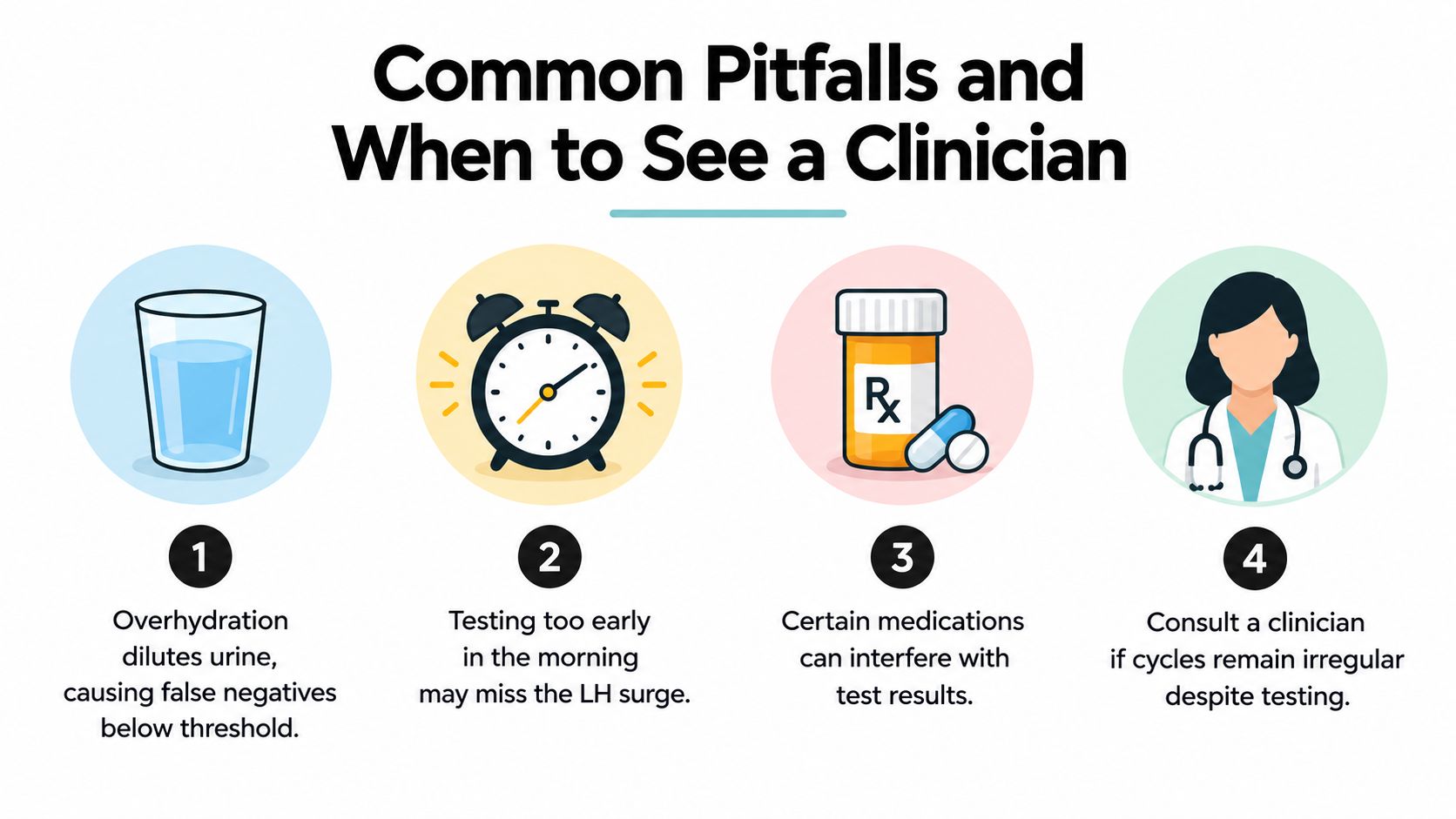
A positive LH result can feel reassuring, but several habits can make the result misleading. The first is overhydration. Drinking a large volume shortly before testing dilutes urine, which may leave LH below the kit's threshold even when the hormone is rising. Keep fluids moderate before testing and avoid trying to “flush” your system.
The second is testing at a poorly chosen time. Some people test immediately on waking because that's familiar from pregnancy testing, but urinary LH timing isn't identical to pregnancy-hormone testing. Use the schedule in your kit instructions, keep the time consistent, and consider a second sample when the line begins to darken.
Correct the interpretation, not just the technique
A positive line means the test detected an LH surge. It doesn't guarantee that ovulation occurred. Australian guidance recommends progesterone-based confirmation when confirmation matters, and a clinician may also consider temperature patterns, ultrasound or other investigations.
Medication can complicate interpretation. Fertility medicines in particular may affect test results, so include every prescription, supplement and treatment in your notes and tell your clinician what you're taking. If your test stays negative, don't keep repeating the same routine indefinitely without reviewing the wider cycle pattern.
Book a clinical appointment if you have irregular or absent periods, known PCOS, repeated cycles without a clear positive, or concerns about recurrent early pregnancy loss. If you're over 35 and have been trying for six months, seek advice rather than relying on home testing alone. Bring your logged results, photographs, medication list and cycle-length history. Those details can help a clinician distinguish a missed surge from an irregular cycle or a surge that didn't lead to confirmed ovulation.
Use the video below as another practical demonstration of common ovulation-testing questions, then compare its advice with your own kit's instructions.
Venus Health Co. offers at-home LH ovulation tests and app-connected basal temperature tracking, so you can record hormone signals, symptoms and cycle patterns in one place. Visit Venus Health Co. to explore the available fertility-tracking tools and choose a routine you can follow consistently.