

Home Health Monitoring Guide for Smarter Daily Tracking
Dr. Adeyinka AdegbosinYou wake before the household does and reach for three different systems. A busy parent checks a scale app, an athlete reviews yesterday's training notes, and someone trying to conceive searches for a temperature entry in a notebook. Each person may be collecting useful information, yet the overall picture still feels scattered.
That's the central challenge of home health monitoring. The aim isn't to measure everything your body can produce. It's to select a small group of meaningful signals, capture them consistently, and understand how they change against your own usual pattern.
Australia's experience with telehealth shows why this approach now fits more naturally into routine care. Between 13 March 2020 and 31 July 2022, 118.2 million telehealth services were delivered to 18 million patients, and more than 95,000 practitioners used telehealth services, as reported in the Australian telehealth evidence report. That infrastructure made remote review, follow-up, and escalation easier to integrate with home measurements.
This guide will help you understand how monitoring works, compare device categories, choose metrics for your goal, connect devices to daily routines, and protect your information. You'll also see where home monitoring can support clinical decisions, where it has limits, and how to start without turning wellness into a second job.
Introduction to Home Health Monitoring Made Simple
A home monitoring system can be as simple as one thermometer and a notebook, or as connected as several devices feeding data into one app. The technology matters, but the question behind the measurement matters more.
An athlete might ask, “Is my body composition changing in the direction my training plan intends?” Someone trying to conceive may ask, “Do my basal temperature and hormone signals suggest that ovulation has occurred or may be approaching?” An older person or busy parent might ask, “Has something changed from my normal routine that deserves attention?”
Those questions need different signals. A body composition scale may help with broad weight, fat, and muscle trends, but it won't answer a fertility question. A basal body thermometer may reveal a cycle pattern, but it won't tell you whether a blood pressure reading needs clinical review. A pulse oximeter can provide a useful oxygen saturation reading in the right context, but it can't replace an assessment of breathing, appearance, or symptoms.
The practical shift: Don't start by buying more devices. Start by deciding what decision you want the data to support.
From scattered readings to a personal baseline
A single reading is often noisy. Sleep, exercise, illness, hydration, stress, timing, and device technique can all influence what you see. A personal baseline gives each new reading context. Instead of asking whether a number looks ideal for everyone, you ask whether it differs meaningfully from your usual pattern.
That distinction helps prevent two common mistakes. The first is overreacting to an isolated result. The second is ignoring a gradual change because every individual reading still looks ordinary. A trend can be more informative than a snapshot, particularly when the monitoring plan includes a clear threshold for contacting a clinician.
Home monitoring also works best when people understand what the device can and can't do. It can collect a signal, organise a pattern, and prompt a conversation. It can't diagnose every condition, interpret symptoms without context, or guarantee that an alert represents an emergency.
A guide for real-life use
The next section explains the basic chain from sensor to app to trend. You'll then compare scales, basal thermometers, LH test strips, blood pressure monitors, and pulse oximeters. After that, the focus moves to three practical groups, athletes, people trying to conceive, and seniors or busy parents.
The later sections cover app integration, routine design, privacy, clinical boundaries, and a simple starter plan. Throughout, the guiding principle stays the same: meaningful signals beat data overload.
How Home Health Monitoring Actually Works
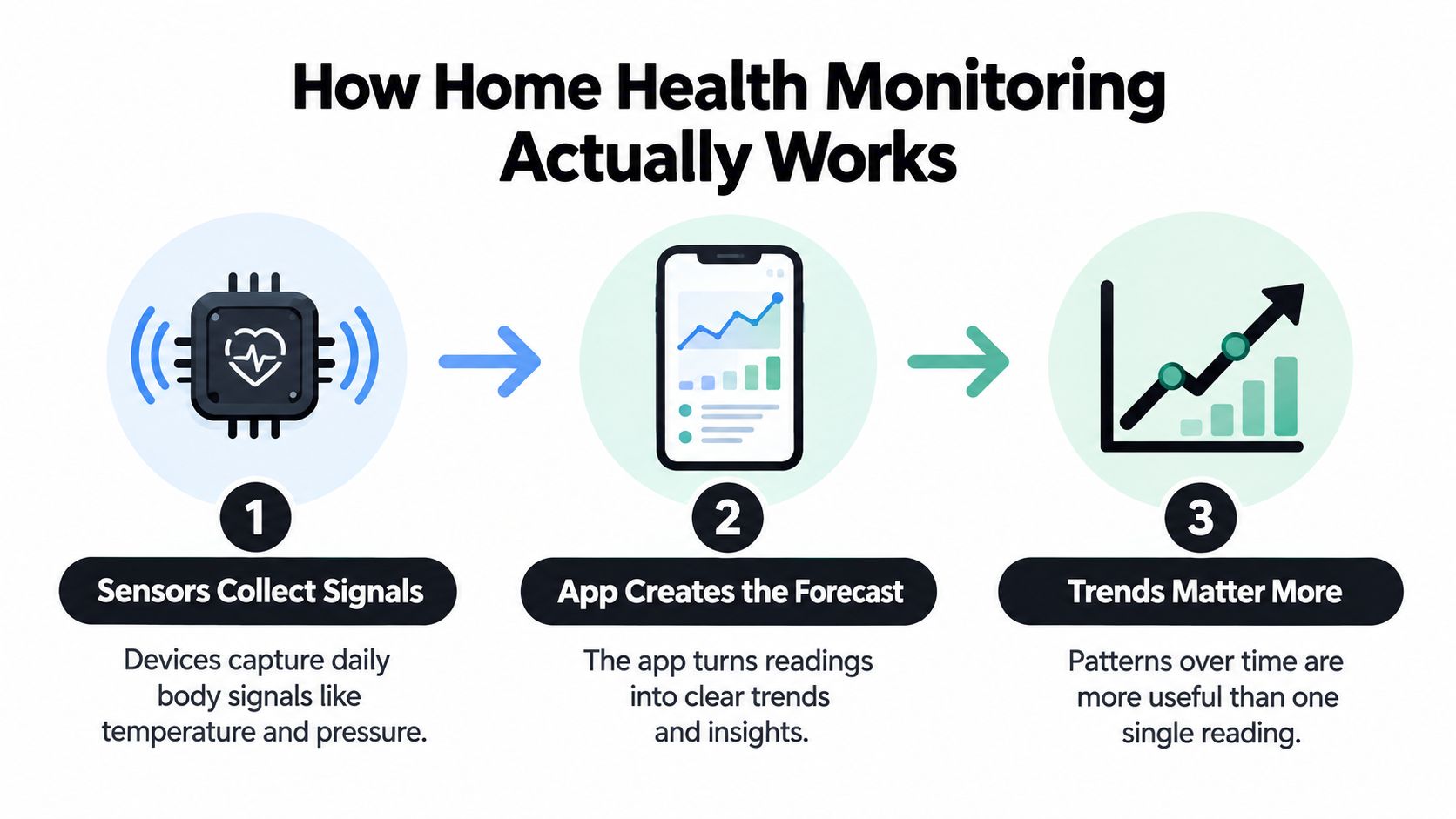
Think of home monitoring as a small weather station for your body. A weather station doesn't measure every possible atmospheric detail. It captures selected signals, sends them to a system that organises them, and helps you recognise whether conditions are stable or changing.
The three layers
Sensing is the first layer. A device captures a physiological or environmental signal, such as temperature, body weight, blood pressure, pulse rate, oxygen saturation, or movement. The quality of the result depends on the device, the way you use it, and whether the signal relates to your health question.
Syncing is the transfer layer. Bluetooth may send a reading to a phone, while some systems rely on manual entry. Automatic syncing reduces transcription mistakes and makes it easier to keep a continuous record, but it doesn't make an unsuitable measurement useful.
Sense-making is the interpretation layer. An app may display a graph, compare readings with your previous pattern, or flag a threshold that warrants attention. The most helpful systems don't show more data. They make the relevant change easier to recognise.
A basal thermometer designed to connect with an app, such as the Venus Smart Basal Thermometer for Ovulation, is an example of a device built around repeated morning temperature readings and automatic Bluetooth transfer. The value comes from the developing curve, not from treating one temperature as a complete answer.
Why timing and consistency matter
If you measure at unpredictable times, the app may be comparing unlike conditions. A morning temperature taken immediately after waking isn't directly equivalent to one taken after getting up, exercising, or drinking coffee. Blood pressure readings can also be affected by posture, activity, stress, and cuff placement.
Consistency doesn't mean perfection. Travel, illness, shift work, and disrupted sleep happen. Record those factors when they could explain a change, then look for the broader pattern rather than abandoning the process after one imperfect entry.
For environmental context, an EcoQuest Purifiers air monitor can help you observe conditions in the home alongside personal measurements. That can be useful when you're exploring whether changes in the environment coincide with comfort, sleep, or respiratory symptoms, though an environmental reading still needs to be interpreted alongside the person's symptoms and clinical advice.
A useful test: If a reading won't change what you do, discuss, or monitor next, it may not deserve a place in your daily routine.
Thresholds also need a plan. A device may identify a reading outside your usual range, but a clinician should help define what counts as a meaningful change and what action follows. The purpose of monitoring isn't to create an endless stream of alerts. It's to support timely, proportionate decisions.
Device Categories You Can Use at Home
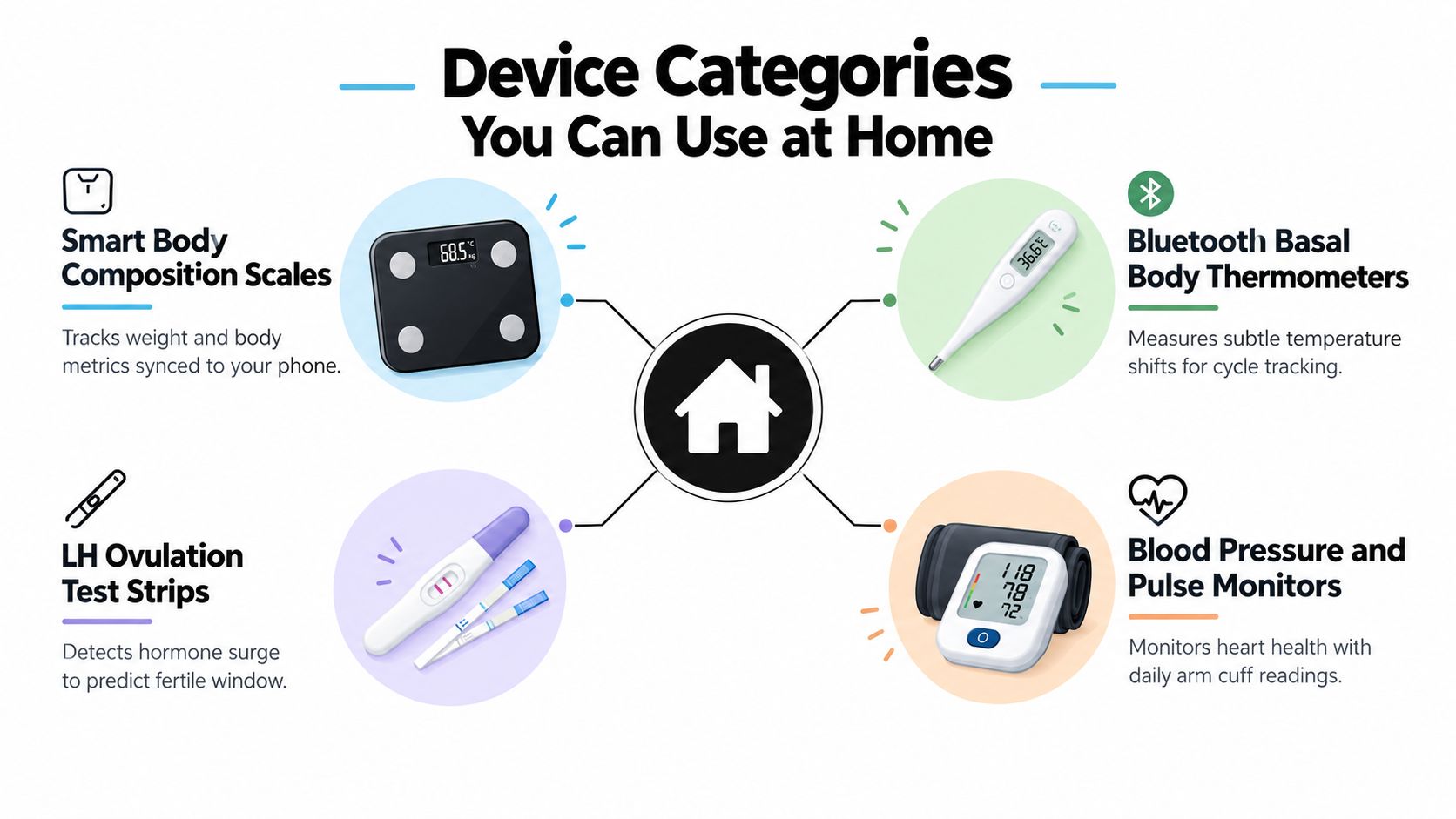
Different devices answer different questions. Comparing them by signal, routine, and intended user is more useful than comparing them by the number of features listed on a box.
Smart body composition scales
A smart scale can track weight and provide estimates related to body composition, depending on the device. For many people, the most useful output is a trend over repeated measurements, such as a weekly change in weight or a gradual shift in estimated fat and muscle measures.
Use the scale under similar conditions when possible. A weekly check-in may be more sustainable than repeated weighing, particularly if daily variation creates anxiety or distracts from the longer pattern. App syncing can also reduce the need to copy readings into a spreadsheet. For a closer look at how digital weighing can fit into a broader routine, explore this guide to digital weighing scales.
Bluetooth basal body thermometers
Basal body temperature, or BBT, is taken at rest, usually immediately after waking. People using fertility awareness methods often examine the pattern across the cycle rather than relying on a single temperature. A Bluetooth model can transfer the reading to an app, where it can sit alongside period information, symptoms, and LH results.
The daily experience should be quiet and repeatable. Keep the thermometer accessible, take the measurement before getting out of bed, and note unusual sleep, illness, or schedule disruption when relevant.
LH ovulation test strips
LH test strips detect a hormone surge in urine. They can add a different type of information to a BBT curve, because BBT generally helps confirm a pattern after ovulation, while an LH result may help identify a potentially fertile period before it.
The trade-off is manual interpretation and timing. You'll need to follow the product instructions, log the result accurately, and understand that an LH signal is one part of fertility tracking rather than a guarantee of conception.
Blood pressure and pulse oximetry monitors
A blood pressure monitor uses an arm cuff to estimate pressure in the arteries. Technique matters, including cuff position, posture, rest, and avoiding a reading immediately after exertion. If you're monitoring blood pressure for a clinical reason, agree with your healthcare professional on the schedule and the readings that require follow-up.
A pulse oximeter estimates oxygen saturation and pulse rate. It can provide context in selected situations, but a reading shouldn't override concerning symptoms or delay urgent care. Device placement, movement, circulation, and other factors can affect the result.
A wearable can complement these tools, but comfort and routine fit are essential. If you wear a watch or fitness device regularly, taking time to choose the right watch band may make the habit easier to maintain. The best device is still the one you'll use correctly and consistently.
What to Track for Your Goals and Life Stage
The right monitoring plan depends on the job you need the data to perform. An athlete, a person trying to conceive, and an older adult may all use a scale, yet the useful question, timing, and interpretation will differ.
CSIRO's Smarter Safer Homes work describes systems that can observe motion, temperature, humidity, vibration, power use, and health measures such as blood pressure, glucose, weight, and body temperature. Its design emphasis is deviation from an individual baseline, not collecting every available metric, as described in the CSIRO home-monitoring research.
| User Group | Priority Metrics | Frequency | Why It Matters |
|---|---|---|---|
| Athletes | Weight trend, estimated fat trend, estimated muscle trend | Weekly or according to the training plan | Shows direction over time without letting daily fluctuation dominate |
| Trying to conceive | BBT, LH results, cycle details, relevant symptoms | BBT each morning, LH according to the testing plan | Combines resting temperature patterns with a hormone signal and personal context |
| Seniors or busy parents | Weight, blood pressure when clinically indicated, selected wellness or activity signals | A simple agreed routine | Helps identify change from a familiar pattern without creating a demanding schedule |
Athletes need direction, not constant judgement
For performance and body-composition goals, a weekly summary can be more useful than reacting to every fluctuation. Weight, estimated fat, and estimated muscle measures can be viewed together with training load, recovery, nutrition, and how you feel. A shift in one measure shouldn't automatically be treated as success or failure.
Choose two or three core metrics first. Add another only if it answers a real question, such as whether recovery changes are appearing alongside performance or body-composition trends.
Fertility tracking needs complementary signals
BBT and LH provide different kinds of information. BBT helps reveal a resting-temperature pattern over the cycle, while LH testing can add information about a hormone surge. Logging symptoms or cervical mucus may provide further context, but more entries aren't always better if they make the routine harder to follow.
Seniors benefit from calm, purposeful observation
Older adults living independently may need monitoring that supports safety without feeling intrusive. A simple weight check, a clinician-directed blood pressure routine, or a selected movement signal may be more acceptable than a system that records everything in the home.
Australian evidence supports that caution. A 2025 study of the Smarter Safer Homes solution found quality-of-life gains for older people living at home, but the improvement wasn't sustained over the long term, and earlier reviews found no clear health-related quality-of-life benefit from smart-home or home-health monitoring technologies for older adults, as reported in the Australian quality-of-life study.
Decision rule: Keep a metric when it helps you notice a meaningful change or supports a conversation with a clinician. Remove it when it only creates noise.
Connecting Devices Apps and Daily Routines
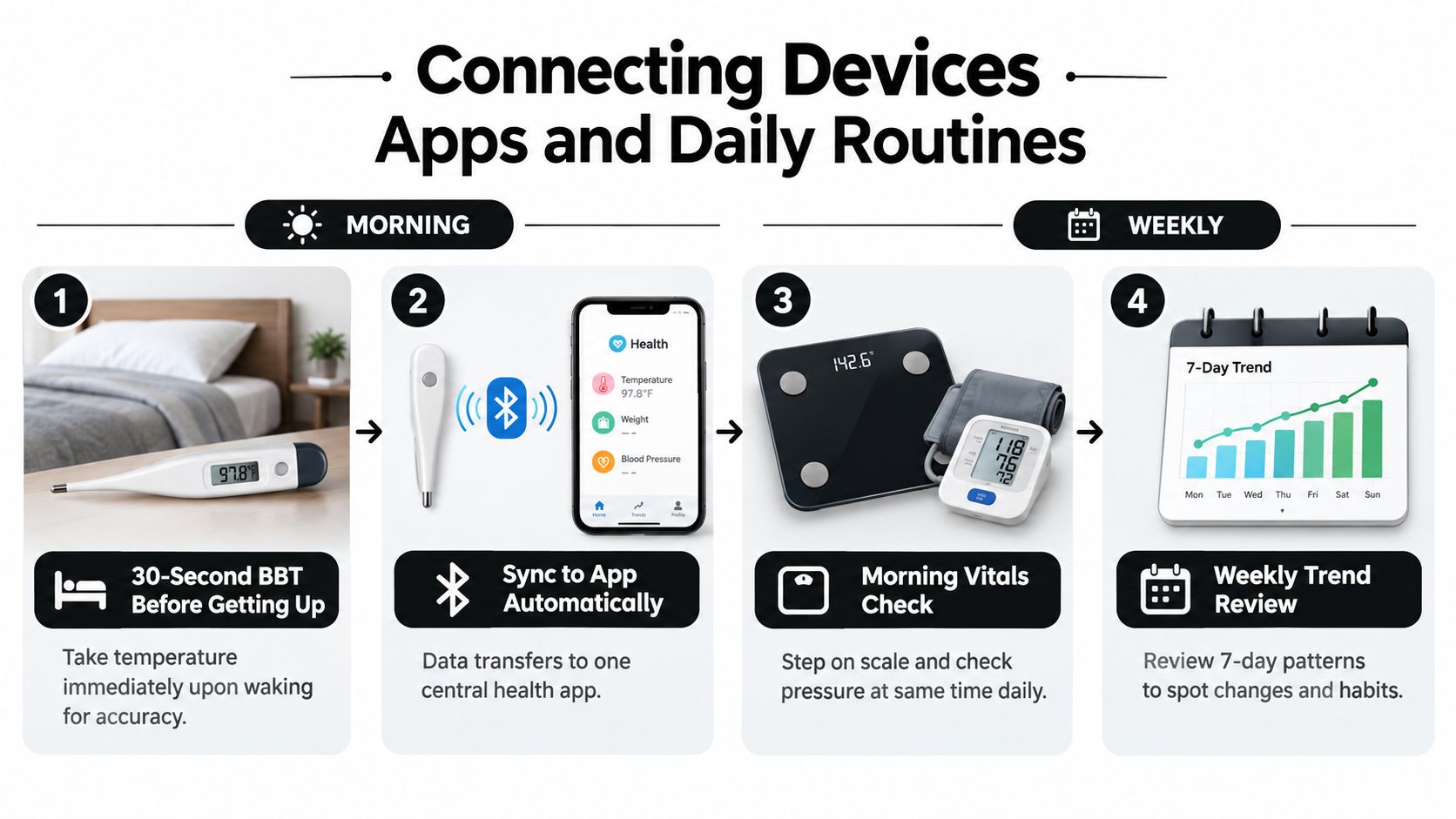
A connected system works when the routine feels almost automatic. The aim isn't to spend the morning entering data. It's to create a small sequence in which each measurement has a clear place and the app presents the pattern in language you can understand.
Build the morning around fixed anchors
For someone tracking fertility, the first anchor is waking. Keep the BBT thermometer beside the bed and take the reading before standing up. Automatic Bluetooth syncing can then move the result into the app, removing a manual transcription step.
A scale or blood pressure monitor may follow, but only if those measurements serve your plan. A person trying to conceive may not need a daily body-composition reading. An athlete may prefer a weekly scale routine. Someone monitoring blood pressure for a clinical reason should follow the schedule agreed with their healthcare professional.
Keep one record for related signals
Logging BBT, LH results, symptoms, and cycle information in one place makes relationships easier to review. A separate notebook can still be useful for notes about travel, illness, poor sleep, or medication changes, but avoid maintaining multiple competing sources of truth.
If you use an Android phone, this guide to the best Android health app can help you think through how app compatibility and data organisation fit into your setup.
Review connections during setup:
- Check Bluetooth access: Allow the permissions required for syncing, but avoid granting unrelated access.
- Test one complete transfer: Take a reading and confirm that it appears in the intended app before relying on the workflow.
- Create a travel fallback: Pack the device, charging or battery supplies, and a simple note-taking option for disrupted connectivity.
- Record exceptions: Mark illness, unusual sleep, intense exercise, or travel so the app's trend has context.
- Choose a review time: Look at patterns weekly rather than repeatedly refreshing the app after every reading.
Australia's telehealth infrastructure also makes remote review and follow-up more practical. The Australian telehealth report records 118.2 million services delivered between 13 March 2020 and 31 July 2022, creating a large clinical foundation for care conversations that don't always require an in-person visit. Home data becomes more useful when a clinician can review a pattern, discuss symptoms, and agree on what happens if a threshold is crossed.
Privacy Security and Clinical Considerations
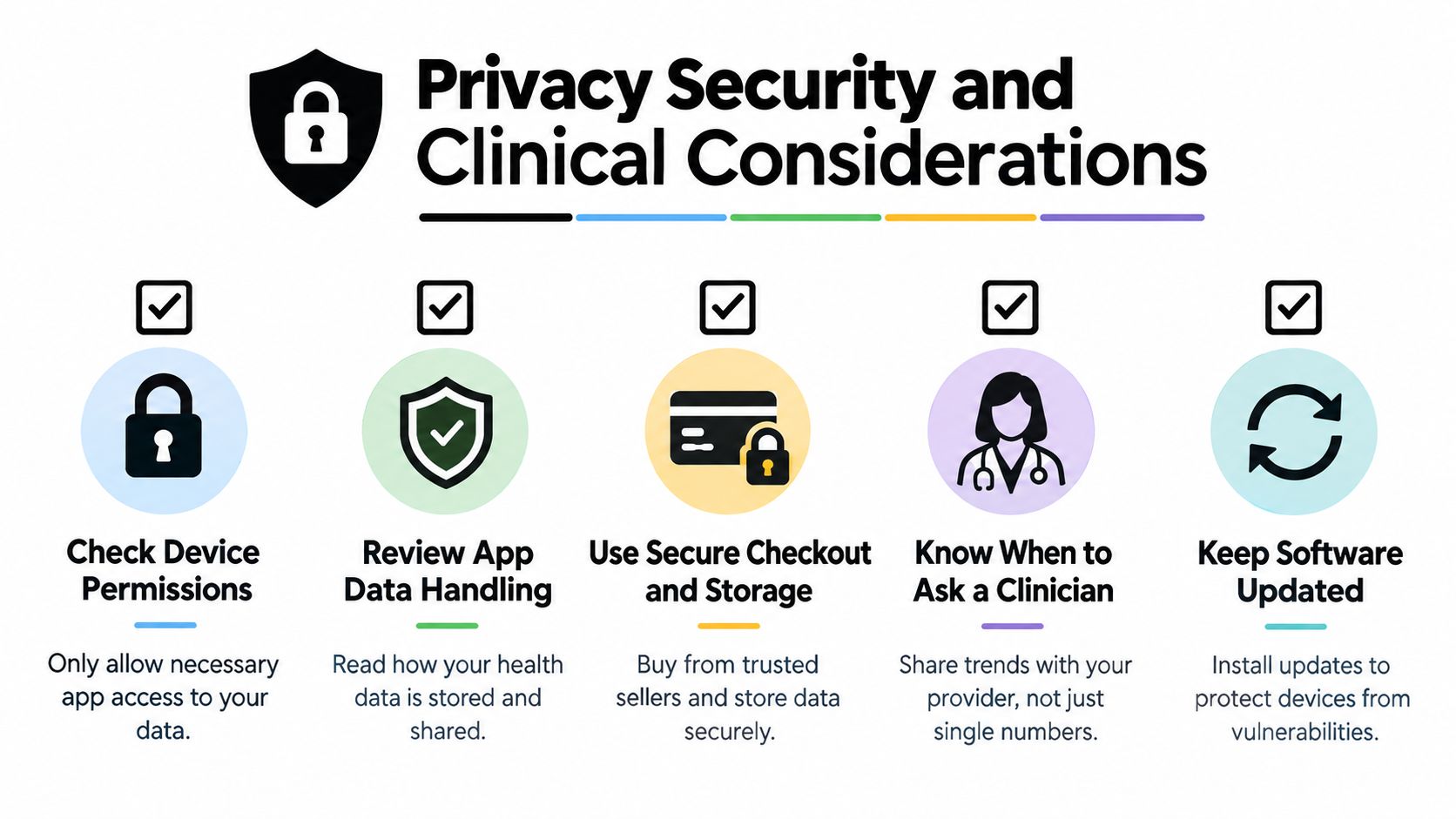
Health data deserves the same care as any other sensitive information. Before connecting a device, check which permissions the app requests, what data it stores, whether you can export or delete your information, and whether sharing with a clinician is optional or built into the workflow.
Use a strong, unique password for the account and keep the phone's operating system and app updated. Buy devices from identifiable sellers, use secure payment pages, and be cautious about sending screenshots of health graphs through informal channels. A trend can reveal more about your routine than you may expect, especially when several signals are combined.
Ask what action follows a change
Remote monitoring is most valuable when a signal leads to timely review or escalation. The NSW Agency for Clinical Innovation's remote patient monitoring evidence check concluded that remote patient monitoring is usually feasible, safe, acceptable, and as effective as face-to-face care in most cases. It also reported that cost-effectiveness is often comparable with usual care.
That doesn't mean every condition benefits from every device. Threshold-based monitoring works best when a physiological change can be detected early enough for someone to respond. Collecting more readings without an escalation plan can create anxiety without improving care.
Australian clinical results illustrate the potential when the system is connected to action. In a NSW study of remote monitoring for acute COVID-19, 4,399 of 276,236 people with positive SARS-CoV-2 tests participated in RPM, and the remotely monitored group had lower 28-day mortality than usual care, with an adjusted odds ratio of 0.19 and a 95% confidence interval of 0.08 to 0.43, as reported in the Australian remote-monitoring study. The study also reported a shorter mean length of stay.
CSIRO's chronic-disease home-monitoring trial reported a 53% decrease in hospital admissions, a 76% reduction in length of stay when admission occurred, more than 40% lower mortality, and 24% system-wide savings through fewer GP visits, specialist visits, and procedures, according to CSIRO's home-monitoring findings.
Know where reassurance ends
Monitoring can support a clinical decision, but it can't replace symptoms, examination, professional judgement, or urgent care. A normal reading doesn't prove that everything is fine, and an unusual reading doesn't automatically identify the cause.
Quality-of-life evidence also remains uneven for older adults. The findings in the earlier section matter because a short-term improvement in reassurance or wellbeing isn't the same as a durable long-term benefit. Before adopting a system, ask whether it reduces a real burden, supports independence, or helps a clinician intervene earlier.
For practical guidance on handling app records, permissions, and sharing, review these best practices for data management.
Building a Sustainable Monitoring Routine You Will Stick To
Start with a 14-day experiment, not a permanent promise. Select one goal, choose two or three metrics, and decide when you'll review the pattern.
- Set up the basics: Place devices where the routine naturally happens and confirm that readings sync correctly.
- Keep timing steady: Use the same morning or weekly anchor whenever practical.
- Add context sparingly: Note illness, travel, unusual sleep, or major routine changes.
- Review trends weekly: Look for direction and baseline deviation instead of judging every reading.
- Agree on escalation: Ask your healthcare professional what changes should prompt a call, appointment, or urgent action.
- Remove unnecessary signals: If a metric doesn't support a decision, pause it.
Athletes can begin with weekly body-composition summaries. People trying to conceive can pair morning BBT with LH results and relevant cycle notes. Seniors and busy parents can keep the plan deliberately small, focusing on stability and changes that matter to their care needs.
Home monitoring should support confidence, not create surveillance of yourself or someone else. If you're designing support for an older adult, combine technology with conversation, consent, and human help. Resources such as support options from Bornbir also show why practical at-home care involves more than collecting measurements.
Choose tools with clear data practices, reliable support, and protection such as a warranty where available. Then let the routine earn its place by helping you make calmer, better-informed decisions.
Venus Health Co. brings app-connected tools for body composition and fertility tracking into one health ecosystem, including a smart scale for weight and body-composition insights and a Bluetooth basal body thermometer for automatic BBT syncing. Visit Venus Health Co. to explore tools that can help you focus on meaningful signals, consistent routines, and personalised trends at home.