

Body Fat Percentage Healthy Ranges by Age and Sex
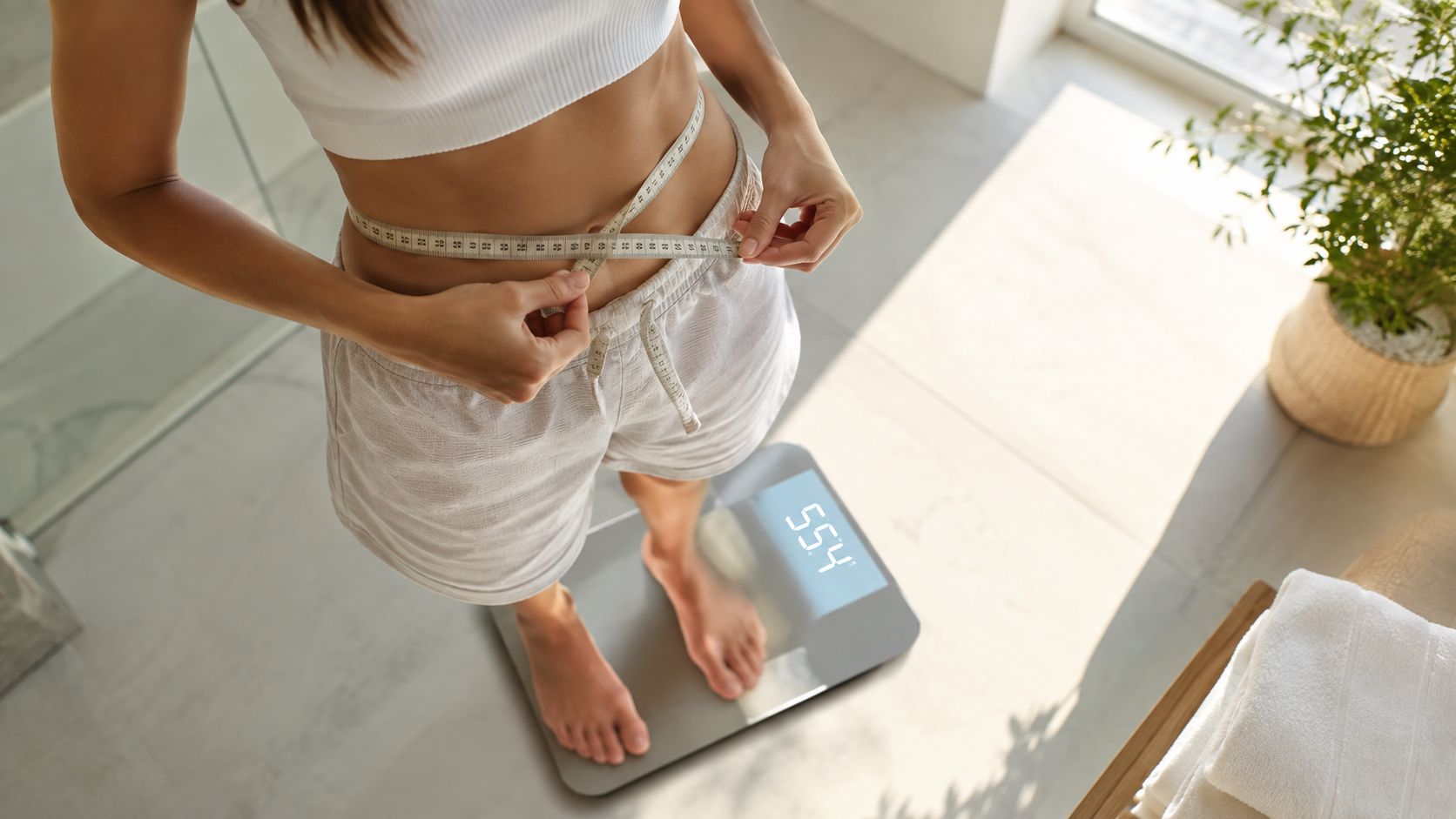
Dr. Adeyinka AdegbosinYou step on the bathroom scale after a few weeks of training. The number has barely moved, yet your jeans feel looser and your shoulders look more defined. Another person at the same weight may have a very different balance of muscle and fat, which is why weight alone can leave you with an incomplete answer.
Body fat percentage adds useful context, but it isn't a pass-or-fail score. A healthy body fat percentage depends on sex, age, muscle mass, life stage, measurement method and wider health markers. The most helpful approach is to understand a functional range, measure consistently and follow the direction of change rather than reacting to one surprising reading.
Introduction Why Body Fat Percentage Matters More Than Weight Alone
A bathroom scale measures your total mass. It doesn't tell you whether a change came from fat, muscle, water, food in your digestive system or other lean tissue. Body fat percentage estimates how much of your total body weight is fat, while the remainder is generally described as lean mass.
That distinction matters for a person who strength trains, an athlete returning from injury, a busy parent becoming more active or an older adult trying to preserve muscle. Two people can weigh the same and have different proportions of fat and lean tissue. They may also have different waist measurements, fitness levels and metabolic risk.
BMI has a similar limitation. Australian public-health guidance places adults into BMI categories, and the Australian Dietary Guidelines.pdf) focus on BMI rather than a universal body-fat cutoff. BMI can therefore be useful for population-level screening while still missing important individual differences, particularly in muscular people or people whose weight sits in a familiar range while body fat is comparatively high.
The central idea: A healthy body fat percentage isn't one magic number. It's a context-dependent range interpreted alongside waist size, strength, movement, nutrition, sleep and relevant health checks.
Australia's national picture makes that context important. The Australian Institute of Health and Welfare data summarised for Australian readers reported that 66% of adults aged 18 and over were living with overweight or obesity in 2022, made up of 34% overweight but not obese and 32% obese. BMI isn't the same as body fat percentage, but this figure shows why Australians need practical ways to understand body composition without reducing health to a single measurement.
This guide takes a calm, useful route through the subject. You'll learn what body fat percentage measures, how age and sex change the reference range, why very low and higher levels deserve different attention, how home devices estimate the figure and how to track trends without letting daily fluctuations control your decisions.
What Body Fat Percentage Really Means for Your Health
A person can weigh the same as a training partner yet have a different body composition. One may carry more muscle and less fat, while the other has less lean mass and a higher fat proportion. Their waist measurements, clothing fit, strength and health considerations may differ even when the scale shows the same number.
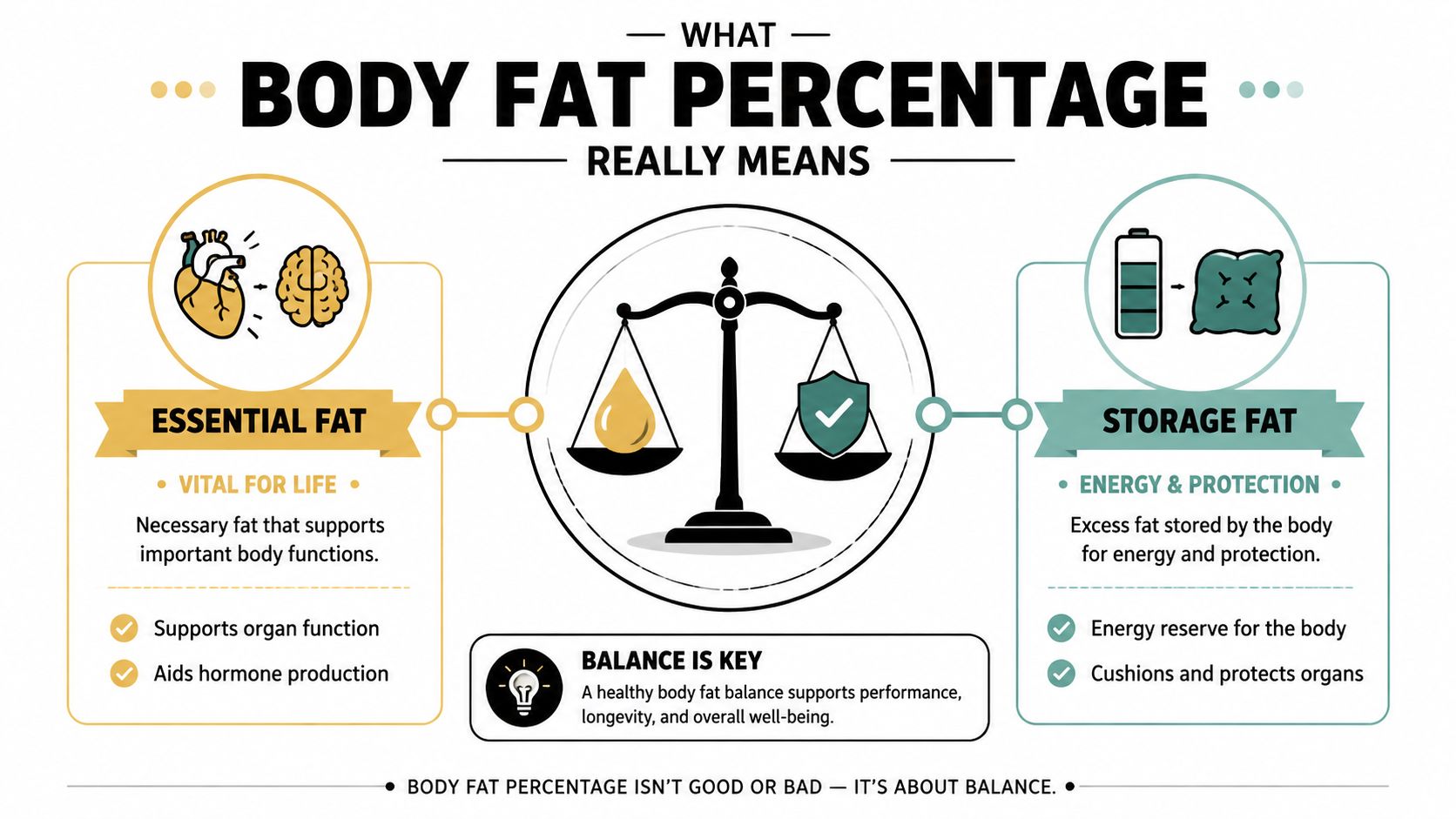
Body fat has two broad roles. Essential fat supports normal physiological function. Australian-facing guidance places essential fat at about 2–5% for men and 10–13% for women, as outlined in Australian body-fat guidance. These figures describe a physiological floor, not targets to pursue. Moving close to that floor can create health concerns rather than improve health.
Stored fat works like a spare fuel supply and also helps with insulation and cushioning. The body needs some storage fat, while a larger reserve can have different implications depending on where it is carried and what other health markers show.
The number is a proportion, not a judgement
Body fat percentage can clarify whether weight change is mainly fat loss from general weight loss. It can also help you watch whether muscle is being preserved during changes to eating and activity. The measurement still cannot show every relevant detail, including the exact location of fat or the quality of cardiovascular fitness.
BMI has a similar blind spot. Muscle adds to body weight, so a muscular person may fall into a higher BMI category without having the same health profile as someone with more body fat. A person in a familiar or lower BMI category may also benefit from checking waist size, body composition and metabolic health instead of treating BMI as the whole answer.
The same percentage can carry different meaning across age, sex, muscle mass and health history. Use it as one instrument in a dashboard, not as a pass or fail grade. Repeating measurements under similar conditions and watching the direction over time gives a clearer picture than reacting to one reading.
People seeking structured weight-management support can contact an obesity clinic from Empire Medical Wellness to discuss broader health factors with qualified professionals. Body composition may inform that conversation, but it does not replace clinical assessment.
The following video offers a visual introduction to the topic:
Healthy Body Fat Percentage Ranges by Sex and Age
A healthy body fat percentage is better understood as a functional range than a single ideal number. Age and sex affect how much fat the body normally carries, so the same reading can have different meanings for different people. The ranges below provide a reference point, not a pass-or-fail result.
| Group | Healthy Range | Notes |
|---|---|---|
| Women aged 20–39 | 21–32% | A commonly cited adult range; individual context still matters |
| Women aged 40–59 | 23–33% | The reference range rises modestly with age |
| Women aged 60–79 | 24–35% | A higher range may be compatible with healthy ageing |
| Men aged 20–39 | 8–19% | The lower end approaches the essential-fat floor |
| Men aged 40–59 | 11–21% | Age-related changes shift the reference band upwards |
| Men aged 60–79 | 13–24% | Interpretation should include strength and functional health |
These Australian-focused bands work like a map. A reading near either edge does not automatically indicate a problem, while a reading within the range cannot confirm overall health. Waist measurement, strength, activity, recovery and relevant medical factors provide important context.
Why sex changes the reference range
Women generally carry more essential fat than men. Body fat supports hormonal and reproductive function, so the lowest available reading is not automatically the healthiest target. A percentage that appears lean in a fitness setting may be difficult to maintain if it approaches the essential-fat floor, particularly when energy intake and training demands are poorly matched.
Men's reference ranges begin lower because their essential-fat requirements are lower. The bottom of the band is still not a performance instruction. An athlete, an older adult focused on maintaining strength and someone aiming for general wellbeing may each have a suitable target in different parts of the range.
Women considering fertility or reproductive health may find this DEXA scan and body-fat resource useful for understanding why body composition should be considered alongside life stage and clinical context, rather than treated as an aesthetic score.
Why age changes the reference range
The listed bands rise modestly with age. Normal changes in muscle mass, hormones and body composition help explain this shift. A higher age-specific range is not a reason to ignore other health markers, and older adults do not need to pursue very low body fat to support wellbeing.
Consider two readings. A man at 18% falls within the commonly cited healthy band for men aged 20–39. A woman at 28% falls within the commonly cited healthy band for women aged 20–39. If either person had a different age, training pattern, waist measurement or health goal, the same percentage could require a different interpretation.
The practical question is not, “What is the lowest number I can reach?” Ask instead, “Where can I support energy, strength, recovery, hormonal health and cardiometabolic wellbeing?” That target is more useful than copying an athletic category from someone else's body. When tracking at home, compare readings taken under similar conditions and focus on the trend, since a single device result can shift without representing a meaningful change.
When Body Fat Is Too Low or Too High
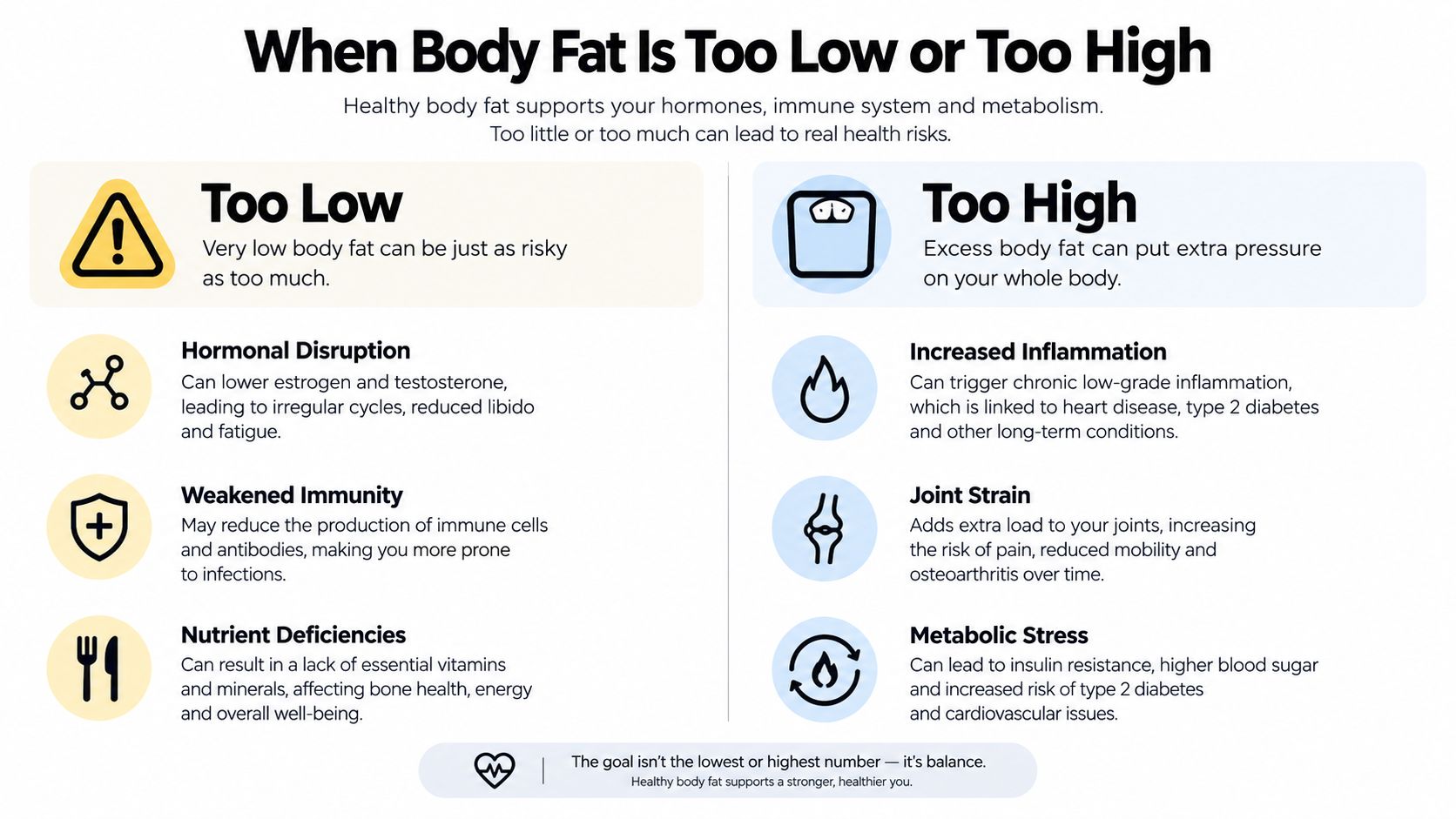
Body fat can become a health concern at either end, but the warning signs aren't identical. Very low body fat may mean the body doesn't have enough reserve for normal function, while higher levels can coincide with greater cardiometabolic stress, particularly when fat is concentrated around the abdomen.
Australian guidance indicates that illness correlations, including heart disease and type 2 diabetes, become more pronounced above about 25% body fat for men and 35% for women. These are risk-associated thresholds, not a diagnosis. A reading above them should prompt a broader conversation about waist size, blood pressure, blood glucose, lipids, activity and family history rather than panic over one device result.
What very low levels can signal
When body fat moves close to essential-fat requirements, the body may struggle to maintain normal hormonal and reproductive function. People who train hard while eating too little may also notice persistent fatigue, poorer recovery, reduced performance or changes in menstrual function. These signs deserve medical attention rather than another round of restriction.
Low isn't automatically healthy, and high isn't automatically unhealthy. A trained person may have a lower reading with good energy and stable function, while another person with a similar reading may feel unwell. The surrounding evidence matters.
Water balance adds another layer of measurement confusion. Hydration can affect body-composition estimates, so people managing conditions involving fluid regulation may benefit from learning about water balance in POTS management while keeping body-fat readings in their proper context.
What higher levels can mean
Above the risk-associated thresholds, correlations with heart disease and type 2 diabetes become more pronounced, according to Australian body-composition guidance from SVC BMD. A higher reading may also accompany reduced movement, joint strain, sleep difficulties or changes in blood pressure and glucose regulation, although body fat percentage alone can't diagnose any of these conditions.
The starting point changes the meaning of a change. For example, a reduction from 34% to 31% in a woman may still leave her in a healthy-to-borderline zone, while a reduction from 27% to 24% in a man may move him from a risk-associated range into a healthier metabolic band, as the Australian guidance explains. The same number of percentage points doesn't produce the same interpretation for every person.
Practical rule: Treat body fat as one signal in a wider dashboard. Follow the trend, check how you feel and function, and discuss persistent concerns with a GP or accredited health professional.
How Body Fat Percentage Is Measured and Which Method Fits You
No consumer method measures body fat as directly as a simple thermometer measures temperature. Most methods estimate body composition from physical properties, formulas or both. That means consistency often matters more than apparent precision when your goal is to monitor change at home.
Common methods compared
Skinfold calipers pinch selected folds of skin and estimate body fat from their thickness. They're affordable and portable, but results depend heavily on the person taking the measurements and on using the same sites and technique each time.
Bioelectrical impedance analysis, or BIA, sends a small electrical signal through the body and uses the result with details such as height, weight, age and sex. Smart scales make BIA convenient, but hydration, recent food, exercise and skin temperature can influence the estimate.
DEXA uses a scan to provide a detailed breakdown of bone, lean tissue and fat distribution. It can be useful when a clinician, sports professional or researcher needs a more detailed assessment, although it isn't a weekly home tool.
Hydrostatic weighing estimates body composition from water displacement. It can be accurate when performed properly, but access is less convenient because you need specialised equipment and a controlled testing setting.
Why home readings move around
A morning reading after a salty meal may not match an afternoon reading after exercise. Hydration, food intake, bowel contents and recent training can all affect body weight and the electrical assumptions used by BIA devices.
That doesn't make a home scale useless. It means you should create a repeatable routine. Use the same device, measure at a similar time, place the scale on a hard level floor and follow the manufacturer's instructions. Avoid treating a single unexpected result as a real change in body fat.
For a broader walkthrough of practical options, see how to measure body fat. The most suitable method is the one you can use consistently and interpret alongside other information.
Measurement mindset: A home device is better at showing a pattern under repeatable conditions than proving an exact body-fat percentage on one morning.
Choose DEXA or a professional assessment when you need a more detailed clinical picture, have a specific medical concern or want to establish a reference point. Choose a home method when regular, repeatable tracking is the priority. Neither choice removes the need for sensible interpretation.
How to Set Realistic Goals and Track Progress Safely at Home
Start with a range, not a dramatic target. Choose a point that supports your age, sex, training status, energy, recovery and life stage. Someone preparing for a strength event may value muscle retention and performance, while someone in perimenopause, trying to conceive or managing healthy ageing may need a different balance of body composition and function.
A useful home routine is simple:
- Choose one measurement day. Measure weekly under similar conditions, such as after waking and using the bathroom, before eating or exercising.
- Record more than body fat. Note body weight, waist measurement, training performance, energy and relevant symptoms.
- Review the direction over four weeks. Look for a consistent pattern rather than reacting to one reading.
- Change one behaviour at a time. Adjust meal structure, add regular strength work or include comfortable aerobic activity, then observe how your measurements and performance respond.
- Pause when warning signs appear. Persistent fatigue, dizziness, disrupted menstrual cycles, rapid unplanned change or distress around food and measurement warrants professional support.
Strength training can help preserve lean mass during fat loss. Moderate aerobic activity, including walking, cycling or dancing, can support fitness and daily movement. If dance is an activity you enjoy, you can find out your dance calorie burn without turning the estimate into a rigid eating rule.
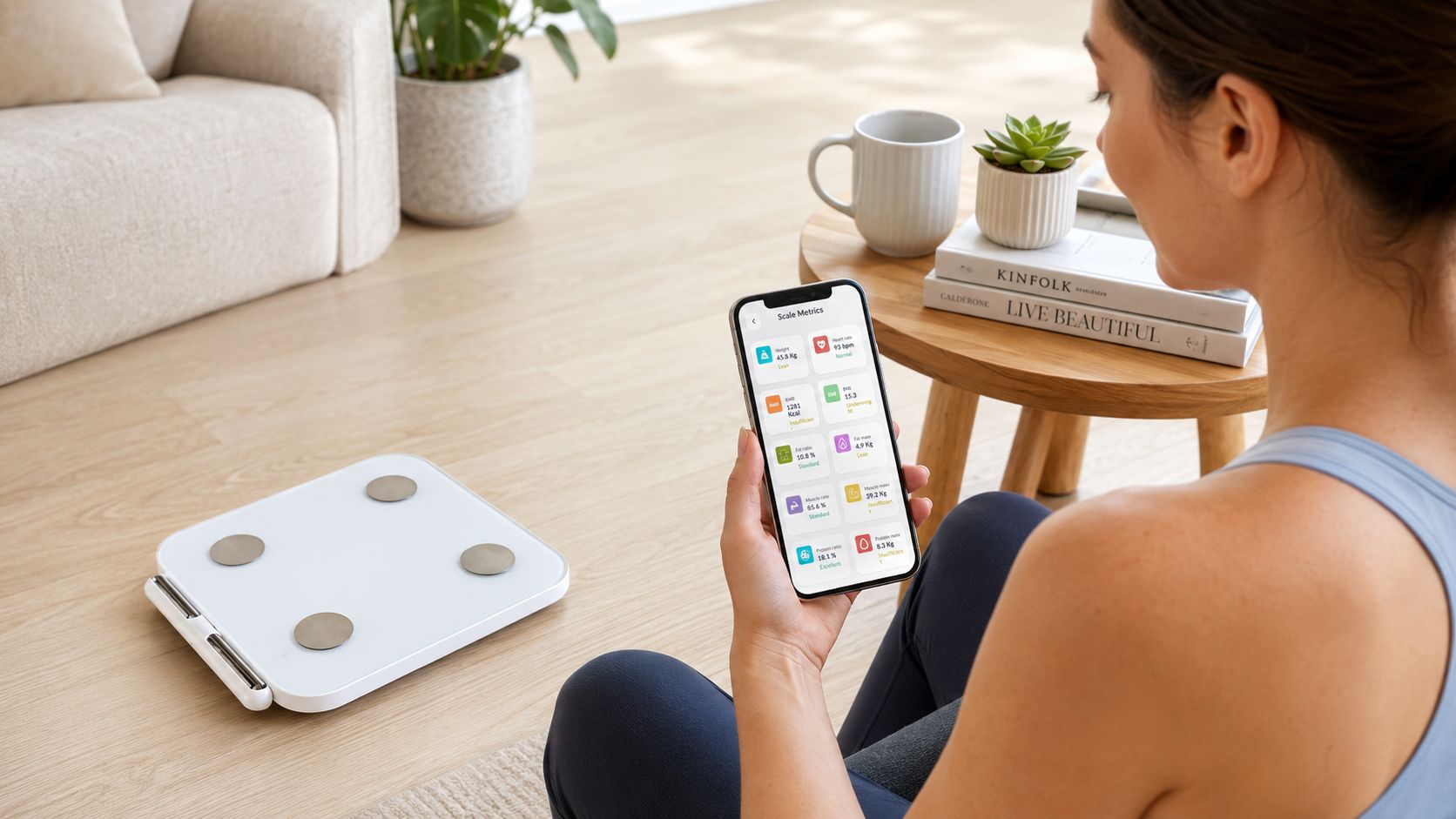
A connected tool can reduce forgotten entries and make trends easier to review. The Venus AI Smart Scale: Body Composition & Body Fat Scale records 12 body-composition metrics, syncs readings to the Venus App through Bluetooth and provides weekly summaries, trend charts and nutrition-tracking features. Those features can help organise information, but they don't turn an estimate into a diagnosis.
You can also use a body fat percentage calculator as an introductory estimate. Calculator outputs and smart-scale readings should be treated as starting points, particularly when the result conflicts with your energy, strength, waist trend or clinical markers.
Your Next Steps to Stay in a Healthy Range
Healthy body fat is a personalised functional range, not a single ideal number. Sex and age shape the reference bands, while muscle mass, waist size, training status, reproductive health, strength and metabolic markers explain why two similar readings can mean different things.
Use this short plan over the next month:
- Measure consistently: Pick one weekly routine and keep the conditions similar.
- Track the trend: Review several readings together instead of judging one result.
- Protect lean mass: Include resistance exercise and enough food to support recovery.
- Check function: Pay attention to energy, sleep, strength, mood and menstrual health where relevant.
- Seek guidance when needed: Ask a GP or qualified health professional about persistent symptoms, unexpectedly low readings, higher-risk readings or rapid unexplained changes.
The most useful goal may be a steadier waist measurement, better strength, improved energy or more confident decision-making rather than the lowest possible body-fat figure. Body composition is a tool for understanding your health, not a score that determines your worth.
Venus Health Co. offers app-connected tools for tracking body composition, weight and related wellness trends at home, including weekly summaries from its AI Body Composition Smart Scale. Visit Venus Health Co. to explore the available health-tracking options and choose a measurement routine you can maintain.