

After Birth Pads How to Choose and Use Them Safely
Dr. Adeyinka AdegbosinThe first few hours after birth can feel oddly ordinary and strangely intense at the same time. You've got a baby in your arms, a belly that still feels full, and a bathroom trip that suddenly becomes something you think about very carefully. That's usually the moment after birth pads stop sounding like a small supply list item and start feeling like part of recovery itself.
Used well, the pad does two jobs. It catches lochia, the normal postpartum bleeding and discharge, and it helps you notice when the pattern is changing in a way that needs attention. That's why good pad choice is about more than comfort. It's about seeing what your body is doing while it heals.
What to Expect in the First Weeks After Birth
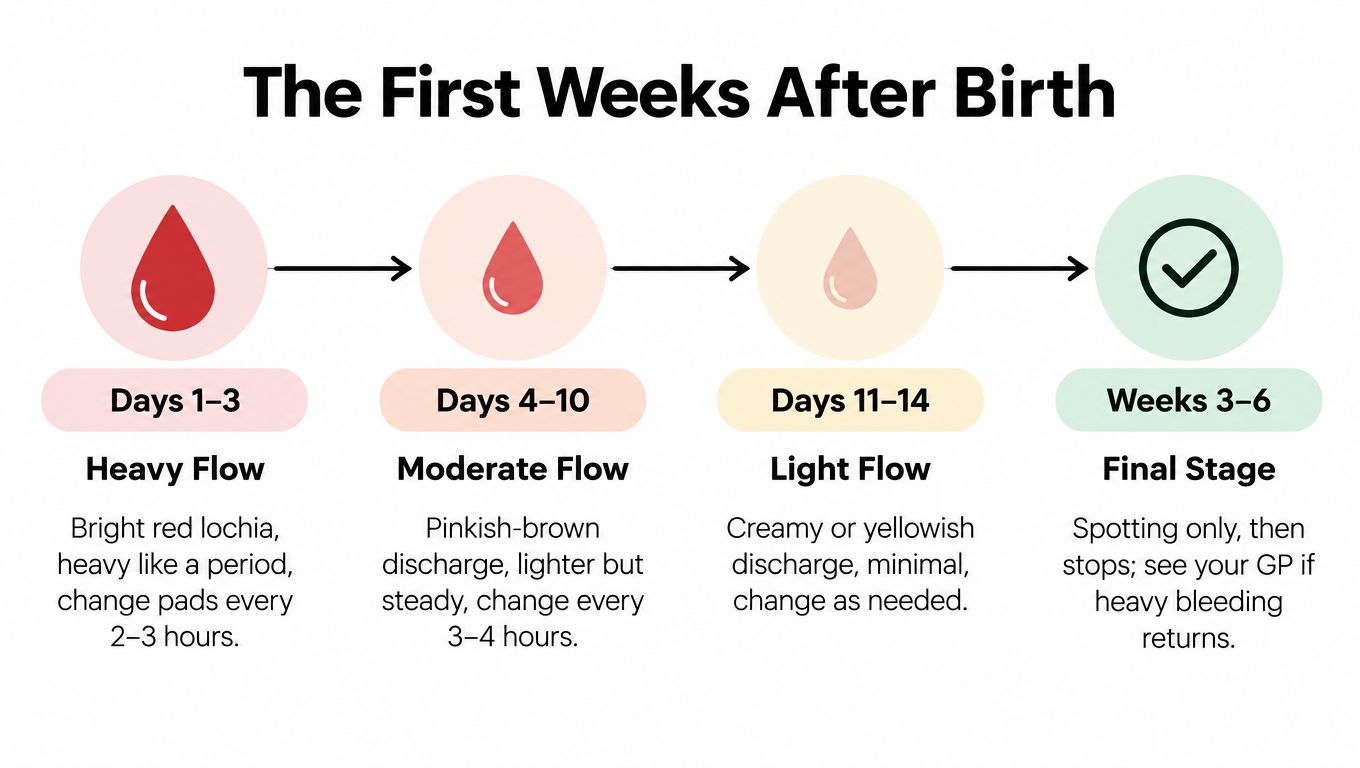
The first nights after birth can feel plain and intense at the same time. One minute you are focused on the baby, the next you are noticing blood, discharge, and how awkward a toilet trip can feel. A practical way to understand recovery is to watch what the pad is telling you, because the pattern usually changes as healing moves on. Guidance from a large primary care review notes that lochia commonly settles over the first few weeks, and Queensland Health says most bleeding has eased by about 4–6 weeks (Queensland Health).
A simple way to think about it
At the start, lochia is usually the brightest and heaviest. Over time it should become lighter, then browner, then taper off. That shift is the same sort of clue you would use with a bruise: fresh blood looks different from older healing, and the body follows a similar pattern after birth.
A pad is useful because it shows that change clearly. In the early days, you need more coverage and absorbency. Later, the pad becomes less of a flood barrier and more of a quiet check on how recovery is going. If bleeding suddenly becomes heavier again, that change is worth paying attention to rather than brushing aside.
Women are advised to watch pad saturation, colour, odour, clots, and changes in volume at home (RACGP). That advice pairs well with the postpartum feminine care recovery guide, which also helps explain why gentle monitoring matters during this stage.
For women using support wear after birth, an abdominal wrap can change how underwear sits and how a pad feels in place, so a useful companion read is this postpartum belly binding guide. The main point is straightforward. Match the pad to the stage of healing, because the pad is doing two jobs, absorbing lochia and showing you when the pattern is shifting.
How After Birth Pads Differ From Period Pads
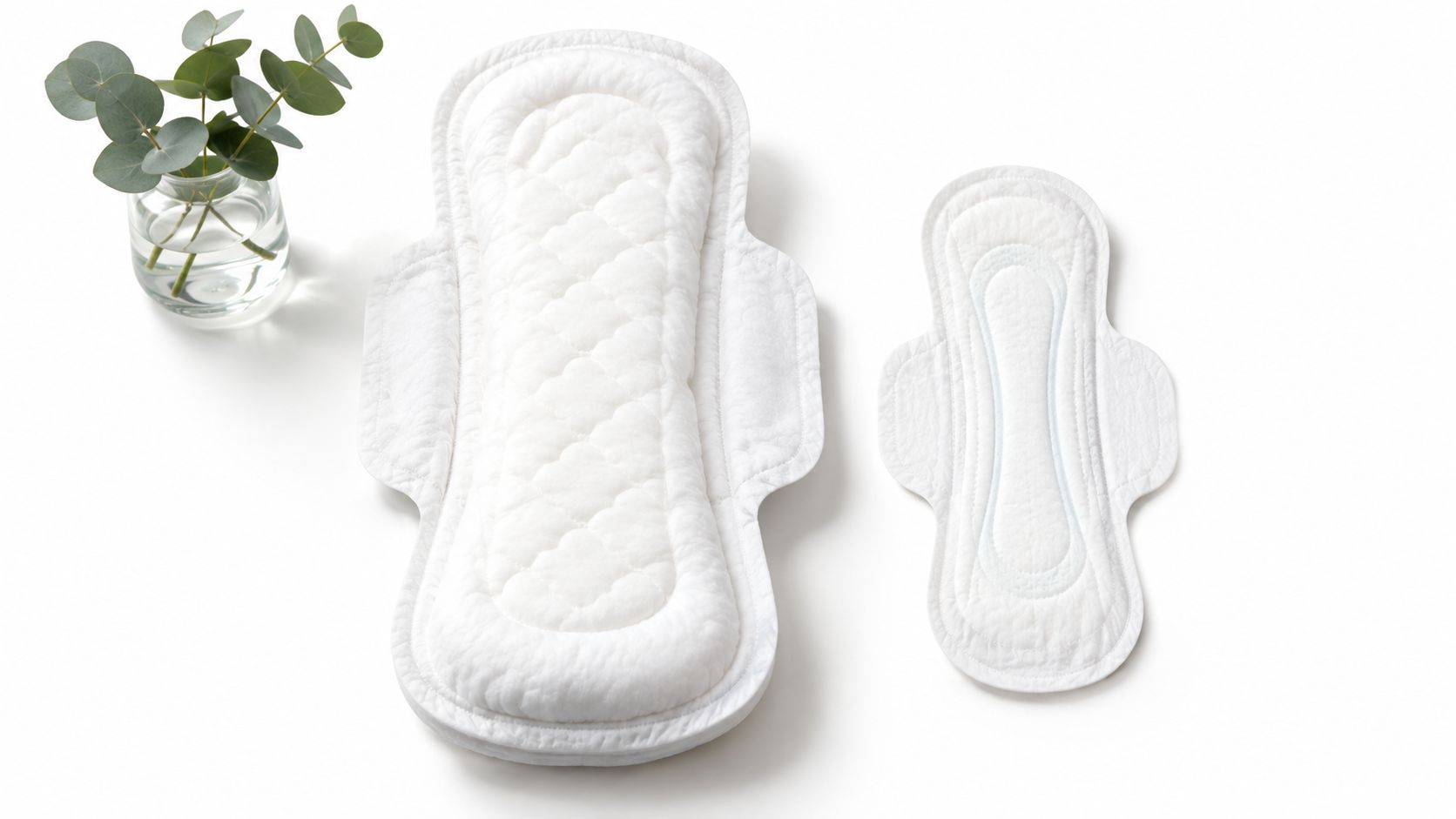
A period pad is made for monthly bleeding. An after-birth pad has a different job. It needs to handle lochia from a healing body, cushion tender stitches or bruised tissue, and make it easy to see what is changing. That is why maternity pads are usually longer, thicker, softer, and shaped for fuller coverage than a normal menstrual pad.
What the extra size actually does
The extra length helps in three simple ways. It catches flow when you stand up, gives more protection when you are lying down, and widens the absorbent area so leakage is less likely to move backwards or sideways.
Australian guidance advises using sanitary pads after birth and avoiding tampons until after the six-week postnatal check, because the body is still healing and infection risk is a concern (Queensland Health). That is one reason pad choice matters early on. A pad is not only there to absorb blood, it also gives you a quick window into recovery.
The practical difference shows up fast. An overnight pad that felt generous before birth can still seem too short when bleeding is heavy. It also matters that postnatal bleeding stays visible. Dark underwear can hide changes in colour or clots, while disposable pads make those changes easier to spot at a glance (RACGP).
What the pad has to do on a busy day
A good after-birth pad should do more than soak up blood. It should cushion, stay put, and let you check what is happening without extra fuss. That matters when you are sore, tired, and up and down for feeds.
If you are packing a hospital bag, choose by function rather than by brand name:
- Heavy early flow: needs full-length coverage and strong absorbency.
- Tender perineal area: needs a softer surface and less rubbing.
- Lying down at night: needs rear coverage that helps prevent leaks when you roll.
- Checking recovery: needs enough visibility so blood colour and clots are easy to see.
The image below shows why shape and size matter, not just absorbency.
Types of After Birth Pads and When to Use Each
A fresh postpartum pad can tell you a lot about recovery. The first clue is how the lochia behaves. Early on, flow is heavier and less predictable, so the pad needs full coverage and enough absorbency to hold up through rest, feeds, and getting out of bed. Later, when the bleeding lightens, the same bulky pad can feel like too much for the job.
Match pad type to lochia stage
| Flow stage | Best pad option | Why it fits |
|---|---|---|
| Heavy early lochia | Hospital-grade maternity pad | Full coverage and stronger absorbency for the first heavy days |
| Moderate flow | Heavy overnight style pad | Enough protection without as much bulk |
| Lighter flow | Thinner maternity pad or breathable cotton cover pad | Better comfort once the volume eases |
| Lower-absorbency days at home | Reusable cloth option, if you're not needing visual checks | Softer feel, but less ideal when you still want to monitor colour and clots |
| Night wear or trips out | Postpartum underwear pairings | Helps keep the pad stable when you're moving, sitting, or sleeping |
That table is also a simple recovery check. If you are changing pads often on day one, the bleeding is still doing early-postpartum work. If you are down to a lighter pad and only changing it a few times across the day by week three, that often matches the usual tapering pattern, as long as the colour and flow are also settling down. A pad that suddenly fills much faster than before deserves attention, because the pad is showing you more than comfort alone.
The trade-off is visibility. Dark underwear and some reusable options can feel comfortable, but they can hide colour changes and clots. Postnatal guidance from maternity services often favours disposable pads early because they make it easier to see what is happening at a glance. When you want a little more security on active days or overnight, Nuage Wears leak proof briefs can sit over the pad and help it stay in place without replacing regular checks.
A practical shopping approach
Buy for stages, not for one perfect pad. Early recovery asks for absorbency and coverage. Later recovery asks for less bulk and easier movement. That way, your supply matches the way lochia changes instead of fighting against it.
If you like using a cooling layer for sore areas, this cooling pad postpartum guide can help you think about comfort add-ons without making the basics more complicated.
The image below shows why shape and size matter, not just absorbency.
Materials Absorbency and Comfort Features Explained
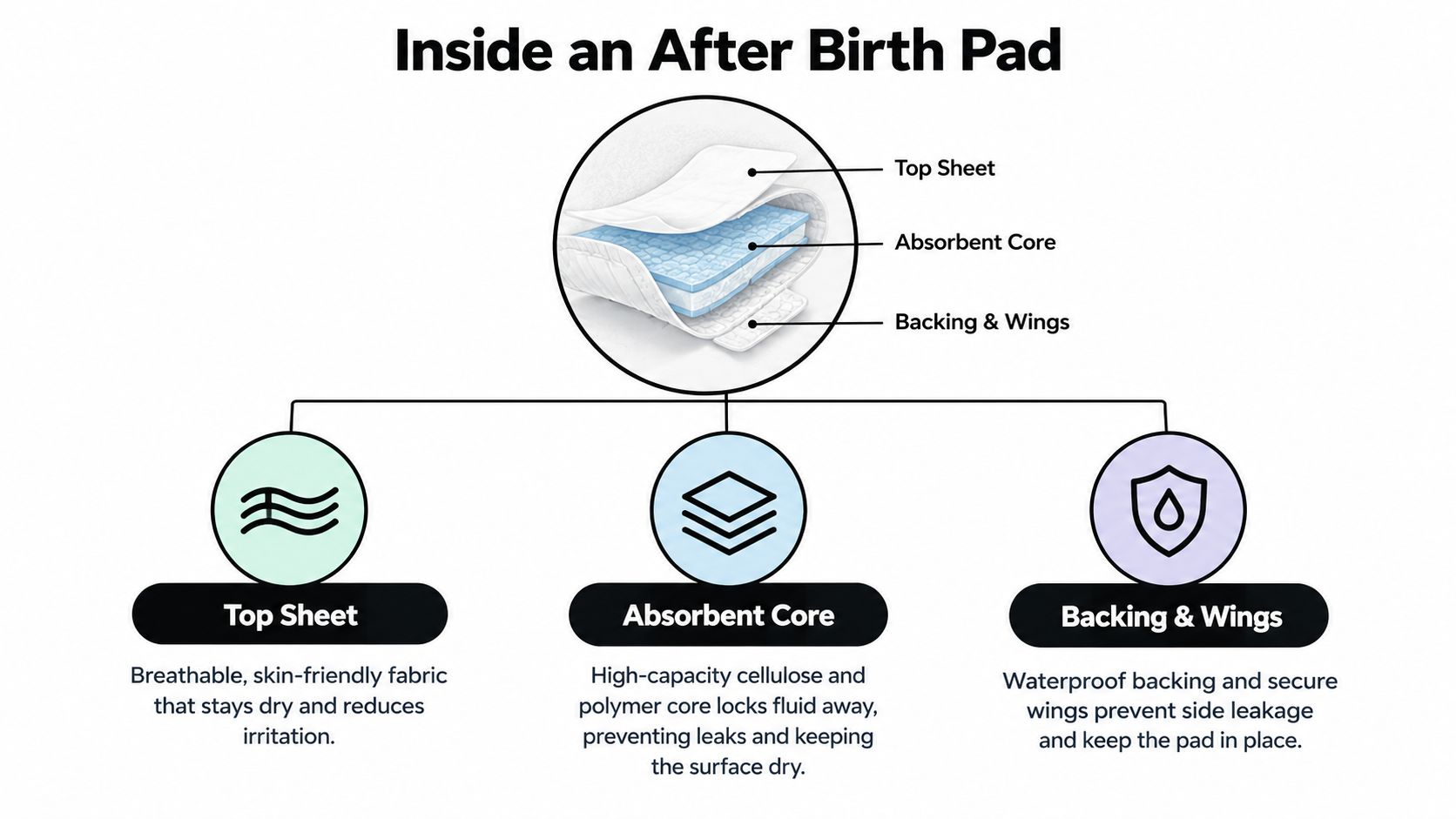
A packet can say "extra absorbent" and still leave you wondering what matters. The answer is usually in the construction. A good pad balances a skin-friendly top layer, a core that holds fluid away from the surface, and a backing that helps stop leaks.
What to look for on the label
Breathability matters because healing skin does not like heat and dampness. A soft top sheet can reduce rubbing, especially if you have stitches or a grazed perineum. A wetness-retaining core helps keep fluid away from the surface so the pad feels drier for longer, while a waterproof backing helps prevent seepage into underwear or bedding.
Wings can help a pad stay centred, but they are not the only answer. A pad without enough length or rear coverage can still leak when you lie down, even if it has wings. Fit around the body matters just as much as the label claim.
A quick packaging check can make the choice clearer:
- Absorbent core: does it sound built to hold fluid, not just feel soft?
- Backing: is there a barrier to stop soak-through?
- Width at the back: is it designed for lying down as well as standing?
- Adhesive strength: will it stay put without pulling at sensitive skin?
- Fragrance: is it fragrance-free, which is usually kinder for healing skin?
Good leakage protection should make observation easier, not harder. If a pad is so hidden or so bulky that you cannot tell what the bleeding is doing, it is not helping recovery tracking very well.
If you are using a digital tracking habit during recovery, some people pair pad-based bleeding notes with other tracked signs such as temperature or cycle data. The Venus Smart Basal Thermometer for Ovulation - Bluetooth BBT Tracker with App is one way to keep that data in one app. The point is simple. Recovery tools work best when they fit into a routine without extra friction.
The right pad should feel dependable, not noticeable. If you are constantly adjusting it, scratching at the edges, or worrying about odour cover-up from fragrance, that is usually a sign to simplify the setup and choose a calmer option.
Sizing Fitting and Changing Pads for Good Hygiene
A well-fitting pad can make the first days feel much more manageable. If it sits too far forward, too far back, or slips in your underwear, it may fold, bunch, and leak. A simple routine keeps that from becoming one more thing to worry about.
A calm routine for daily use
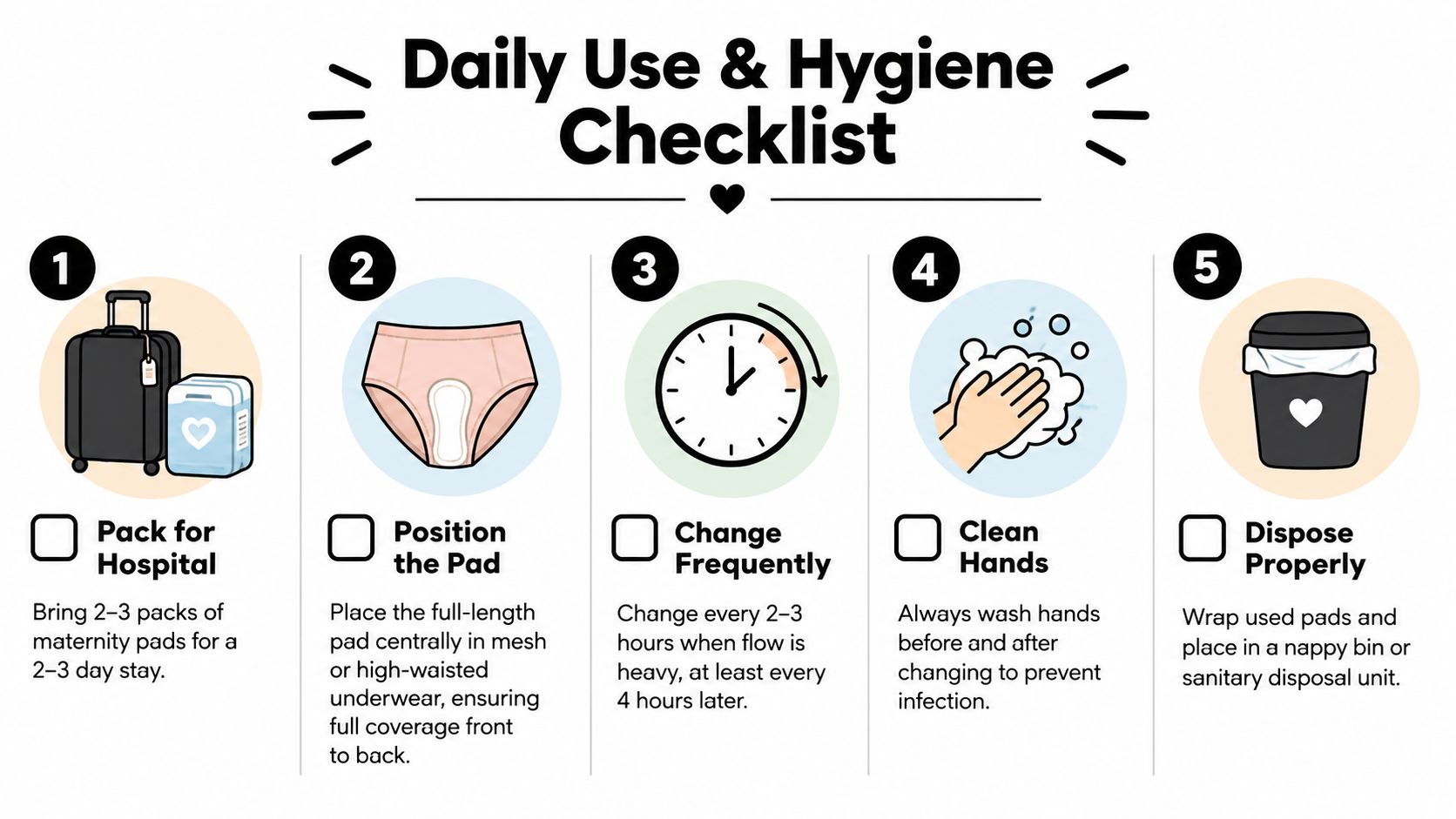
- Pack enough for the first stretch. Hospital time and the first days at home often involve more changes than expected.
- Place the pad centrally. Mesh underwear or high-waisted underwear can help keep it centred from front to back.
- Check the fit after lying down and standing up. The pad should stay flat instead of twisting or riding up.
- Wash your hands before and after each change. Clean hands help reduce contamination around healing tissue.
- Dispose of used pads cleanly. Wrap them and place them in a sanitary bin or nappy bin where possible.
A good change routine also means watching the pad itself. Lochia usually changes over time, so the pad is doing two jobs, absorbing fluid and showing you how recovery is progressing. If the bleeding is still heavy, a fuller pad makes sense. As it eases, a lighter pad is often more comfortable and easier to live with. That gradual step-down also helps you notice if the bleeding pattern shifts in a way that does not feel right.
How often is “frequently” in practice? In the first days, that often means changing pads every 2 to 4 hours, or sooner if they feel wet or soiled. Guidance from Queensland Health also advises frequent changes, keeping the perineal area dry, and washing hands before and after changing to support wound care (Queensland Health). Dry skin and clean hands matter more than scent or “freshness” products.
When to step down
You do not need to stay with the heaviest pad once the flow starts to ease. A thinner pad can feel kinder when walking, sitting, and sleeping become more settled. Many women keep a longer pad for nights, because lying down changes how fluid moves.
Small adjustments make the routine easier:
- For night feeds: keep a spare pad, underwear, and disposal bag next to the bed.
- For walks to the bathroom: choose a pad with secure adhesive so it stays in place.
- For C-section comfort: avoid bulky layers that press into the incision area.
- For home naps: use the more absorbent pad if you are likely to lie flat for a while.
The aim is steady comfort and clear observation. A pad should protect healing skin, reduce leaks, and make changes quick enough that they feel routine rather than disruptive.
Bleeding Warning Signs and When to Call for Help
Pads do more than absorb blood. They also show the pattern of recovery, a bit like a bedside chart you can check through the day. If the lochia is changing in the expected stages, the pad may show that things are settling. If it suddenly soaks faster, brightens again, or smells off, that change deserves attention.
Australian consumer health guidance defines postpartum haemorrhage as losing more than 500 millilitres of blood after birth, and says it occurs in approximately 5–15 out of every 100 Australian births (Pregnancy, Birth and Baby).
What needs urgent attention
If, after the first 24 hours, you are soaking more than one maxi pad every two hours, contact a clinician promptly. RACGP guidance also says to seek immediate assessment for sudden or very heavy bleeding, including soaking one sanitary pad every 1–2 hours, large clots, increasingly bright-red blood, dizziness, fever, or worsening pain (RACGP).
The pattern matters. One busy pad after a more active day is different from a pad that keeps filling faster than before. Bright-red bleeding that returns after it had started to lighten can also signal that you should be checked.
How to read the warning pattern
A strong smell needs attention too. When the odour changes along with heavier bleeding, it can point to infection or another problem that should be assessed. That is why the pad is useful as a simple recovery monitor, not just a layer of protection.
If you are also dealing with body soreness, a practical large back ice pack guide can help with general postpartum aches, but it does not answer questions about bleeding. Keep those two issues separate.
Seek urgent assessment if the bleeding feels wrong, even if you cannot name the cause. Heavy bleeding, weakness, clamminess, a rapid heartbeat, shortness of breath, or feeling generally unwell needs prompt help in the postpartum period.
Avoid tampons and menstrual cups for the first 6 weeks while healing is still underway. If you are unsure what the pad is telling you, write down the saturation, colour, clots, and smell before you call. Those details help a midwife or GP judge the pattern quickly.
For broader recovery support, the post-pregnancy recovery guide can sit alongside your care plan.
How to Choose the Right After Birth Pads for You
The choice becomes easier when you start with four questions. How heavy is the flow today? How sensitive does the tissue feel? How much movement do you need? Do you still need to see the bleeding clearly when you change pads? Those answers point you toward the right pad for this stage of recovery.
Build a small staged kit
Begin with your heaviest option for the first days, then keep a thinner version ready for later. If you expect to be on your feet more, choose a pad with stronger stay-put support. If your skin feels tender, look for softness and fragrance-free packaging rather than extra scent.
A simple stage-by-stage checklist can help:
- Heavy first days: keep full-length, high-absorbency pads on hand.
- Lighter weeks: switch to thinner pads that feel less bulky.
- Night use: keep the larger size longer if you lie flat.
- Movement or trips out: choose secure underwear pairings that stop shifting.
- Monitoring: keep disposable pads available when colour, clots, or smell matter most.
The pad can do two jobs at once. It protects your clothes, and it shows you how recovery is changing. A pad that suddenly fills faster, looks a different colour, or smells off gives you a clearer picture of what is happening, especially when you are still getting used to lochia shifting from one stage to the next.
Comfort and vigilance can sit together. A pad that feels soft, stays in place, and lets you see what is happening gives you both. If you are buying today, choose for the stage you are in now, keep one step lighter ready for later, and use the pad as a simple recovery monitor, not just a hygiene item.
If you want support alongside your own notes, the Venus Health Co. app-connected tools can sit alongside your recovery routine. Keep your pad supply staged, keep noting changes, and choose the tools that make it easier to rest, recover, and ask for help when something does not look right.